Loading...
Done
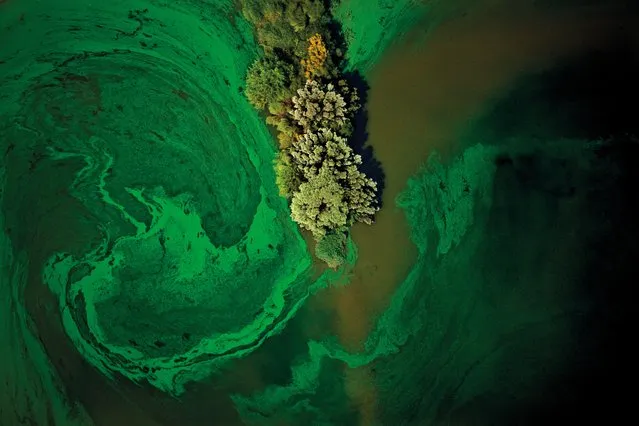
Luling, Louisiana US. New evidence contradicts previous claims of the relative safety of glyphosate, the world’s most widely used herbicide, which is manufactured here. It is often used in conjunction with seeds that have been genetically modified to tolerate its application, meaning that anyone consuming these crops is eating a genetically modified plant, and whatever residue of the pesticide that remains. (Photo by J. Henry Fair/Industrial Scars/Papadakis Publisher)

Luling, Louisiana, US. New evidence contradicts previous claims of the relative safety of glyphosate, the world’s most widely used herbicide, which is manufactured here. It is often used in conjunction with seeds that have been genetically modified to tolerate its application, meaning that anyone consuming these crops is eating a genetically modified plant, and whatever residue of the pesticide that remains. (Photo by J. Henry Fair/Industrial Scars/Papadakis Publisher)
Details
25 Oct 2016 10:40:00
A visitor is dwared between the wheels of BelAZ 450-ton dump truck (L) and BelAZ 360-ton dump truck (R) at the plant of Belarusian manufacturer of heavy trucks and equipment for earthmoving, BelAZ, in Zhodino, some 55 km from Minsk, Belarus, 27 August 2019. The company mostly delivers its products to CIS mining companies, mainly from Russia and Ukraine. (Photo by Tatyana Zenkovich/EPA/EFE/Rex Features/Shutterstock)

A visitor is dwared between the wheels of BelAZ 450-ton dump truck (L) and BelAZ 360-ton dump truck (R) at the plant of Belarusian manufacturer of heavy trucks and equipment for earthmoving, BelAZ, in Zhodino, some 55 km from Minsk, Belarus, 27 August 2019. The company mostly delivers its products to CIS mining companies, mainly from Russia and Ukraine. (Photo by Tatyana Zenkovich/EPA/EFE/Rex Features/Shutterstock)
Details
29 Aug 2019 00:05:00
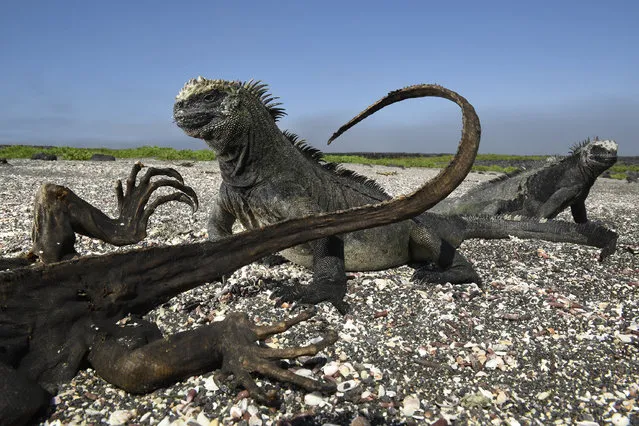
Galapagos – Rocking the Cradle: Four major ocean currents converge along the Galapagos archipelago, creating the conditions for an extraordinary diversity of animal life, April 25, 2016. The islands are home to at least 7,000 flora and fauna species, of which 97 percent of the reptiles, 80 percent of the land birds, 50 percent of the insects and 30 percent of the plants are endemic. The local ecosystem is highly sensitive to the changes in temperature, rainfall and ocean currents that characterize the climatic events known as El Niño and La Niña. These changes cause marked fluctuations in weather and food availability. Many scientists expect the frequency of El Niño and La Niña to increase as a result of climate change, making the Galapagos a possible early-warning location for its effects. (Photo by Thomas P. Peschak for National Geographic/World Press Photo)

Galapagos – Rocking the Cradle: Four major ocean currents converge along the Galapagos archipelago, creating the conditions for an extraordinary diversity of animal life, April 25, 2016. The islands are home to at least 7,000 flora and fauna species, of which 97 percent of the reptiles, 80 percent of the land birds, 50 percent of the insects and 30 percent of the plants are endemic. (Photo by Thomas P. Peschak for National Geographic/World Press Photo)
Details
16 Apr 2018 00:01:00
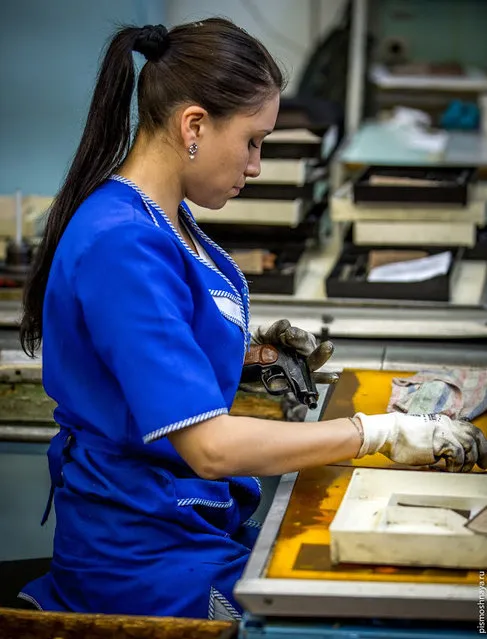
Izhmash (Ижмаш)

“Izhevsk Machinebuilding Plant (Russian: Ижевский Mашиностроительный Завод) or IZHMASH (ИЖМАШ) is a weapons and motor vehicle manufacturer based in Izhevsk, founded in 1807 at the decree of Tsar Alexander I, and is now one of the largest corporations in its field. It manufactures the famous Kalashnikov series of assault rifle, along with a host of other Russian arms, including medium cannons, missiles, and guided shells”. – Wikipedia. (Photo by Pismoshnaya.ru, 2012)
Details
09 Dec 2012 10:04:00
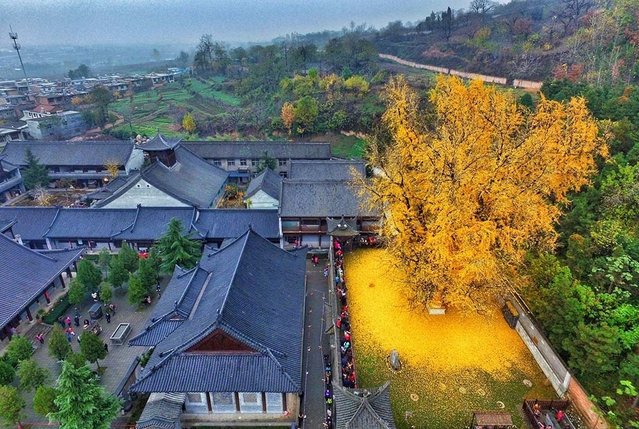
The Ancient Ginkgo Tree Makes Golden Сarpet Оf Leaves Every Autumn

This particular Gingko tree (aka Gingko Biloba) is not just any tree. It was reportedly planted by Tang Dynasty's Emperor Taizong, the emperor portrayed in Fang Bingbing's Empress of China, from over a thousand years ago. Take a look at these stunning photos when the Gingko tree displays its full glory in late autumn.
Details
04 Dec 2015 12:08:00
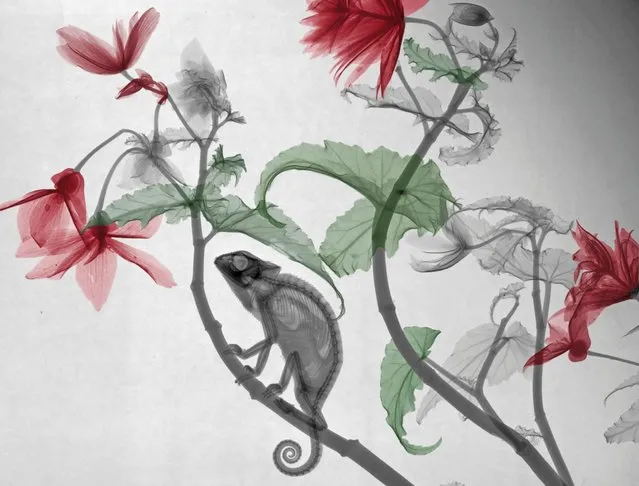
“Chameleon and Begonia”. (Photo by Arie van't Riet)

Physicist Arie van't Riet uses a series of duel X-ray cameras to capture flowers, plants and small animals in living dioramas. The x-rays are then finished and colorized in Photoshop. Giving way to some breathtaking nature scenes. Photo: “Chameleon and Begonia”. (Photo by Arie van't Riet)
Details
13 Mar 2014 05:45:00
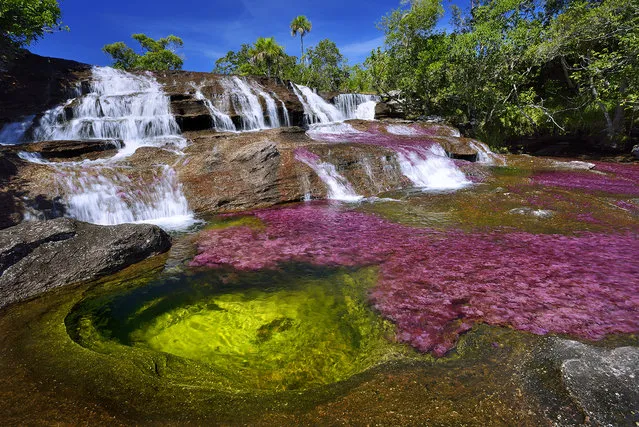
A waterfall is seen at the end of the rainy season, in August, when the water level finally decreases, in the Cano Cristales RIver in the Sierra de la Macarena in Colombia. It has become covered with a bright pink endemic aquatic plant, Macarenia Clavigera. (Photo by Olivier Grunewald)

“El rio mas bonito del Mundo”, the most beautiful river of the world, the “River of five colors”, the “Rainbow River”, or even the “Escaped from Paradise”, are the shimmering appellations that Colombians give to Cano Cristales, a small stream located in the heart of the Macarena National Park, 150 km (93 miles) south of Bogota. Photo: A waterfall is seen at the end of the rainy season, in August, when the water level finally decreases, in the Cano Cristales RIver in the Sierra de la Macarena in Colombia. It has become covered with a bright pink endemic aquatic plant, Macarenia Clavigera. (Photo by Olivier Grunewald)
Details
25 Mar 2014 15:15:00
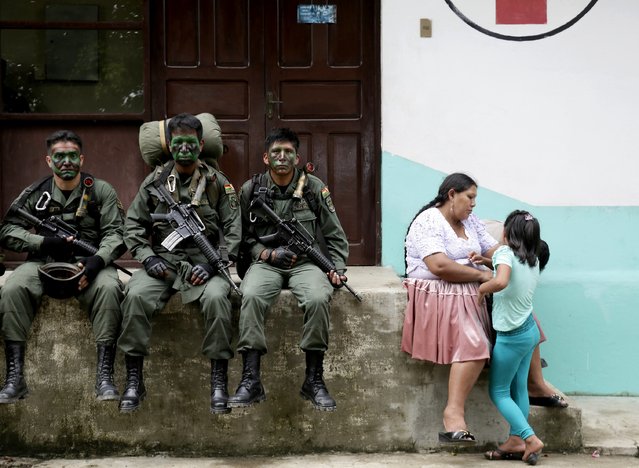
Members of the Bolivian combined forces of army and police rest at their headquarters at the end of their ceremony for the task of fighting against drugs and the eradication of coca leaves in Chimore, east of La Paz, December 10, 2014. The government of Bolivia's President Evo Morales eradicated some 11,000 hectares of illegal coca plants and confiscated nearly 192 tons of drugs in 2014, according to the local media. (Photo by David Mercado/Reuters)

Members of the Bolivian combined forces of army and police rest at their headquarters at the end of their ceremony for the task of fighting against drugs and the eradication of coca leaves in Chimore, east of La Paz, December 10, 2014. The government of Bolivia's President Evo Morales eradicated some 11,000 hectares of illegal coca plants and confiscated nearly 192 tons of drugs in 2014, according to the local media. (Photo by David Mercado/Reuters)
Details
12 Dec 2014 13:10:00