Loading...
Done
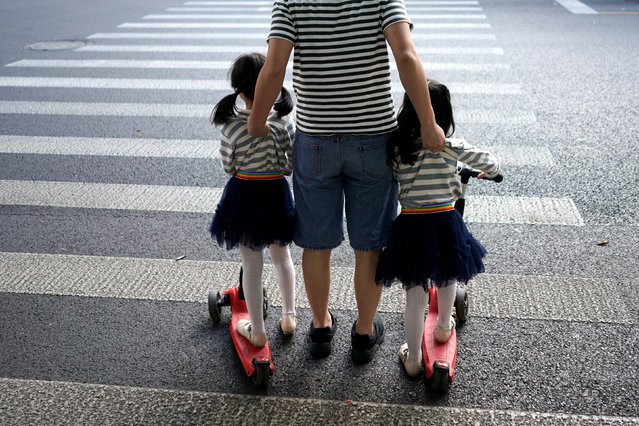
A father crosses a road with his twin daughters in Shanghai, China September 28, 2018. (Photo by Aly Song/Reuters)

A father crosses a road with his twin daughters in Shanghai, China September 28, 2018. (Photo by Aly Song/Reuters)
Details
02 Oct 2018 00:03:00
A woman crosses a road outside the EU Parliament ahead of the EU elections in Brussels, Belgium, May 22, 2019. (Photo by Yves Herman/Reuters)

A woman crosses a road outside the EU Parliament ahead of the EU elections in Brussels, Belgium, May 22, 2019. (Photo by Yves Herman/Reuters)
Details
01 Jun 2019 00:01:00
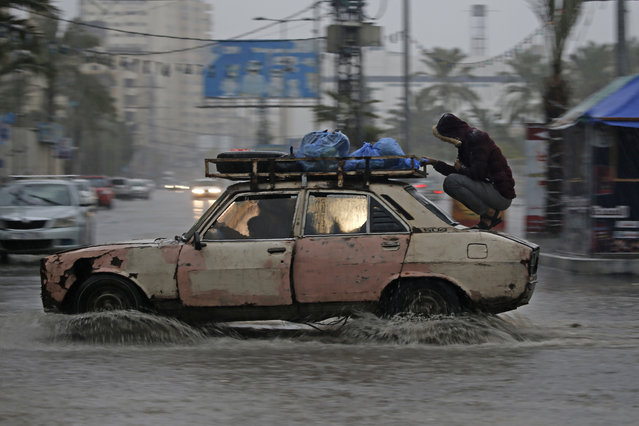
A car drives through a flooded road following heavy rain in Gaza City on December 27, 2019. (Photo by Mohammed Abed/AFP Photo)

A car drives through a flooded road following heavy rain in Gaza City on December 27, 2019. (Photo by Mohammed Abed/AFP Photo)
Details
08 Feb 2020 00:01:00
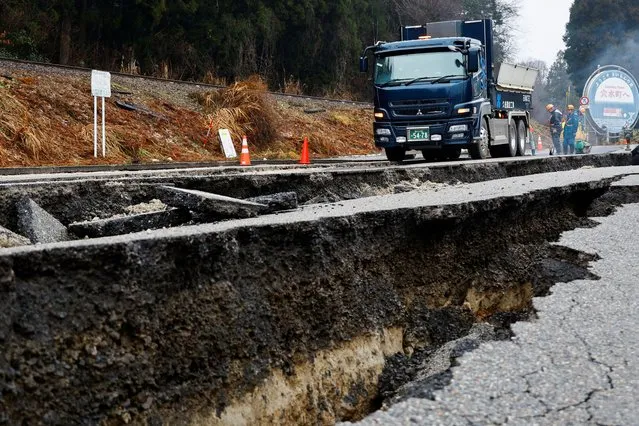
Workers repair a damaged road, in the aftermath of an earthquake, near Anamizu, Japan on January 3, 202. (Photo by Kim Kyung-Hoon/Reuters)

Workers repair a damaged road, in the aftermath of an earthquake, near Anamizu, Japan on January 3, 202. (Photo by Kim Kyung-Hoon/Reuters)
Details
09 Jan 2024 18:49:00
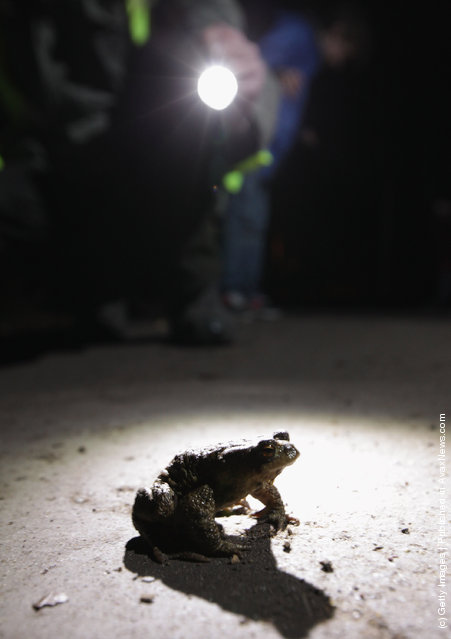
A volunteer approaches a male toad to pick him up from a road near Berlin

A volunteer approaches a male toad to pick him up from a road near Berlin on March 18, 2012 in Gueterfelde, Germany. (Photo by Sean Gallup/Getty Images)
Details
19 Mar 2012 12:14:00
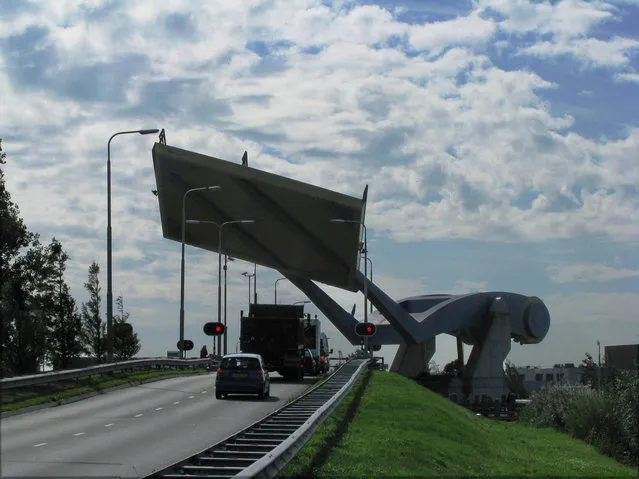
Slauerhoff Bridge, Netherlands

The Slauerhoffbrug (English: Slauerhoff Bridge) is a fully automatic bascule bridge (aka tail bridge) in the city of Leeuwarden in the Netherlands. It uses two arms to swing a section of road in and out of place within the road itself. It is also known as the “Slauerhoffbrug ‘Flying’ Drawbridge”. A tail bridge can quickly and efficiently be raised and lowered from one pylon (instead of hinges). This quickly allows water traffic to pass while only briefly stalling road traffic. The deck is 15 m by 15 m. It is painted in yellow and blue, representative of Leeuwarden's flag and seal.
Details
06 Nov 2013 10:34:00
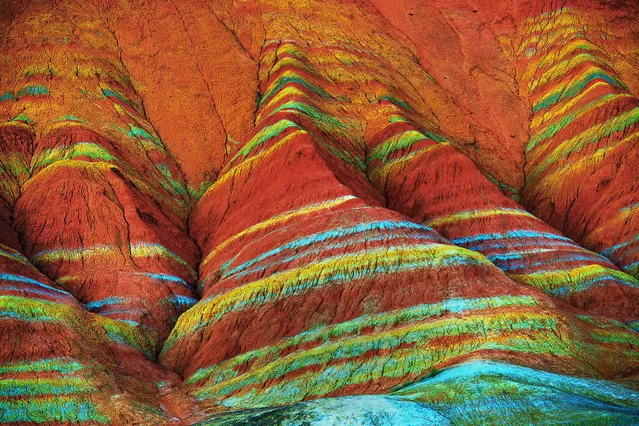
View of colourful rock formations at the Zhangye Danxia Landform Geological Park in Gansu Province, China. The Zhangye Danxia Landform Geological Park is 40km from Zhangye city. The park spans more than 400 square kilometers in Gansu. The unusual terrain is the result of red sandstone and mineral deposits carved over the years by natural forces. A number of boardwalks have been built to encourage visitors to explore the rock formations. (Photo by ImagineChina/The Grosby Group)

View of colourful rock formations at the Zhangye Danxia Landform Geological Park in Gansu Province, China. The Zhangye Danxia Landform Geological Park is 40km from Zhangye city. The park spans more than 400 square kilometers in Gansu. The unusual terrain is the result of red sandstone and mineral deposits carved over the years by natural forces. (Photo by ImagineChina/The Grosby Group)
Details
02 Dec 2013 09:12:00
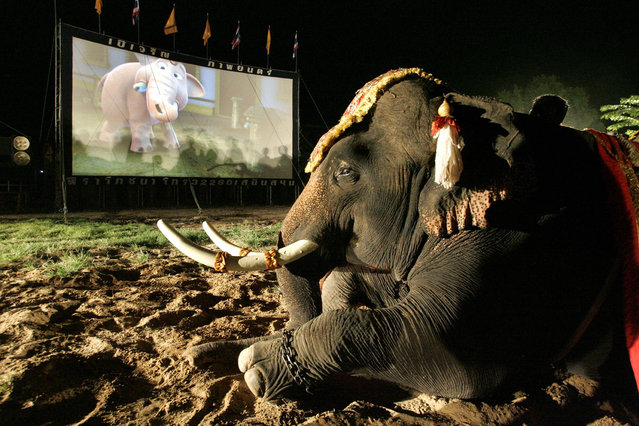
A mahout watches the Thai animation movie Kan Kluay with his elephant in Ayuthaya province, about 80km (49 miles) north of Bangkok June 5, 2006. The movie tells the story of a young Thai wild elephant who, while looking for his father, becomes the war elephant of the Thai King fighting against Burma and restored Thailand's ancient Ayuthaya empire that existed about 400 years ago. (Photo by Sukree Sukplang/Reuters)

A mahout watches the Thai animation movie Kan Kluay with his elephant in Ayuthaya province, about 80km (49 miles) north of Bangkok June 5, 2006. The movie tells the story of a young Thai wild elephant who, while looking for his father, becomes the war elephant of the Thai King fighting against Burma and restored Thailand's ancient Ayuthaya empire that existed about 400 years ago. (Photo by Sukree Sukplang/Reuters)

Details
12 Aug 2015 13:33:00