Loading...
Done
The following “Utopian Tours” drawings are conceptual images of what tourism in North Korea might one day look like, created by North Korean architects. The images, curated by Nick Bonner, are on view as part of the exhibition at the Venice Architecture Biennale in the Korean Pavilion. Bonner runs the Beijing-based Koryo Tours – a company that organizes tours of outsiders into North Korea. (Photo by Nick Bonner/Kyle Vanhemert/Venice Architecture Biennale)

At this year’s Venice Bienniale in Italy, the Korean pavilion has a curious exhibit called “Commissions for Utopia”. It includes renderings from North Korea’s top architects and artists (all anonymous), many of whom studied at the Paekho Institute of Architecture, North Korea’s state-run architectural college, and none of whom have ever left the country. They were asked to create a vision of North Korea’s future sustainable architecture for its expanding tourism industry. Their final products are a glimpse into what it would be like to envision the future after being entirely cut off from the present for almost 70 years. (Photo by Nick Bonner/Kyle Vanhemert/Venice Architecture Biennale)
Details
08 Aug 2014 11:03:00
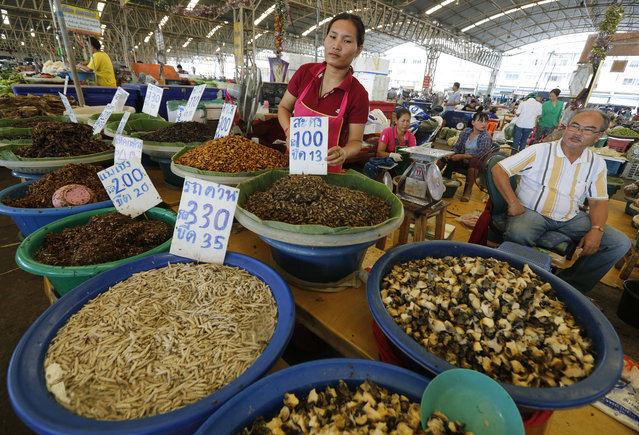
Thai vendors stand next to edible insects for sale at Talad Thai market in Pathum Thani province on the outskirts of Bangkok, Thailand, 15 July 2013. Insects have long been on the menu in Thailand, but academics and the United Nation's Food and Agriculture Organization (FAO) officials are hoping they will become a more common global source of protein and nutrients to meet the need for growing world food requirements in the future. (Photo by Narong Sangnak/EPA)

Thai vendors stand next to edible insects for sale at Talad Thai market in Pathum Thani province on the outskirts of Bangkok, Thailand, 15 July 2013. Insects have long been on the menu in Thailand, but academics and the United Nation's Food and Agriculture Organization (FAO) officials are hoping they will become a more common global source of protein and nutrients to meet the need for growing world food requirements in the future. (Photo by Narong Sangnak/EPA)
Details
22 May 2014 08:51:00
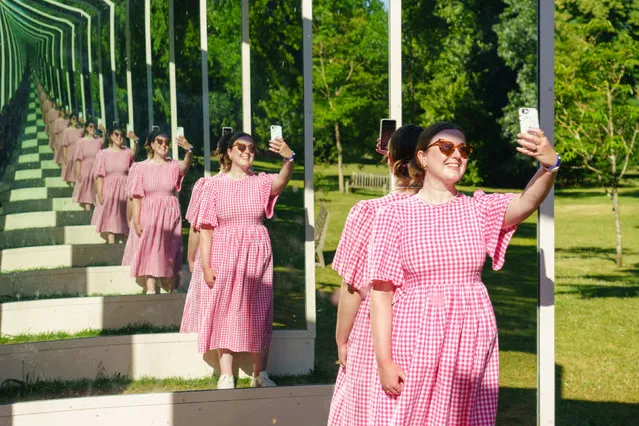
A visitor takes a selfie with “The Breach” by Leandro Erlich, during a photo call for Kew Gardens' forthcoming “Food Forever” exhibition, examining the fragile future of food and the impact of our day-to-day eating habits on the planet, at the Royal Botanic Gardens, in Kew, Richmond, Surrey on Thursday, June 16, 2022. (Photo by Dominic Lipinski/PA Images via Getty Images)

A visitor takes a selfie with “The Breach” by Leandro Erlich, during a photo call for Kew Gardens' forthcoming “Food Forever” exhibition, examining the fragile future of food and the impact of our day-to-day eating habits on the planet, at the Royal Botanic Gardens, in Kew, Richmond, Surrey on Thursday, June 16, 2022. (Photo by Dominic Lipinski/PA Images via Getty Images)
Details
19 Aug 2022 04:53:00
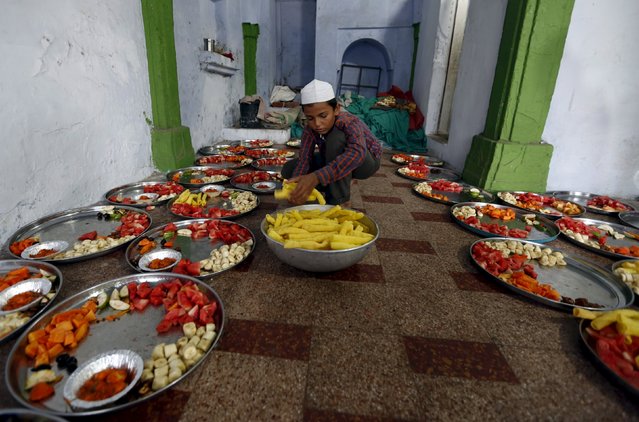
A Muslim boy prepares plates of food for an Iftar (breaking of fast) meal inside a mosque during the holy month of Ramadan in Ahmedabad, India, June 28, 2015. (Photo by Amit Dave/Reuters)

A Muslim boy prepares plates of food for an Iftar (breaking of fast) meal inside a mosque during the holy month of Ramadan in Ahmedabad, India, June 28, 2015. (Photo by Amit Dave/Reuters)
Details
29 Jun 2015 12:20:00
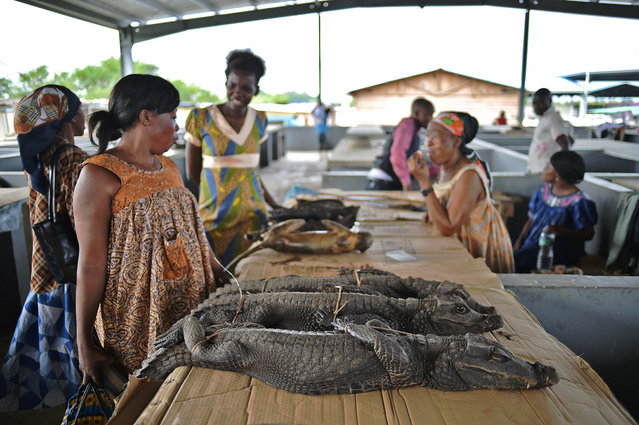
Shoppers walk past crocodiles for sale at a market in Bata on February 3, 2015. Markets in Equatorial Guinea sell a variety of animals including pangolins, monkeys and crocodiles as food. (Photo by Carl de Souza/AFP Photo)

Shoppers walk past crocodiles for sale at a market in Bata on February 3, 2015. Markets in Equatorial Guinea sell a variety of animals including pangolins, monkeys and crocodiles as food. (Photo by Carl de Souza/AFP Photo)
Details
30 Nov 2017 08:33:00
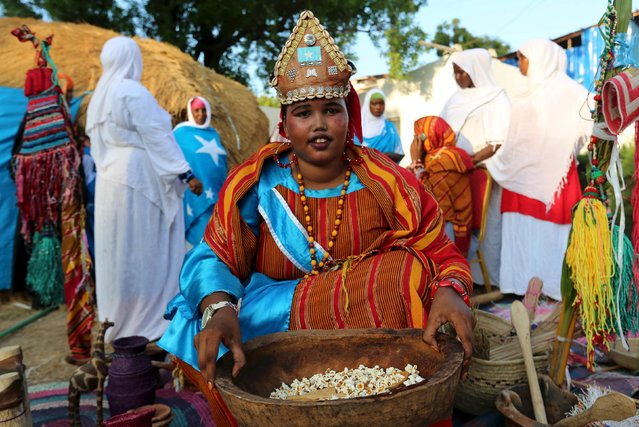
A Somali woman shows traditional items and food during an event to showcase traditional Somali culture in Hamarweyne district in the capital Mogadishu, December 3, 2015. (Photo by Feisal Omar/Reuters)

A Somali woman shows traditional items and food during an event to showcase traditional Somali culture in Hamarweyne district in the capital Mogadishu, December 3, 2015. (Photo by Feisal Omar/Reuters)
Details
05 Dec 2015 08:05:00
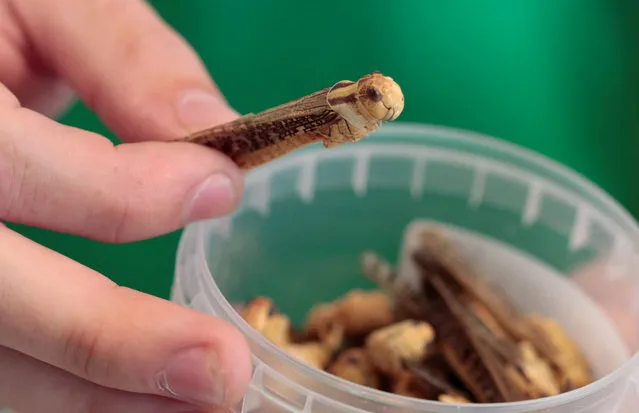
An attendee at the “Eating Insects Detroit: Exploring the Culture of Insects as Food and Feed” conference at Wayne State University shows an edible freeze-dried locust insect in Detroit, Michigan May 26, 2016. (Photo by Rebecca Cook/Reuters)

An attendee at the “Eating Insects Detroit: Exploring the Culture of Insects as Food and Feed” conference at Wayne State University shows an edible freeze-dried locust insect in Detroit, Michigan May 26, 2016. (Photo by Rebecca Cook/Reuters)
Details
29 May 2016 09:41:00
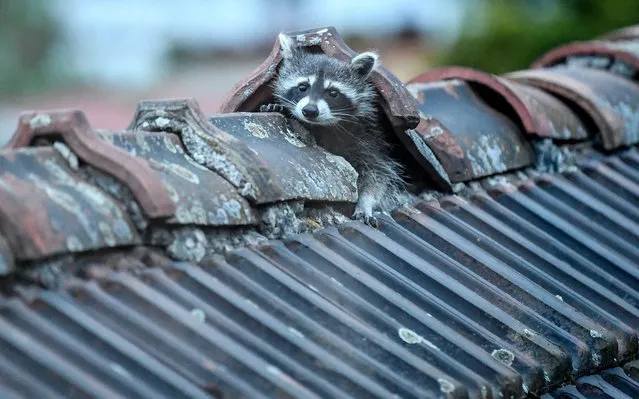
A raccoon crawls out of its hiding place on the roof in Berlin, Germany on May 12, 2020. Every evening he leaves his sleeping place to go in search of food. (Photo by Britta Pedersen/dpa-Zentralbild/dpa)

A raccoon crawls out of its hiding place on the roof in Berlin, Germany on May 12, 2020. Every evening he leaves his sleeping place to go in search of food. (Photo by Britta Pedersen/dpa-Zentralbild/dpa)
Details
17 May 2020 00:05:00