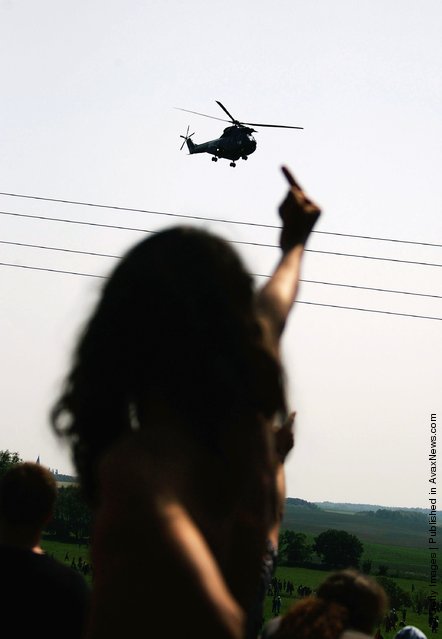
An activist of the anti-G8 forum “Block G8” shows his middle finger to a police helicopter passing overhead June 07, 2007 at Bollhagen, near Heiligendamm, Germany. (Photo by Carsten Koall/Getty Images)
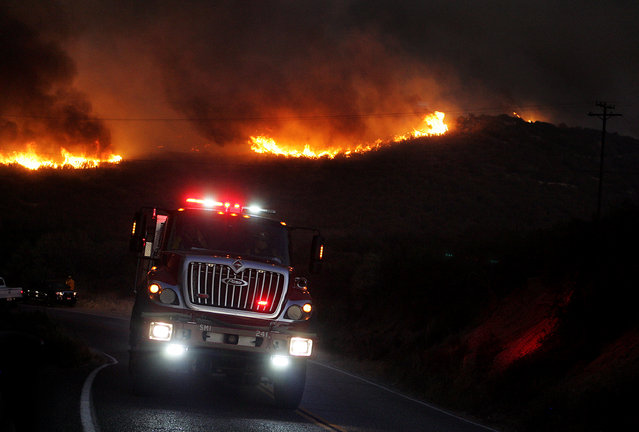
A fire engine drives away from flames on the ridge, east of Silverwood Lake in Crestline, Calif., Sunday, August 7, 2016. (Photo by Terry Peirson/The Press-Enterprise via AP Photo)
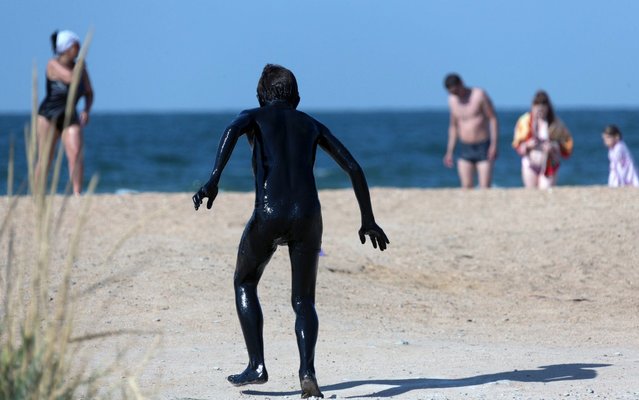
A child covered in mud on Lake Chokrak near the village of Kurortnoye, Leninsky District of Crimea in Russia on July 4, 2019. (Photo by Sergei Malgavko/TASS)
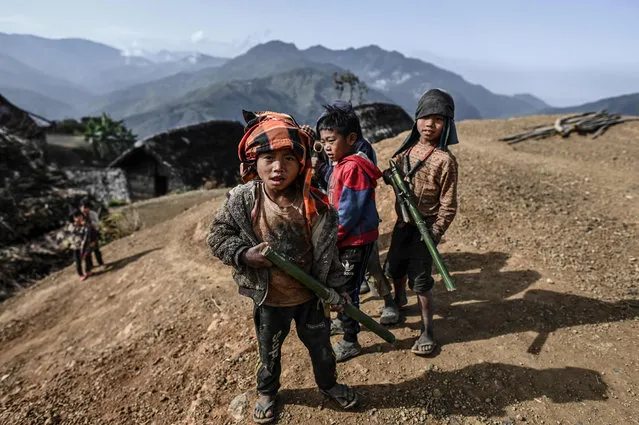
This photo taken on February 9, 2020 shows children playing in front of their homes in Tarmaw Lawri village in the Lahe township in Myanmar's Sagaing region. A haunting refrain pierces the night as the tribeswomen of the Gongwang Bonyo, among the most isolated people in Myanmar, dance around a campfire to bless the harvest ahead. (Photo by Ye Aung Thu/AFP Photo)
Two students in Birmingham, United Kingdom dressed as policewomen enjoy a takeaway on October 31, 2018. Halloween party-goers enjoyed one hell of a night for the annual fright-fest. (Photo by Caters News Agency)
Belgian Fran Vanhoutte celebrates as she crosses the finish line at the finals of the women's 500m +D speed skating event, at the World Games 2025, in Chenghdu, China, on Thursday 14 August 2025. This year, the World Games take place from 7 to 17 August. (Photo by Rex Features/Shutterstock)
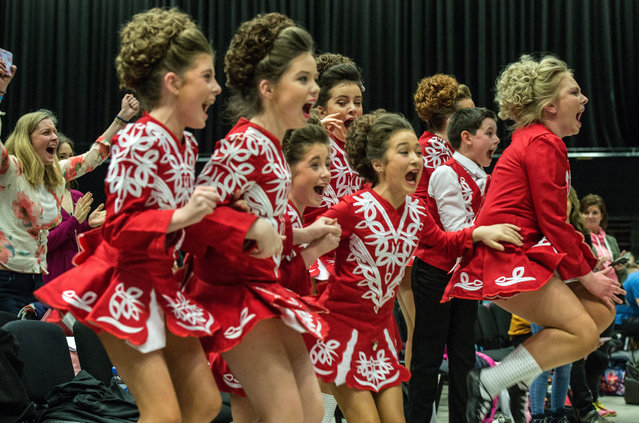
A team of Irish dancers celebrate after winning the under 12's group kaylee World Irish Dance Championship on April 2, 2016 in Brighton, England. The 8th World and 11th European Irish Dance Championships sees over 1500 dancers from 26 countries, speaking over 20 languages, competing in a variety of contests at the Brighton Centre on the city's beachfront. The event is organised by the World Irish Dance Association and is billed as the “Irish Dance Spectacular”. (Photo by Chris Ratcliffe/Getty Images)
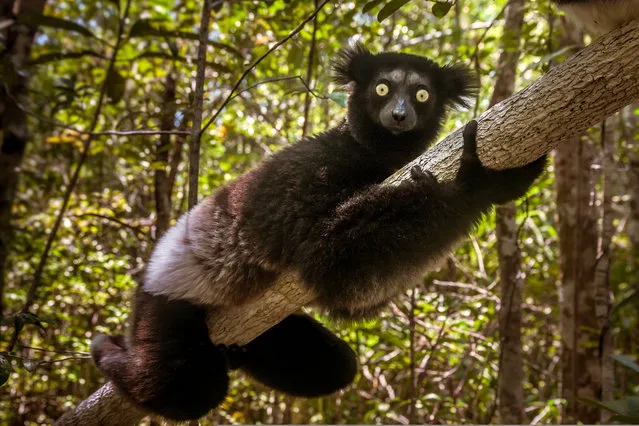
The secretive indri (Indri indri) of Madagascar, the largest living lemur. It is also critically endangered and highly evolutionarily distinct with no close relatives, which makes its branch one of most precarious on the mammal evolutionary tree. In the likely event that the indri goes extinct, we will lose 19m years of unique evolutionary history from the mammal tree of life. (Photo by Pierre-Yves Babelon/Aarhus University)