Loading...
Done
Men wear masks as they sit in the metro in Prague, Czech Republic, 17 March 2020. According to media reports, the Czech government decided to impose a two-week quarantine in the country on the evening of 15 March, and ban all international travel from 16 March 2020. Currently 383 cases of the coronavirus SARS-CoV-2, which causes the Covid-19 disease, have been officially confirmed in Czech Republic. (Photo by Martin Divisek/EPA/EFE)

Men wear masks as they sit in the metro in Prague, Czech Republic, 17 March 2020. According to media reports, the Czech government decided to impose a two-week quarantine in the country on the evening of 15 March, and ban all international travel from 16 March 2020. Currently 383 cases of the coronavirus SARS-CoV-2, which causes the Covid-19 disease, have been officially confirmed in Czech Republic. (Photo by Martin Divisek/EPA/EFE)
Details
19 Mar 2020 00:07:00
People stand in queue keeping social distance beside a Covid-19 awareness scarecrows placed by Chennai municipality at a market during a government-imposed nationwide lockdown as a preventive measure against the COVID-19 coronavirus, in Chennai on April 11, 2020. (Photo by Arun Sankar/AFP Photo)

People stand in queue keeping social distance beside a Covid-19 awareness scarecrows placed by Chennai municipality at a market during a government-imposed nationwide lockdown as a preventive measure against the COVID-19 coronavirus, in Chennai on April 11, 2020. (Photo by Arun Sankar/AFP Photo)
Details
13 Apr 2020 00:07:00
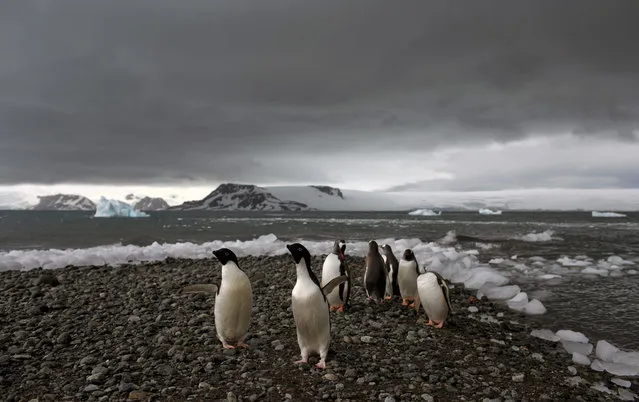
In this January 27, 2015 photo, penguins walk on the shore of Bahia Almirantazgo in Antarctica.  Antarctica “is big and it's changing and it affects the rest of the planet and we can't afford to ignore what's going on down there”, said David Vaughan, science director of the British Antarctic Survey. (Photo by Natacha Pisarenko/AP Photo)

In this January 27, 2015 photo, penguins walk on the shore of Bahia Almirantazgo in Antarctica. Antarctica “is big and it's changing and it affects the rest of the planet and we can't afford to ignore what's going on down there”, said David Vaughan, science director of the British Antarctic Survey. (Photo by Natacha Pisarenko/AP Photo)
Details
22 Feb 2015 10:45:00
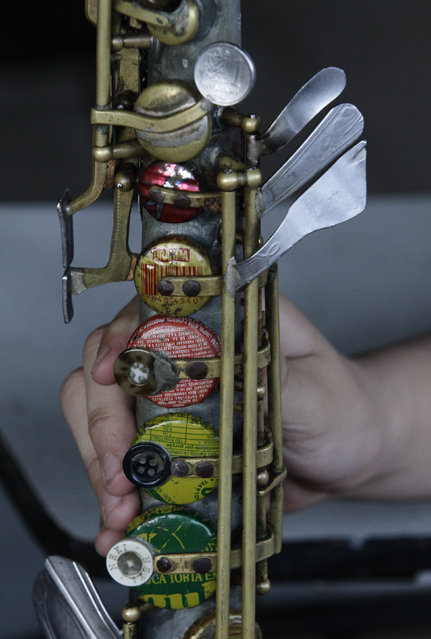
A student of the Orchestra of Recycled Instruments of Cateura holds an instrument made from recycled material by craftsman Nicolas Gomez, in Cateura, near Asuncion, May 9, 2013. The orchestra is the brainchild of its conductor Favio Chavez, who wanted to help the children of garbage pickers at the local landfill, and the instruments are made from salvaged materials by craftsman Gomez. (Photo by Jorge Adorno/Reuters)

A student of the Orchestra of Recycled Instruments of Cateura holds an instrument made from recycled material by craftsman Nicolas Gomez, in Cateura, near Asuncion, May 9, 2013. The orchestra is the brainchild of its conductor Favio Chavez, who wanted to help the children of garbage pickers at the local landfill, and the instruments are made from salvaged materials by craftsman Gomez. The orchestra now involves 30 schoolchildren who have toured countries in Latin America, North America and Europe to play music ranging from Beethoven and Mozart to the Beatles and Paraguayan folk songs. (Photo by Jorge Adorno/Reuters)
Details
12 Jul 2013 09:23:00
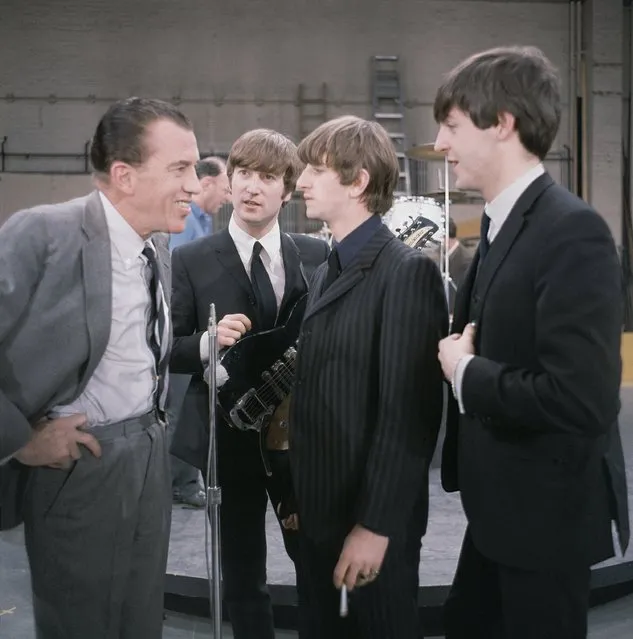
The British rock and roll group the Beatles talk to Ed Sullivan at CBS Studio 50 before their live television appearance on “The Ed Sullivan Show” in New York, February 10, 1964. From left to right are, Sullivan, John Lennon, Ringo Starr, holding a cigarette, and Paul McCartney. (Photo by AP Photo)

The British rock and roll group the Beatles talk to Ed Sullivan at CBS Studio 50 before their live television appearance on “The Ed Sullivan Show” in New York, February 10, 1964. From left to right are, Sullivan, John Lennon, Ringo Starr, holding a cigarette, and Paul McCartney. (Photo by AP Photo)
Details
09 Feb 2014 10:47:00
The antennas of the European Southern Observatory's Atacama Large Millimeter/Submillimeter Array, also known as ALMA, are set against the splendor of the Milky Way in this picture by Babak Tafreshi

The antennas of the European Southern Observatory's Atacama Large Millimeter/Submillimeter Array, also known as ALMA, are set against the splendor of the Milky Way in this picture by Babak Tafreshi. Construction of the full ALMA array is due to be completed in Chile's Atacama Desert in 2013, but the facility is already making scientific observations with a partial array of antennas. (Photo by ESO/B. Tafreshi/TWAN)
Details
03 Jun 2012 11:57:00
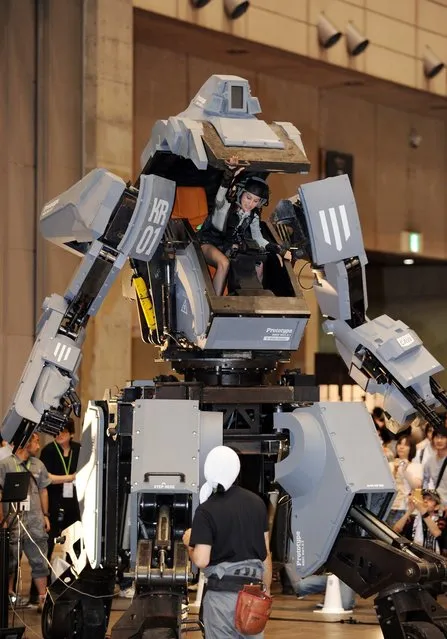
Female “pilot” Anna (C) climbs out the cockpit of Japanese electronics company Suidobashi Heavy Industry's newly unveiled robot “Kuratas” at the Wonder Festival in Chiba, suburban Tokyo on July 29, 2012. The Kuratas robot, which will go on sale with a price tag of one million USD, measures four meters in height, weighs four tons and has four wheeled legs that can either be controlled remotely through the 3G network or by a human seated within the cockpit.

Female pilot Anna climbs out the cockpit of Japanese electronics company Suidobashi Heavy Industry's newly unveiled robot “Kuratas” at the Wonder Festival in Chiba, suburban Tokyo on July 29, 2012. The “Kuratas” robot, which will go on sale with a price tag of one million USD, measures four meters in height, weighs four tons and has four wheeled legs that can either be controlled remotely through the 3G network or by a human seated within the cockpit. (Photo by Yoshikazu Tsuno/AFP Photo)
Details
30 Jul 2012 09:26:00
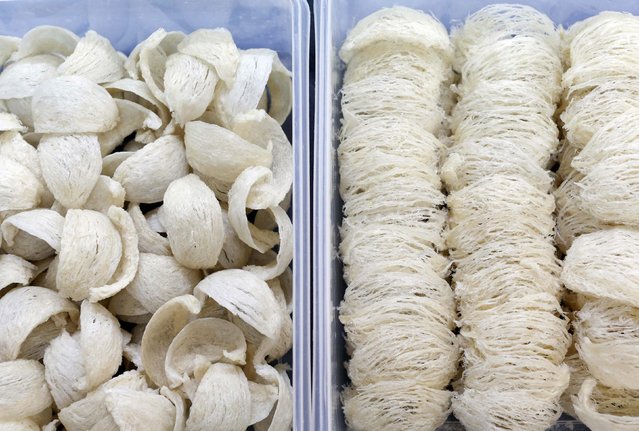
Two styles of cleaned bird's nest, Yan Zhan (L) and Su Zhan (R) await repacking at a processing plant in Kuala Lumpur, February 17, 2015. Prized in China for is alleged health benefits for hundreds of years, nests made from swiftlets' saliva are being mixed into coffee and cereal as the Southeast Asian producers of the delicacy seek to broaden its appeal, and their profit margins. (Photo by Olivia Harris/Reuters)

Two styles of cleaned bird's nest, Yan Zhan (L) and Su Zhan (R) await repacking at a processing plant in Kuala Lumpur, February 17, 2015. Prized in China for is alleged health benefits for hundreds of years, nests made from swiftlets' saliva are being mixed into coffee and cereal as the Southeast Asian producers of the delicacy seek to broaden its appeal, and their profit margins. The nests are among the world's most expensive foods, selling for up to $2,500 a kg and the swiftlets that weave them are indigenous to Indonesia, Malaysia, Thailand and Vietnam. (Photo by Olivia Harris/Reuters)
Details
24 Feb 2015 13:57:00