Loading...
Done
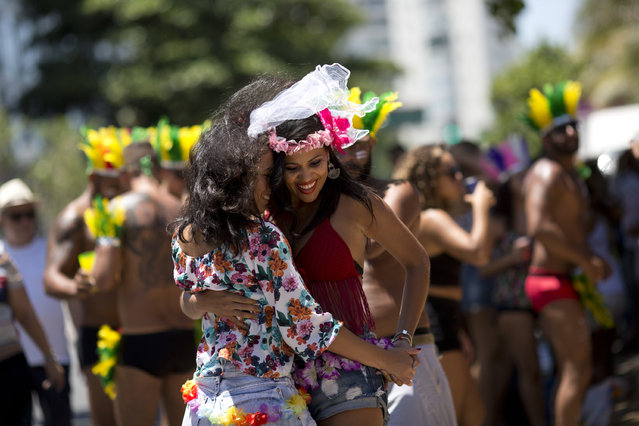
In this February 19, 2017 photo, a couple dances during the “If you don't give me....then you lend me” Carnival street party on Ipanema beach, in Rio de Janeiro, Brazil. The typical view of Carnival in Brazil is anything goes, with no headdress too big, no outfit too small, no song too ribald, but this year some organizers of the world's best known party are drawing the line at lyrics that are sexist, homophobic or racist. (Photo by Silvia Izquierdo/AP Photo)

In this February 19, 2017 photo, a couple dances during the “If you don't give me....then you lend me” Carnival street party on Ipanema beach, in Rio de Janeiro, Brazil. The typical view of Carnival in Brazil is anything goes, with no headdress too big, no outfit too small, no song too ribald, but this year some organizers of the world's best known party are drawing the line at lyrics that are sexist, homophobic or racist. (Photo by Silvia Izquierdo/AP Photo)
Details
24 Feb 2017 00:06:00
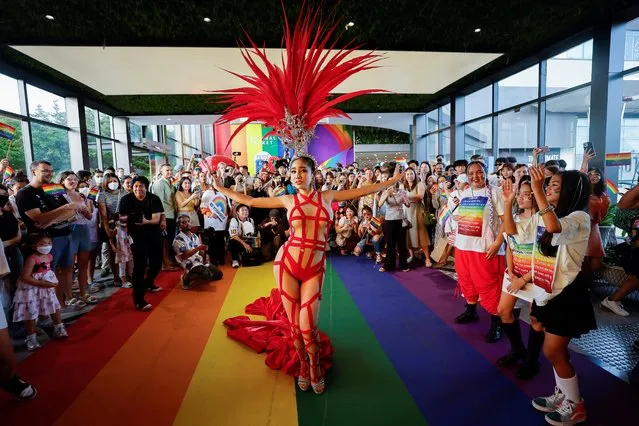
A person takes part in the annual LGBTQ+ Pride parade in Phuket, Thailand on June 4, 2023. (Photo by Jorge Silva/Reuters)

A person takes part in the annual LGBTQ+ Pride parade in Phuket, Thailand on June 4, 2023. (Photo by Jorge Silva/Reuters)
Details
09 Jun 2023 03:02:00
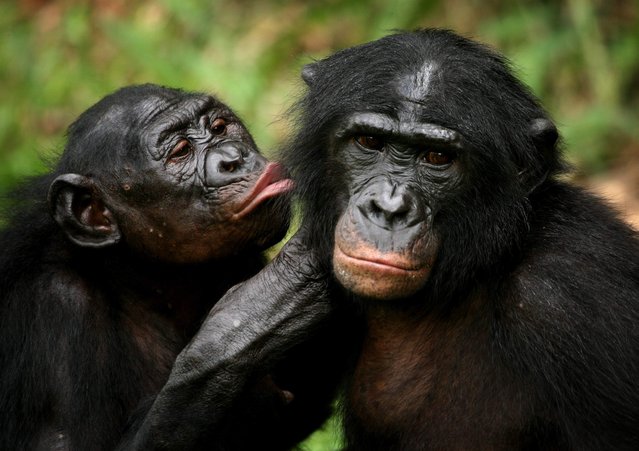
Bonobo apes, primates unique to Congo and humankind's closest relative, groom one another at a sanctuary just outside the capital Kinshasa, Congo on October 31, 2006. (Photo by Finbarr O'Reilly/Reuters)

Bonobo apes, primates unique to Congo and humankind's closest relative, groom one another at a sanctuary just outside the capital Kinshasa, Congo on October 31, 2006. (Photo by Finbarr O'Reilly/Reuters)
Details
08 Feb 2017 00:01:00
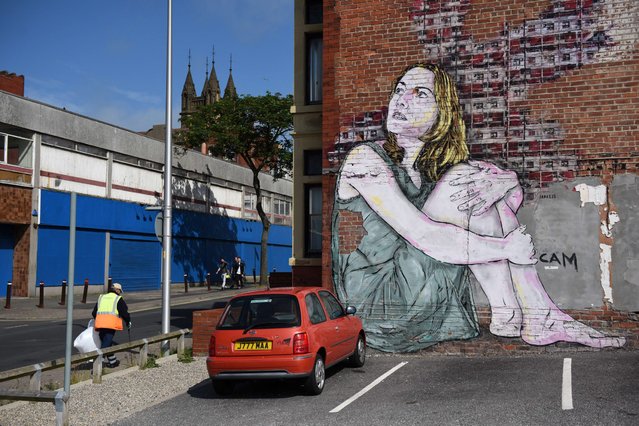
A workman walks past a large mural on the side of a building during the “Sand Sea & Spray” Urban Art Festival in Blackpool, north west England on July 11, 2015. (Photo by Oli Scarff/AFP Photo)

A workman walks past a large mural on the side of a building during the “Sand Sea & Spray” Urban Art Festival in Blackpool, north west England on July 11, 2015. (Photo by Oli Scarff/AFP Photo)
Details
07 Oct 2015 08:04:00
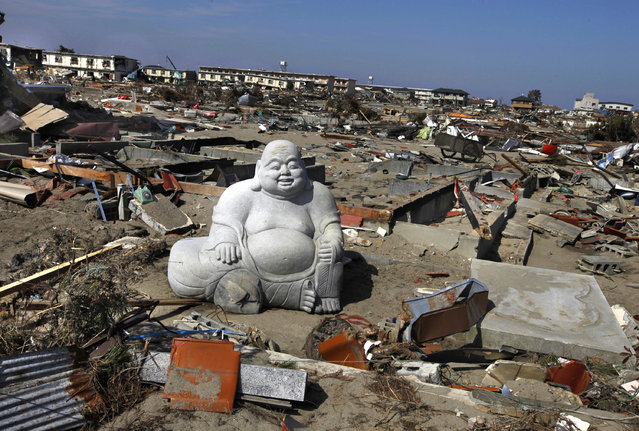
A statue of Hotei Buddha sits in the debris in the  tsunami-destroyed town of Sendai, Miyagi Prefecture, northern Japan Friday, April 1, 2011. (Photo by Vincent Yu/AP Photo)

Vincent Yu is a multiple award winner who won Honorable Mention in the 2013 Photographer of the Year category for Pictures of the Year International. Photo: A statue of Hotei Buddha sits in the debris in the tsunami-destroyed town of Sendai, Miyagi Prefecture, northern Japan Friday, April 1, 2011. (Photo by Vincent Yu/AP Photo)
Details
30 Mar 2014 11:26:00
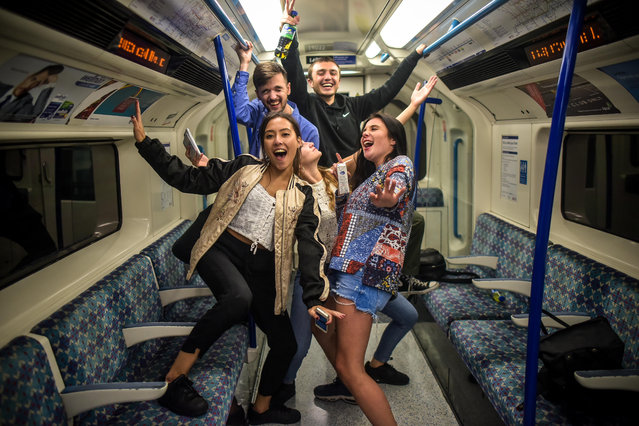
A group of people are seen on a Victoria line train in London, England during the first night of the Night Tube service on August 19 2016. The Central line and Victoria line are the first to operate a Night service with further lines expected to be running by the end of the year. (Photo by SWNS.com)

A group of people are seen on a Victoria line train in London, England during the first night of the Night Tube service on August 19 2016. The Central line and Victoria line are the first to operate a Night service with further lines expected to be running by the end of the year. (Photo by SWNS.com)
Details
28 Sep 2016 11:25:00
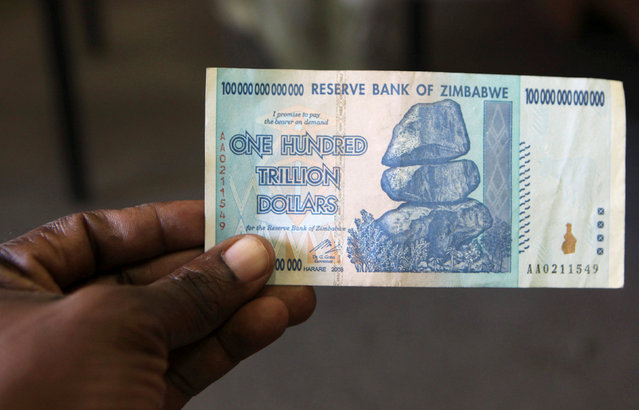
A man holds up for a picture a one hundred trillion Zimbabwean dollars note inside a shop in Harare, Zimbawe, June 12, 2015. (Photo by Philimon Bulawayo/Reuters)

A man holds up for a picture a one hundred trillion Zimbabwean dollars note inside a shop in Harare, Zimbawe, June 12, 2015. Hyperinflation in Zimbabwe was a period of currency instability that began in the late 1990s shortly after the confiscation of private farms from landowners, towards the end of Zimbabwean involvement in the Second Congo War. During the height of inflation from 2008 to 2009, it was difficult to measure Zimbabwe's hyperinflation because the government of Zimbabwe stopped filing official inflation statistics. However, Zimbabwe's peak month of inflation is estimated at 79.6 billion percent in mid-November 2008. (Photo by Philimon Bulawayo/Reuters)
Details
25 Oct 2016 10:08:00
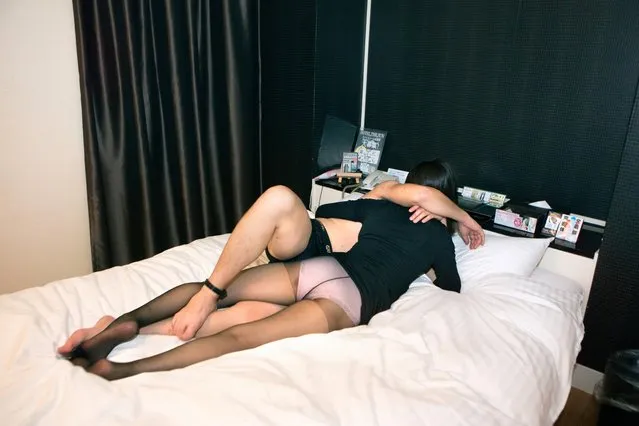
For her series “Japanese Whispers”, Belgian photographer Zaza Bertrand headed inside the intimate world of rabuhos – Japanese love hotels. Love hotels became popular in Japan from the 1960s onwards, due to a lack of privacy in many family homes. There are now around 37,000 of these hotels in Japan, allowing short daytime “rests” or overnight stays. (Photo by Zaza Bertrand/The Guardian)

For her series “Japanese Whispers”, Belgian photographer Zaza Bertrand headed inside the intimate world of rabuhos – Japanese love hotels. Love hotels became popular in Japan from the 1960s onwards, due to a lack of privacy in many family homes. There are now around 37,000 of these hotels in Japan, allowing short daytime “rests” or overnight stays. (Photo by Zaza Bertrand/The Guardian)
Details
02 Dec 2016 11:30:00