Loading...
Done
A South African police officer speaks to residents of the densely populated Alexandra township east of Johannesburg Friday, March 27, 2020. (Photo by Jerome Delay/AP Photo)

A South African police officer speaks to residents of the densely populated Alexandra township east of Johannesburg Friday, March 27, 2020. (Photo by Jerome Delay/AP Photo)
Details
09 Apr 2020 00:01:00


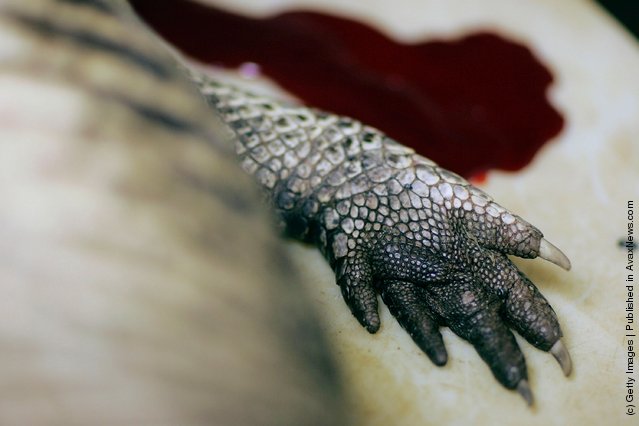
An alligator is skinned at All American Gator August 16, 2006 in Pembroke Park, Florida. The company processes gators for their skins, meat and trophies and was at full capacity a day after the start of gator hunting season. This year more than 4,000 licenses were sold with each license allowing hunters to kill two gators. The hunt has been expanded by 41 days over previous years, running August 15 to November 1. (Photo by Joe Raedle/Getty Images)
Details
04 Apr 2011 10:51:00


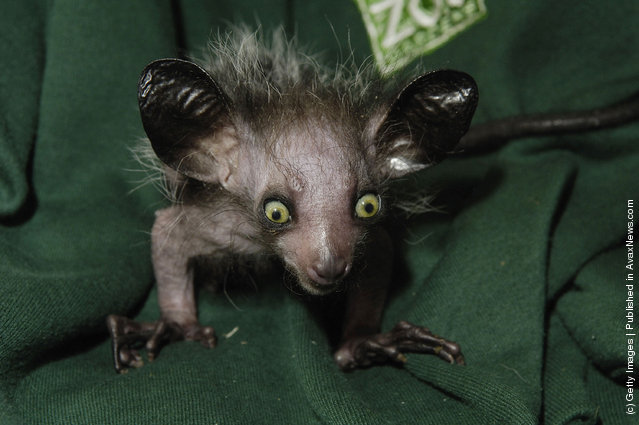
“The aye-aye (Daubentonia madagascariensis) is a lemur, a strepsirrhine primate native to Madagascar that combines rodent-like teeth and a special thin middle finger to fill the same ecological niche as a woodpecker. It is the world's largest nocturnal primate, and is characterized by its unusual method of finding food; it taps on trees to find grubs, then gnaws holes in the wood and inserts its narrow middle finger to pull the grubs out. The only other animal species known to find food in this way is the striped possum. From an ecological point of view the aye-aye fills the niche of a woodpecker as it is capable of penetrating wood to extract the invertebrates within”. – Wikipedia

Photo: In this handout image from Bristol Zoo is seen the first captive bred aye-aye in the UK named “Kintana” (meaning star in Malagasy) April 15, 2005 at Bristol Zoo Gardens, England. The zoo announced today only the second baby aye-aye to be hand-reared in the world (the first was in Jersey Zoo) and has now made his first public appearance since his birth on 11 February 2005. (Photo by Rob Cousins/Bristol Zoo via Getty Images)
Details
13 Apr 2011 13:33:00
A member of security personnel stands on duty on an empty train platform inside a station on the Subway Line Number 1 on the eve of the Chinese Lunar New Year, in Beijing, China, February 7, 2016. According to local media, traffic in Beijing has seen a rare relief from its usual heavy pressure after 15 million people have left the city, heading for family reunions in their hometowns on the eve of the Chinese Lunar New Year of Monkey. (Photo by Jason Lee/Reuters)

A member of security personnel stands on duty on an empty train platform inside a station on the Subway Line Number 1 on the eve of the Chinese Lunar New Year, in Beijing, China, February 7, 2016. According to local media, traffic in Beijing has seen a rare relief from its usual heavy pressure after 15 million people have left the city, heading for family reunions in their hometowns on the eve of the Chinese Lunar New Year of Monkey. (Photo by Jason Lee/Reuters)
Details
08 Feb 2016 11:11:00
Marge Simspon in “Fire Suit”, Thierry Mugler.

Marge Simpson may be many things (doting mother, long-suffering wife, erratic driver), but she’s not usually a style icon. Thanks to artist Alexsandro Palombo – known for his irreverent and colourful fashion cartoons – she is now, as he re-imagines her in some of the most iconic dresses of all time. Photo: Marge Simspon in “Fire Suit”, Thierry Mugler.
Details
26 Nov 2013 09:06:00
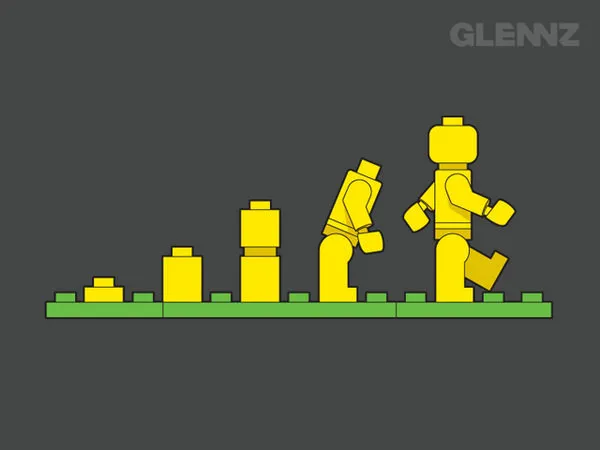
Funny Illustrations by Glenn Jones

Glenn Jones is a graphic designer and illustrator from Auckland, New Zealand. Design is one of his great hobbies and he has worked in the industry for over 15 years. Glenn Jones submitted T-shirt designs to Threadless.com before, and worked there for a few success years. Now he is concentrating on his own range of T-shirts at Glennz Tees.
The following are some designs of his T-shirts. Have fun and course you can vote to elect your favorite one in his online t-shirt store.
Details
11 Jan 2013 14:55:00
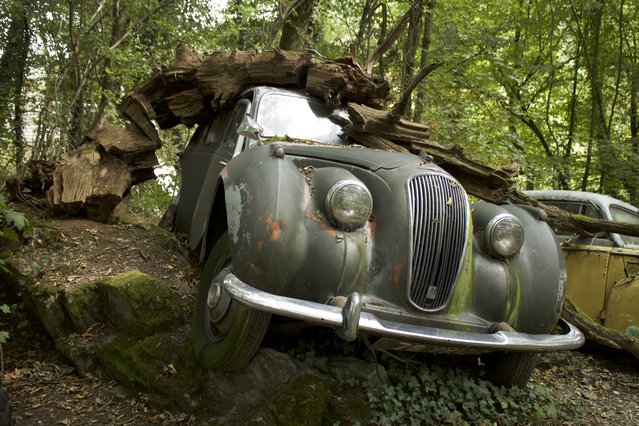
Michael Fröhlich's Jowett Javelin rotting car in his forest sculpture park in Neandertal Germany, September 11, 2016. An eccentric artist has collected fifty vintage cars and left them to rot in a forest – and now they're worth over $1 million. Former racing driver Michael Fröhlich, from Dusseldorf, Germany, has purposely crashed the cars into trees, buried them in mud and parked them on cliff faces in his estate's garden in the middle of the German Neanderthal. His collections includes a Jaguar XK120 worth $170,000, a Porsche 356 racer and a Buick worth $17,000. Perhaps his most interesting collectable is a Rolls Royce, with a purposefully misspelt “Buckingham Palace” – replacing the B with an F – emblazoned on the side with a replica of the Queen Elizabeth at the wheel. (Photo by Christoph Hagen/Barcroft Images)

Michael Fröhlich's Jowett Javelin rotting car in his forest sculpture park in Neandertal Germany, September 11, 2016. An eccentric artist has collected fifty vintage cars and left them to rot in a forest – and now they're worth over $1 million. Former racing driver Michael Fröhlich, from Dusseldorf, Germany, has purposely crashed the cars into trees, buried them in mud and parked them on cliff faces in his estate's garden in the middle of the German Neanderthal. His collections includes a Jaguar XK120 worth $170,000, a Porsche 356 racer and a Buick worth $17,000. (Photo by Christoph Hagen/Barcroft Images)

Details
24 Sep 2016 10:56:00
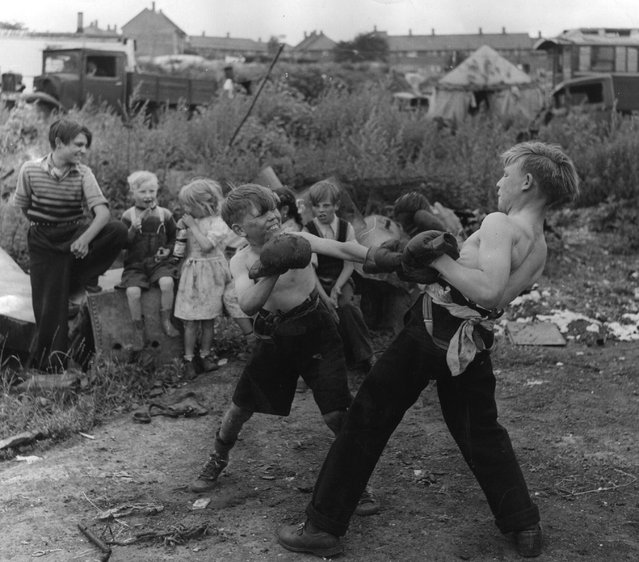
The unromantic gypsies. Children boxing in a gypsy camp in Kent, England on July 1, 1951. Like all boys these gypsy lads like to try their hand at boxing. Encouraged by their friends they fight it out on Corke's Meadow. Few Romanies now live a life of wandering romance. Most are like the three hundred squatters of Corke's Meadow, Kent, which is part of a “gypsy problem” that involves about 100,000 today. Of those about 25,000 can be rightly called gypsies, the rest are Mumpers and Posh-rats and Hobos. Corke's Meadow has both kinds. “Picture Post” cameraman Bert Hardy photographs the Corke's Meadow gypsies in their encampment. (Photo by Hulton-Deutsch Collection/Corbis via Getty Images)

The unromantic gypsies. Children boxing in a gypsy camp in Kent, England on July 1, 1951. Like all boys these gypsy lads like to try their hand at boxing. Encouraged by their friends they fight it out on Corke's Meadow. Few Romanies now live a life of wandering romance. Most are like the three hundred squatters of Corke's Meadow, Kent, which is part of a “gypsy problem” that involves about 100,000 today. Of those about 25,000 can be rightly called gypsies, the rest are Mumpers and Posh-rats and Hobos. Corke's Meadow has both kinds. “Picture Post” cameraman Bert Hardy photographs the Corke's Meadow gypsies in their encampment. (Photo by Hulton-Deutsch Collection/Corbis via Getty Images)
Details
12 Mar 2017 00:01:00