Loading...
Done
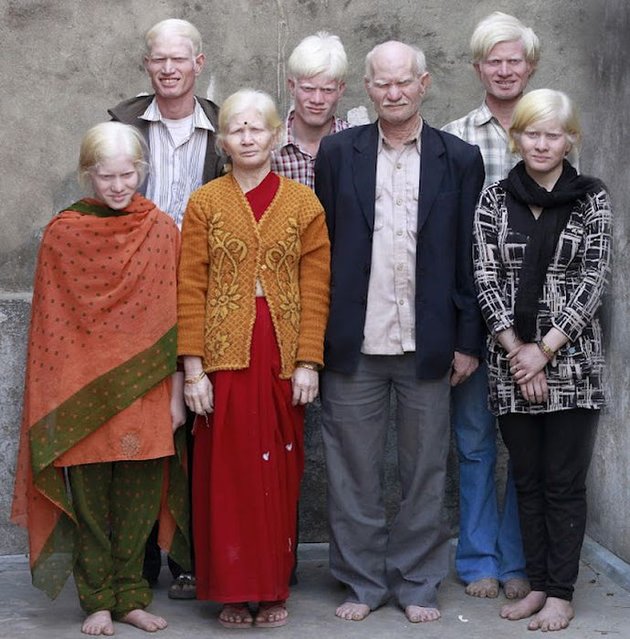
World's Biggest Albino Family

A white-skinned Indian couple are set to enter the record books along with their offspring, after becoming the world's biggest albino family. The ten members of the Pullan family, headed by Rosetauri, 50, and his wife Mani, 45, all have the extremely pale skin and near-white hair of albinos.But despite years of prejudice and suffering the poor vision which is a side effect of the condition, the Pullans and their eight other family members are set to land a Guinness World Record.
Details
27 Sep 2013 10:30:00
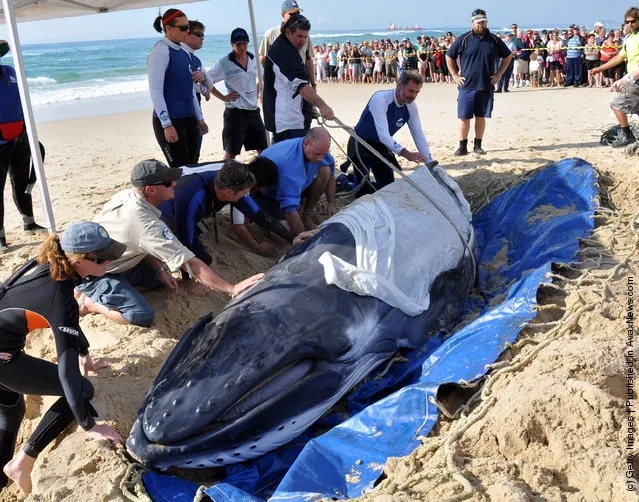
Volunteer rescue a beached humpback calf to sea at Surfers Paradise Beach on the Gold Coast, Australi

Volunteer rescuers prepare to drag a beached humpback calf to sea at Surfers Paradise Beach on August 8, 2011 on the Gold Coast, Australia. The humpback calf was stranded on the beach yesterday for hours before volunteer rescuers were able to drag it back to the sea. SeaWorld Australia says a mother and calf humpback were sighted near where the calf was released and are hoping to get photos to verify it is the same calf and that it has been reunited with it's mother. (Photo by 2011 SeaWorld Australia via Getty Images)
Details
09 Aug 2011 12:26:00
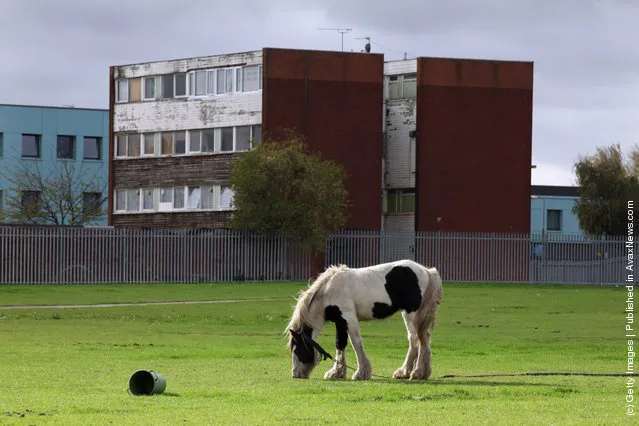
A pet horse

A pet horse tethered on land known as “The Cracker” in Tipton that may be seized by bailiffs on October 10, 2011 in Dudley, England. Horse lovers in Tipton are battling the local council over the tradition of keeping their horses tethered on public land near their homes. Locals say tradition that has been in existence for generations and believe it stems from the age of the canal when many local men used their horses to tow canal barges along the industrial Black Country canals. After a spate of horses running free Sandwell Council are now enforcing the law and impounding tethered horses. Locals are planning their next protest with a horse drive to the council headquarters to try and save their traditions. (Photo by Christopher Furlong/Getty Images)
Details
14 Oct 2011 09:10:00
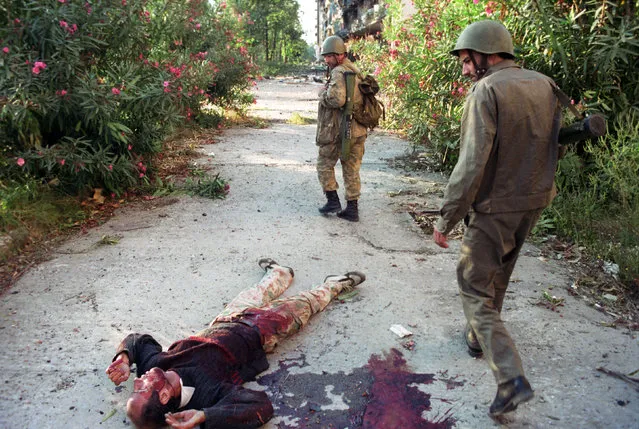
Abkhazia. Sukhumi, 1993. A house-to-house combat. (Photo by Andrei Solovyov/ITAR-TASS)

The War in Abkhazia from 1992 to 1993 was fought between Georgian government forces for the most part, and Abkhaz separatist forces, Russian armed forces and North Caucasian militants. Ethnic Georgians who lived in Abkhazia fought largely on the side of Georgian government forces. Ethnic Armenians and Russians within Abkhazia's population largely supported the Abkhazians, and many fought on their side. The separatists received support from thousands of North Caucasus and Cossack militants and from the Russian Federation forces stationed in and near Abkhazia. Here: Abkhazia. Sukhumi, 1993. A house-to-house combat. (Photo by Andrei Solovyov/ITAR-TASS)
Details
29 Sep 2017 07:31:00
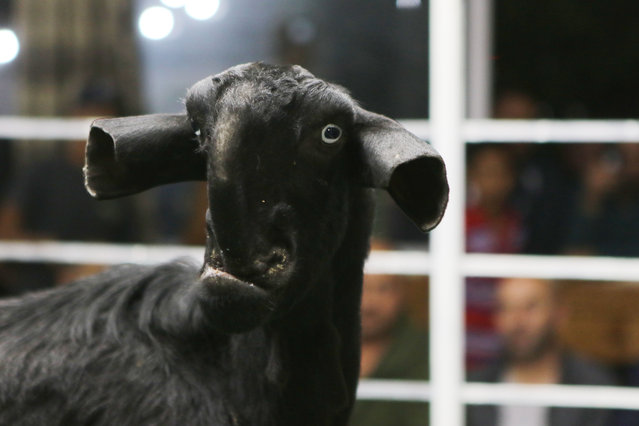
A Goat is displayed on a stage for animal breeders and collectors during a rare levant goat auction and exhibition on April, 27, 2018, in Amman, Jordan. (Photo by Salah Malkawi/Getty Images)

A Goat is displayed on a stage for animal breeders and collectors during a rare levant goat auction and exhibition on April, 27, 2018, in Amman, Jordan. Animal breeders participants came from Kuwait, Saudi Arabia, UAE, Qatar and Palestine to bid on rare goats at the Jrdanian breeder Yahya Abu Jaber near the Jordanian capital. (Photo by Salah Malkawi/Getty Images)
Details
02 May 2018 00:03:00
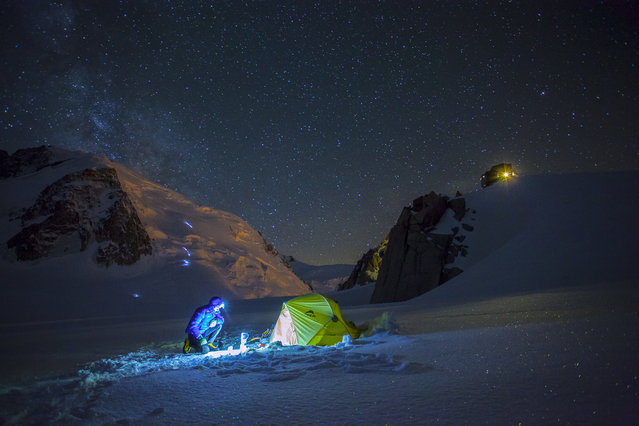
“A snapshot from mountaineer's life”. Have you ever wondered how does a mountaineer's day start? (Photo and caption by Kamil Tamiola/National Geographic Traveler Photo Contest)

“A snapshot from mountaineer's life”. Have you ever wondered how does a mountaineer's day start? I will give you a hint: you wake up at 3 am, set the stove, wake up your partner, pretend it is warm, quickly consume a high-calorie breakfast, watch your friends slowly ascending the icy slopes of your dream summit with their tiny head torches glimmering against perfectly blue ice, and hope for the good weather. One would ask: why all this trouble? The answer is easy: for the love of the adventure and the unknown. Location: Chamonix, Haute Savoye, France. (Photo and caption by Kamil Tamiola/National Geographic Traveler Photo Contest)

ATTENTION! All pictures are presented in high resolution. To see Hi-Res images – just TWICE click on any picture. In other words, click small picture – opens the BIG picture. Click BIG picture – opens VERY BIG picture.
Details
27 Jun 2013 12:47:00
Chernobyl

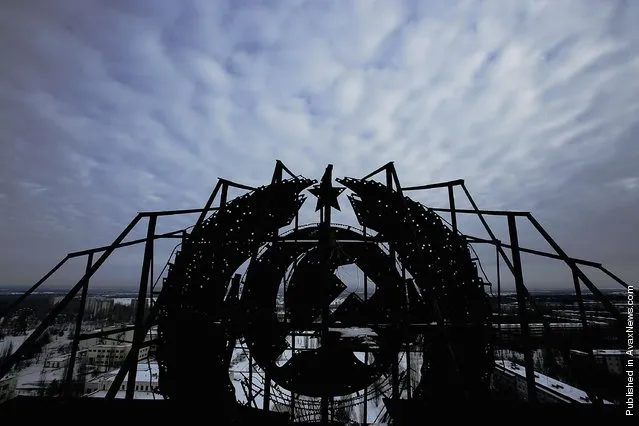
Scaffolding holding a remnant of the Soviet Union, the hammer and sickle, is seen on a rooftop of an abandoned building in the town of Pripyat on January 25, 2006 near Chernobyl, Ukraine. The town of Pripyat, deserted since the 1986 catastrophe, once housed 30,000 people, the majority of being workers from the Chernobyl Nuclear Power Plant. Days after the catastrophe the inhabitants were relocated to other locations in the Soviet Union. The town of Pripyat has remained uninhabited since. Prypyat and the surrounding area will not be safe for human habitation for several centuries. Scientists estimate that the most dangerous radioactive elements will take up to 900 years to decay sufficiently to render the area safe.
Details
14 Mar 2011 10:20:00


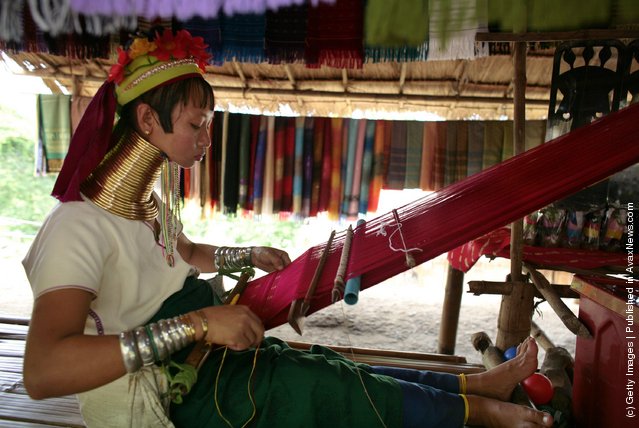
Mah Chan, a Long Neck Padaung hill tribe woman weaves a scraf for sale to tourists in a small village where 30 familes live July 13, 2006 in Chiang Dao, Thailand. All the Long Neck villages are set up for tourists and just over a year ago the hill tribe members were hand picked to move closer to Chiang Mai from more remote communities so that they could be more accessible. The Padaung women famously wear brass rings around their necks, beginning at five-years-old, to distort the growth of their collarbones and making them look like they have long necks. They are originally from eastern Burma near the Thailand border. (Photo by Paula Bronstein/Getty Images)
Details
19 Apr 2011 11:56:00