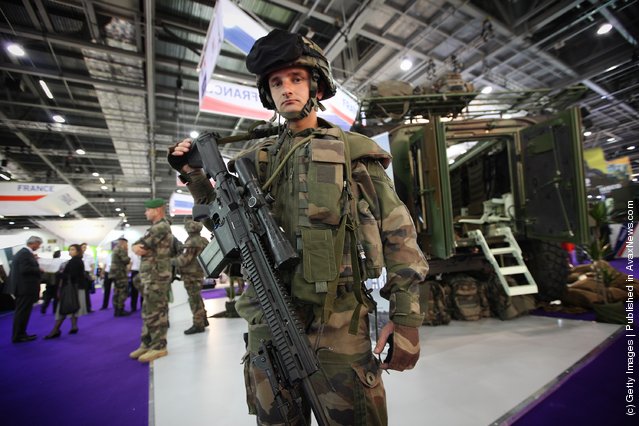
A French soldier stands near a military combat command vehicle on display at The Defence and Security Exhibition on September 13, 2011 in London, England. ExCeL London is hosting the exhibition with hundreds of manufacturers from all over the world displaying their hardware. (Photo by Peter Macdiarmid/Getty Images)
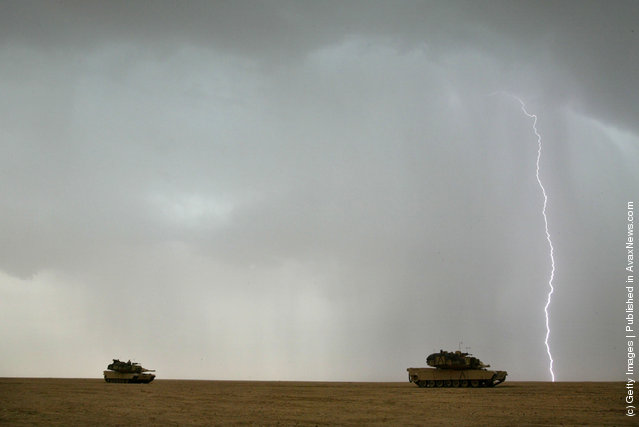
A lighting bolt flashes in the sky as U.S. Army M1A1 Abram tanks roll through the desert December 9, 2002 near the Iraqi border in Kuwait. (Photo by Joe Raedle/Getty Images)
Co-Host Kristin Chenoweth speaks onstage at the American Country Awards 2011 at the MGM Grand Garden Arena on December 5, 2011 in Las Vegas, Nevada. (Photo by Ethan Miller/Getty Images)
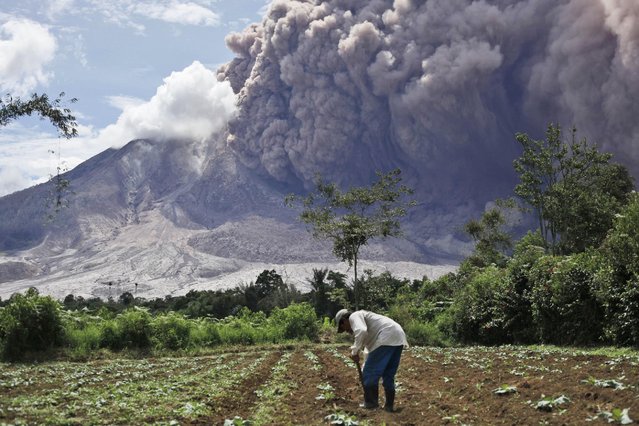
A farmer tends to his field as Mount Sinabung releases pyroclastic flows in Tiga Pancur, North Sumatra, Indonesia, Saturday, June 13, 2015. The volcano, which was put on it highest alert level last week, has sporadically erupted since 2010 after being dormant for 400 years. (AP Photo/Binsar Bakkara)
Female soldiers with their faces painted in the colours of the Venezuelan flag, march during a military parade to celebrate the anniversary of Venezuela's independence in Caracas, July 5, 2015. (Photo by Jorge Dan Lopez/Reuters)
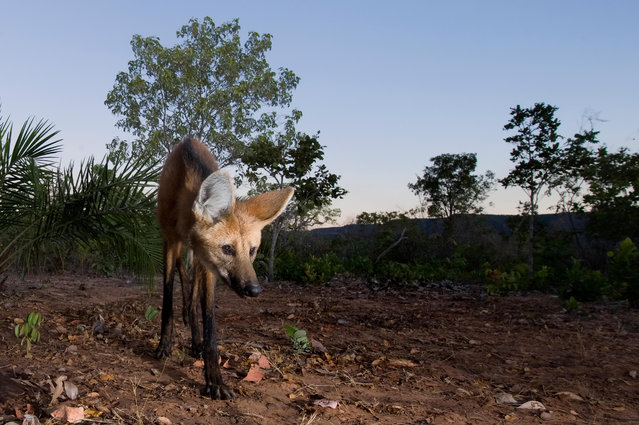
Global wildlife populations will decline by 67% by 2020 unless urgent action is taken to reduce human impact on species and ecosystems, warns the biennial Living Planet Index report from WWF (World Wide Fund for Nature) and ZSL (Zoological Society of London). From elephants to eels, here are some of the wildlife populations most affected by human activity. Here: The maned wolf is among the large mammals in the Brazilian Cerrado that are threatened by the increasing conversion of grasslands into farmland for grazing and growing crops. (Photo by Ben Cranke/Nature Picture Library/Alamy Stock Photo)