Loading...
Done
#6. Vietnam, Total GDP: USD 202.6 billion (2016). Contribution of Travel and Tourism to GDP: 9.1% . Here: A boat in the Thu Bon River, Hoi An, Vietnam. (Photo by Domingo Leiva/Getty Images)

South Asian countries in terms of total contribution of travel and tourism to GDP. #6. Vietnam, Total GDP: USD 202.6 billion (2016). Contribution of Travel and Tourism to GDP: 9.1% . Here: A boat in the Thu Bon River, Hoi An, Vietnam. (Photo by Domingo Leiva/Getty Images)
Details
06 Dec 2017 07:03:00
Japanese chorus girls appear to be drilling in military tactics atop their theater building as they perform salutes, June 30, 1937. The officer is from the Japanese regular army and says the girls display more rhythm in their drills than do the regular troops. (Photo by AP Photo)

Japanese chorus girls appear to be drilling in military tactics atop their theater building as they perform salutes, June 30, 1937. The officer is from the Japanese regular army and says the girls display more rhythm in their drills than do the regular troops. (Photo by AP Photo)
Details
12 Jul 2017 07:35:00
Picture dated January 16th, 2023 the Red Arrows training over RAF Scampton in Lincolnshire. The Red Arrows continued their winter training over RAF Scampton in Lincolnshire yesterday, Monday. The planes were seen soaring across the sky and leaving trails of smoke as they practised their famous aircraft formations. The vapour trails were illuminated by the sunlight as the planes rehearsed in the late afternoon. (Photo by Caroline Haycock/Bav Media)

Picture dated January 16th, 2023 the Red Arrows training over RAF Scampton in Lincolnshire. The Red Arrows continued their winter training over RAF Scampton in Lincolnshire yesterday, Monday. The planes were seen soaring across the sky and leaving trails of smoke as they practised their famous aircraft formations. The vapour trails were illuminated by the sunlight as the planes rehearsed in the late afternoon. (Photo by Caroline Haycock/Bav Media)
Details
11 Feb 2023 04:12:00
Spectacular images offering insight into the lives of the Huaorani people in the Ecuadorian Amazon have been revealed showing how they use traditional methods to hunt monkeys for food. The stunning pictures were taken by conservation photographer Pete Oxford from Torquay, Devon in the Ecuadorian Amazon. “The Huaorani Indians are a forest people highly in tune with their environment. Many are now totally acculturated since the 1950s by missionaries”, said Pete. “Today they face radical change to their culture to the proximity of oil exploration within their territory and the Yasuni National Park and Biosphere Reserve, they are vastly changed. Some still live very traditionally and for this shoot, through my Huaorani friend, a direct relative of those photographed he wanted to depict them as close to their original culture as possible. They still largely hunt with blow pipes and spears eating a lot of monkeys and peccaries”. The Huaorani are also known as the Waorani, Waodani or the Waos and are native Amerindians. Their lands are located between the Curaray and Napo rivers and speak the Huaorani language. Pete says that during his visit he was welcomed into the group and hopes that ancient cultures can be saved. Here: The tribe were seen celebrating after a hunter returned to camp with a wild pig. (Photo by Pete Oxford/Mediadrumworld.com)

Spectacular images offering insight into the lives of the Huaorani people in the Ecuadorian Amazon have been revealed showing how they use traditional methods to hunt monkeys for food. The stunning pictures were taken by conservation photographer Pete Oxford from Torquay, Devon in the Ecuadorian Amazon. Here: The tribe were seen celebrating after a hunter returned to camp with a wild pig. (Photo by Pete Oxford/Mediadrumworld.com)
Details
20 Jan 2017 07:58:00
Wadi Hadhramaut, Hadhramaut Governorate, Yemen: women in abayas and traditional straw hats – conical witches hats, known as madhalla. (Photo by Eric Lafforgue)

“Hadhramaut (Hadhramout, Hadramawt or Ḥaḍramūt) is the formerly independent Qu'aiti state and Kathiri sultanate encompassing a historical region of the south Arabian Peninsula along the Gulf of Aden in the Arabian Sea, extending eastwards from Yemen to the borders of the Dhofar region of Oman. The name of the region is currently retained in the smaller Hadhramaut Governorate of the Republic of Yemen. The people of Hadhramaut are called Hadhramis and speak Hadhrami Arabic”. – Wikipedia

Photo: Wadi Hadhramaut, Hadhramaut Governorate, Yemen: A woman in abayas and traditional straw hats - conical witches hats, known as madhalla. (Photo by Eric Lafforgue)
Details
08 Jan 2013 11:45:00
A spinner shark swims just offshore on Midtown Beach in Palm Beach on Tuesday. (Photo by Jeffrey Langlois/Palm Beach Daily News)

Several beaches along South Florida's Atlantic coast line were closed after thousands of sharks were seen migrating in the waters. The sharks were migrating from Boca Raton to Jupiter since the beginning of March, marine biologists told NBC Miami. Photo: A spinner shark swims just offshore on Midtown Beach in Palm Beach on Tuesday. (Photo by Jeffrey Langlois/Palm Beach Daily News)
Details
10 Mar 2013 09:39:00
Africanis 18. Murraysburg, Western Cape, May 10, 2010. (Photo by Daniel Naudé)

“The Africanis is a landrace of South African dogs. It is believed to be of ancient origin, directly descended from hounds and pariah dogs of ancient Africa, introduced into the Nile Valley from the Levant. The Swahili name for the breed is umbwa wa ki-shenzi meaning common or mongrel or “traditional dog”. Africanis is also an umbrella name for all the aboriginal dogs in southern Africa”. – Wikipedia. Photo: Africanis 18. Murraysburg, Western Cape, May 10, 2010. (Photo by Daniel Naudé)
Details
19 May 2013 11:51:00
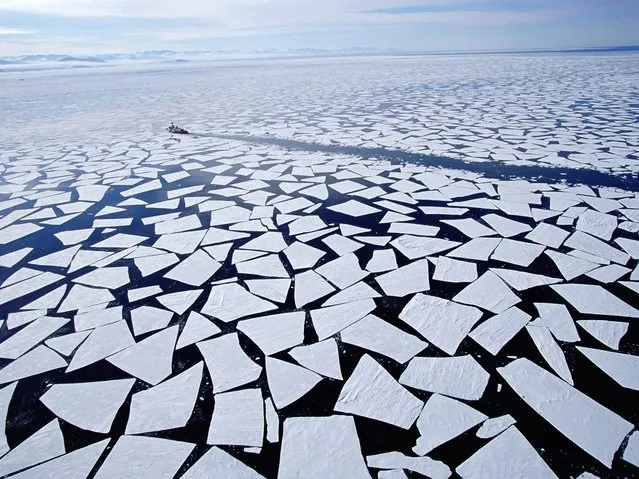
McMurdo Station Antarctic

McMurdo Station is a U.S. Antarctic research centre located on the southern tip of Ross Island, which is in the New Zealand-claimed Ross Dependency on the shore of McMurdo Sound in Antarctica. It is operated by the United States through the United States Antarctic Program, a branch of the National Science Foundation. The station is the largest community in Antarctica, capable of supporting up to 1,258 residents, and serves as the United States Antarctic science facility. All personnel and cargo going to or coming from Amundsen–Scott South Pole Station first pass through McMurdo.
Details
05 Sep 2013 10:18:00