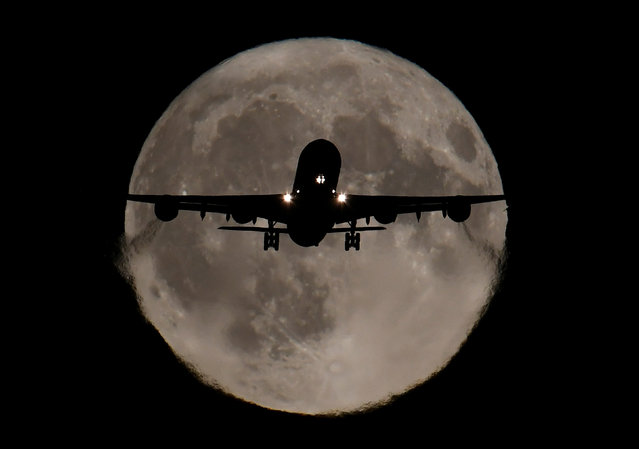
A passenger plane, with a full Harvest moon seen behind, makes its final landing approach towards Heathrow Airport in London, Britain, October 5, 2017. (Photo by Toby Melville/Reuters)
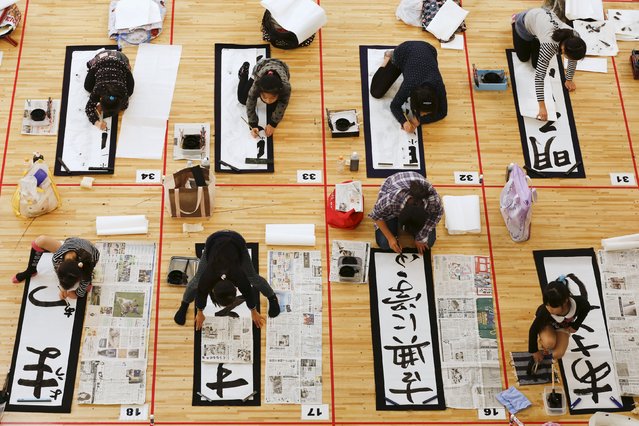
Pupils participate in a calligraphy contest to celebrate the New Year in Tokyo January 5, 2016. Over 3,000 calligraphers who qualified in competitions throughout Japan wrote resolutions or wishes onto paper sheets during the annual contest that marks the start of the new year, according to organizers. (Photo by Thomas Peter/Reuters)
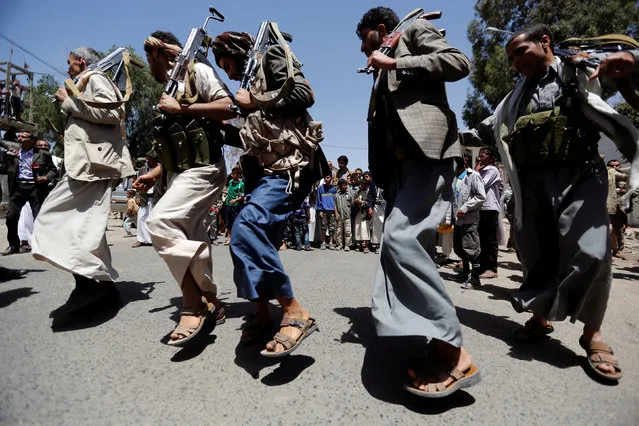
Tribesmen loyal to the Houthi movement perform the Baraa dance during a gathering to show support to the movement in Sanaa, Yemen, May 19, 2016. Bara or Baraa dance is one of the several traditional outdoor dances performed by men in the country of Yemen. Bara dance literally means a dagger dance, where each dancer holds a dagger. The style of the Bara dance differs from tribe to tribe. It is performed on special occasions. (Photo by Khaled Abdullah/Reuters)
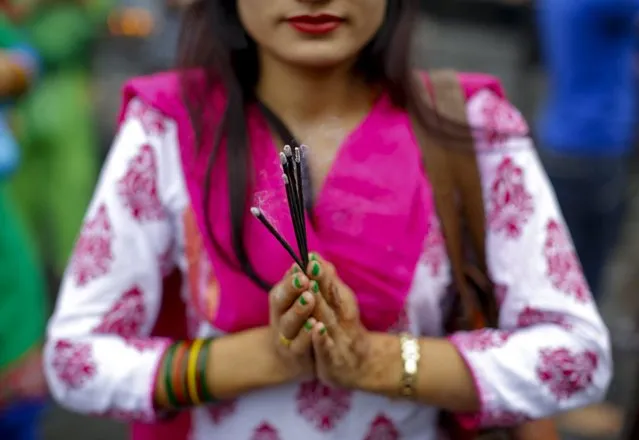
Nepalese Hindu women pray to worship Lord Shiva during the first day of the Sarwan Brata festival, the month of fasting, at the premises of Pashupati Temple in Kathmandu, Nepal, 18 July 2016. Thousands of married and single Nepalese Hindu women will gather in temples for each Monday of the Sawan month (spanning from 16 July to 16 August) to pray for a long and prosperous life of their husbands or for a chance to find a good one. (Photo by Narendra Shrestha/EPA)
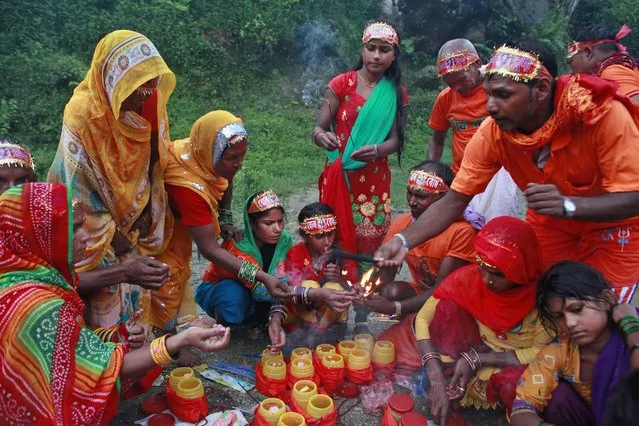
Hindu devotees perform rituals during the Bol Bom pilgrimage, on the outskirts of Kathmandu, Nepal, Monday, August 8, 2016. During this pilgrimage, devotees walk miles barefooted before offering water collected from Bagmati river, at the Pashupatinath temple in Katmandu. Shravan Somwar or Monday of Hindu calendar month of Shravan is considered auspicious for offering prayers to Lord Shiva, the god of destruction. (Photo by Niranjan Shrestha/AP Photo)
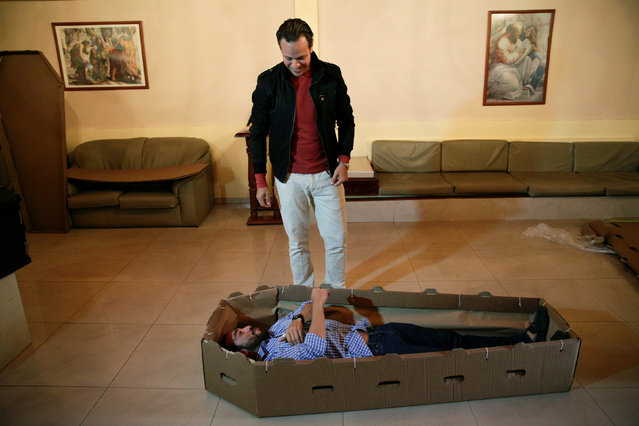
Elio Angulo (bottom C) lies inside a cardboard coffin next to Alejandro Blanchard as they introduce their product to potential customers at a mortuary in Valencia, in the state of Carabobo, Venezuela August 25, 2016. When Venezuelan entrepreneurs Alejandro Blanchard and Elio Angulo decided to create cardboard coffins, they were looking for an ecological selling point to compete against classic wood and brass caskets. Three years on, with the oil-rich country mired in deep economic crisis, their “bio-coffins” are becoming a viable option because of high prices for wooden coffins and shortages of brass ones. (Photo by Marco Bello/Reuters)