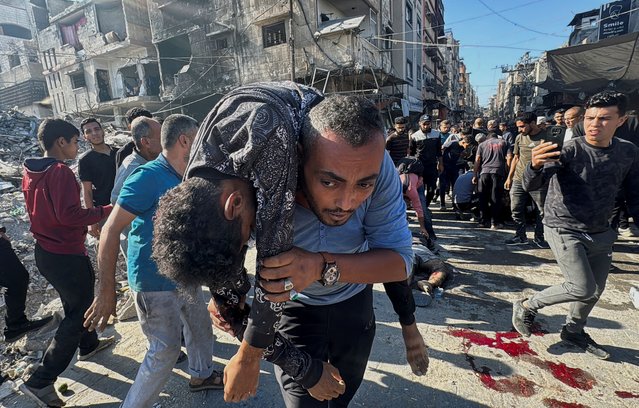
A Palestinian carries an injured person following an Israeli strike, amid the Israel-Hamas conflict, in Beit Lahiya in the northern Gaza Strip on October 30, 2024. (Photo by Reuters/Stringer)
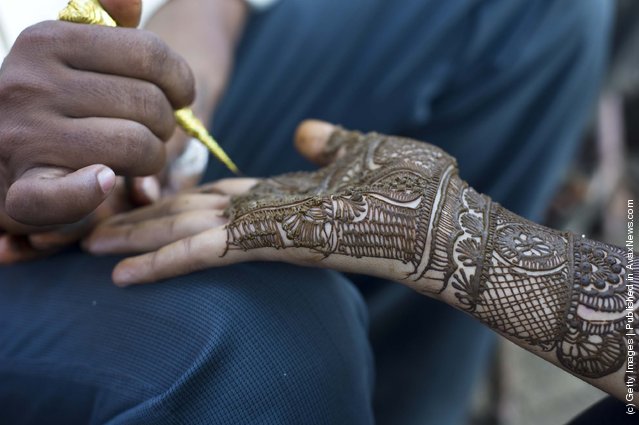
“Mehndi or menhdi is the application of henna as a temporary form of skin decoration in India, as well as by expatriate communities from the country. The word mehndi is derived from the Sanskrit word mendhikā. The use of mehndi and turmeric is described in the earliest Vedic ritual books. Haldi (Staining oneself with turmeric paste) as well as mehndi are important Vedic customs as a symbolic representation of the Outer and the Inner Sun. Vedic customs are meant to awaken the “inner light” and so the gold of the inner Sun has an important symbolic function”. – Wikipedia
Photo: Application of henna or “Mehndi” to a girls hand in a market on October 18, 2010 in Jaipur, India. (Photo by Simon de Trey-White/Getty Images)
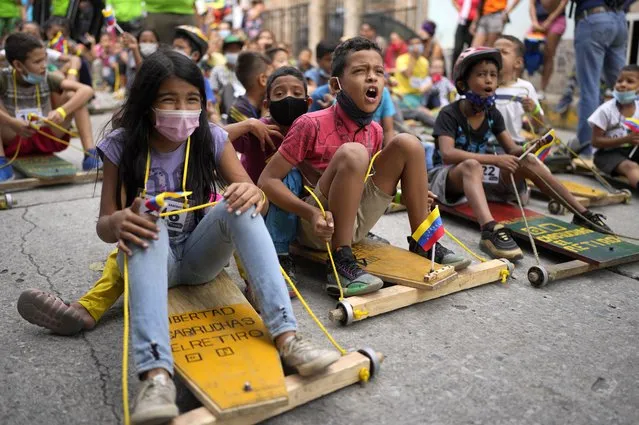
Children enjoy and participate in a traditional street race of “carruchas”, the name for makeshift wooden cars in Caracas, Venezuela, Saturday, December 18, 2021. Children enjoyed the race marking 10 years of persevering this tradition. (Photo by Ariana Cubillos/AP Photo)
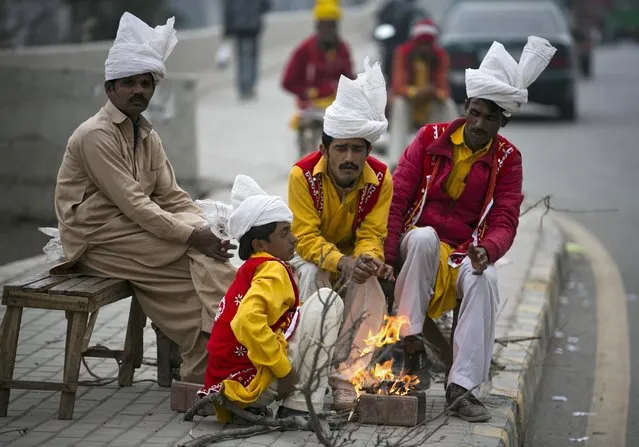
Pakistani street performers sit around fire waiting for customers on a chilly evening in Rawalpindi, Pakistan, Wednesday, February 10, 2016. (Photo by B.K. Bangash/AP Photo)
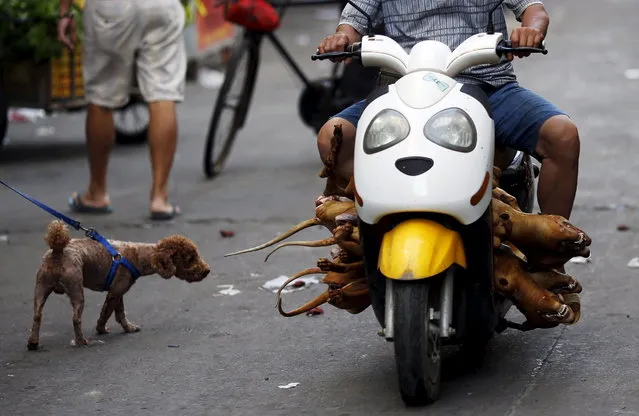
A man carrying butchered dogs drives past a pet dog at a dog meat market in Yulin, Guangxi Autonomous Region, June 21, 2015. (Photo by Kim Kyung-Hoon/Reuters)
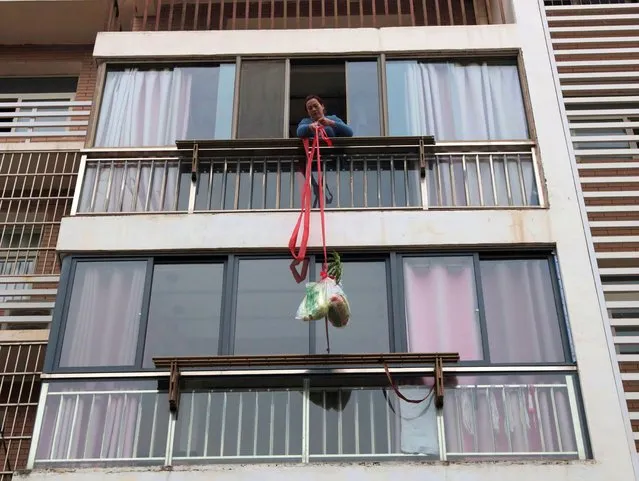
A resident pulls back a rope with groceries tied to the end of it, delivered by community workers, at a residential compound under sealed management in Yichang, Hubei province, China on February 22, 2020. (Photo by Reuters/China Daily)
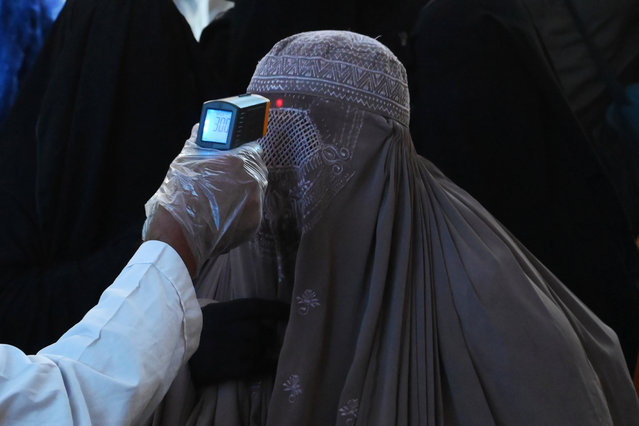
A health official checks the body temperature of a burqa-clad woman passenger amid concerns over the spread of the COVID-19 novel coronavirus at the Lahore Railway station in Lahore on March 19, 2020. (Photo by Arif Ali/AFP Photo)