Monkeys climb onto tourists during the annual Monkey Festival in Lopburi province, Thailand on November 26, 2023. (Photo by Chalinee Thirasupa/Reuters)
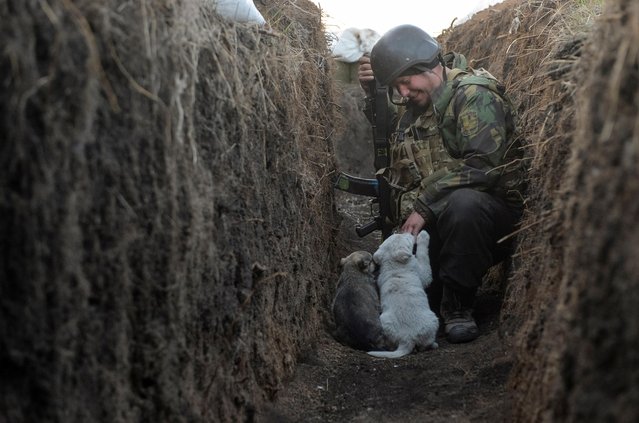
Volodymyr, a service member of the Ukrainian armed forces, plays with puppies at fighting positions on the line of separation from pro-Russian rebels in Donetsk region, Ukraine on April 10, 2021. The two unnamed puppies living on frontline positions will be taken home and named by soldiers departing on troops rotation. (Photo by Oleksandr Klymenko/Reuters)
Tommy Lindsey holds an enormous maple leaf that he found in Mount Vernon, Wash., October 28, 2013. Lindsey was walking with his family when he picked up the leaf that is more than two feet from stem to tip and more than 21 inches wide. (Photo by Frank Varga/The Skagit Valley Herald)
“Farmer reading his farm paper”. Coryell County, Texas, September 1931. (Photo by George W. Ackerman)
P.S. All pictures are presented in high resolution. To see Hi-Res images – just TWICE click on any picture. In other words, click small picture – opens the BIG picture. Click BIG picture – opens VERY BIG picture (if available; this principle works anywhere on the site AvaxNews).
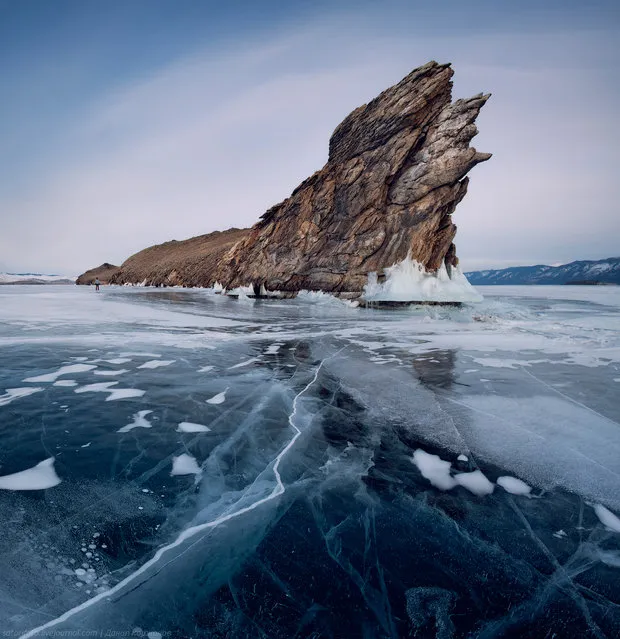
Lake Baikal is the world's oldest lake, at 25 million years (possibly older), and deepest, averaging 744.4 metres (2,442 ft).
Located in the south of the Russian region of Siberia, between Irkutsk Oblast to the northwest and the Buryat Republic to the southeast, it is the most voluminous freshwater lake in the world, containing roughly 20% of the world's unfrozen surface fresh water.
Australian surfer Sally Fitzgibbons rides a wave during the 2023 ISA World Surfing Games at the El Tunco beach in El Salvador on June 6, 2023. (Photo by Marvin Recinos/AFP Photo)
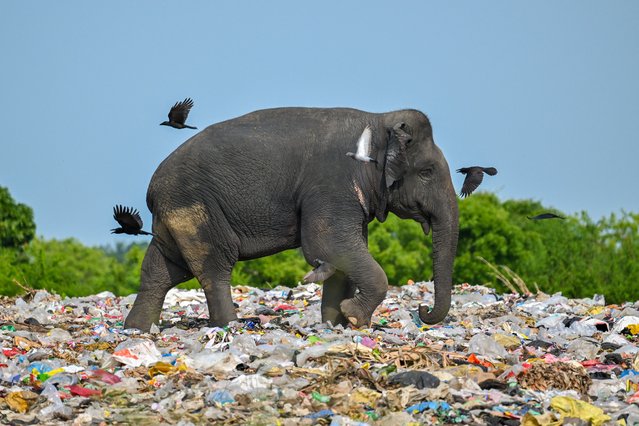
A wild elephant eats garbage containing plastic waste at a dump in Sri Lanka's eastern district of Ampara on June 3, 2023. Sri Lanka is set to launch a nation-wide clean up of plastic waste ahead of new laws banning the sale of single use plastics, the Environmental ministry said, after a spate of deaths of elephants and deer in the island's northeast after foraging at open garbage tips filled with plastic waste, whilst shrinking habitat has led to jumbos raiding villages looking for food. (Photo by Ishara S. Kodikara/AFP Photo)
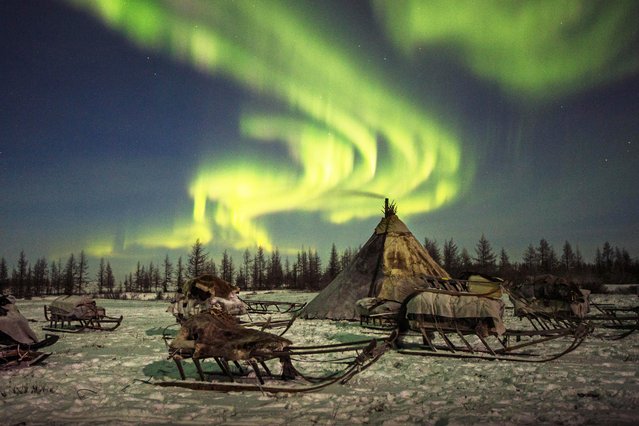
A British photographer has captured life at the “edge of the world”. Timothy Allen, best known for his work on BBC's Human Planet, trekked through the freezing Siberian wilderness for 16 days as he joined part of an 800km migration of reindeer in the Yamal-Nenets region – a name that roughly translates to “edge of the world”. The stunning pictures feature the nomadic Nenets tribe, who drink blood to survive in -45°C temperatures. Timothy's epic journey, which will be revealed in an eight-minute documentary on Animal Planet USA, saw him travel across the bleak terrain of the frozen Ob River with the Nenets people in December last year. Here: An empty camp is shown beneath a colourful sky in Siberia, December 2016. (Photo by Timothy Allen/Barcroft Productions)