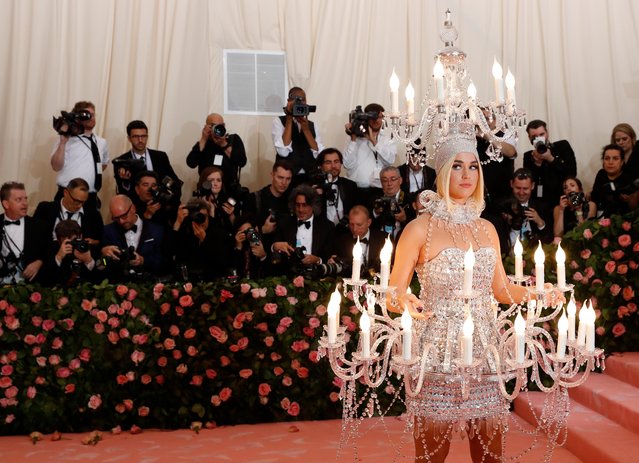
Katy Perry attends the 2019 Met Gala celebrating “Camp: Notes on Fashion” at the Metropolitan Museum of Art on May 06, 2019 in New York City. (Photo by Andrew Kelly/Reuters)
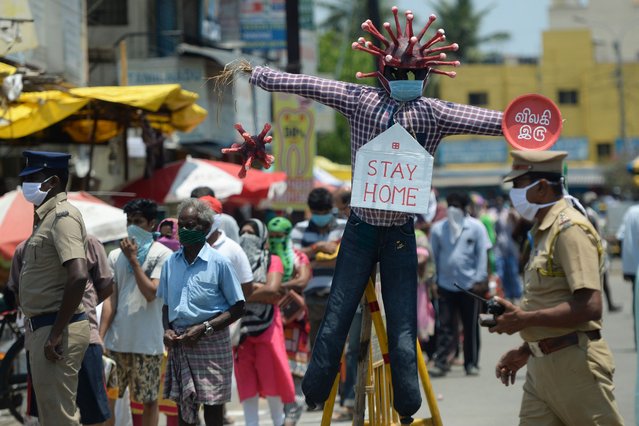
People stand in queue keeping social distance beside a Covid-19 awareness scarecrows placed by Chennai municipality at a market during a government-imposed nationwide lockdown as a preventive measure against the COVID-19 coronavirus, in Chennai on April 11, 2020. (Photo by Arun Sankar/AFP Photo)
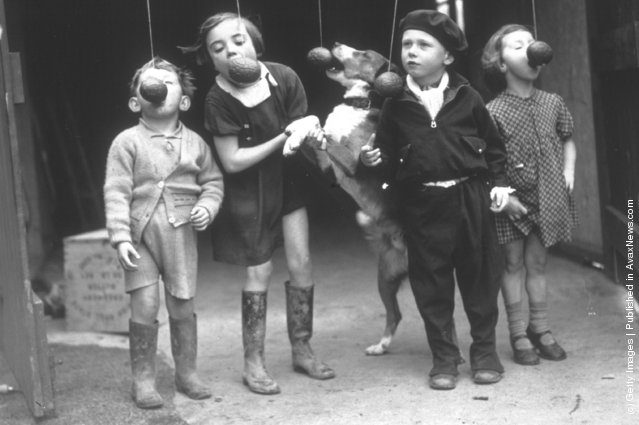
A group of children and their dog playing an Easter game in Cardiff. The game involves trying to eat an Easter egg off a piece of string without using their hands. (Photo by Richards/Fox Photos/Getty Images). 26th March 1937
From the waters edge a New York policeman urges two young children to put their bathing costumes back on. (Photo by Ed Clarity/Keystone/Getty Images). July 1949
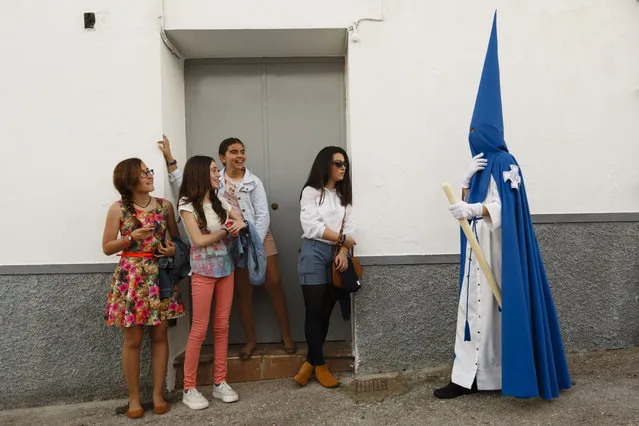
Girls look at a penitent taking part in “Nuestro Senor Atado a la Columna, Maria Santisima de la Paz y San Juan Evangelista” Holy Week procession in Arcos de la Frontera, Spain, Tuesday, March 31, 2015. Hundreds of processions take place throughout Spain during the Easter Holy Week. (Photo by Daniel Ochoa de Olza/AP Photo)
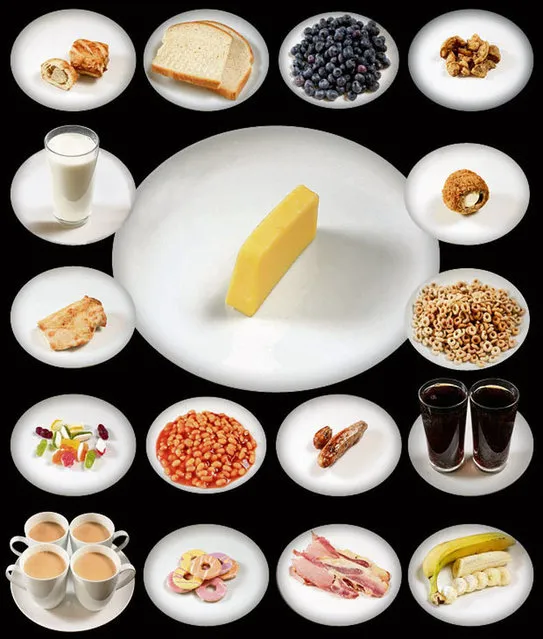
Some foods have significantly more Calories than others but what does the difference actually look like. Each of the photographs below represents 200 Calories of the particular type of food; the images are sorted from low to high calorie density. When you consider that an entire plate of broccoli contains the same number of Calories as a small spoonful of peanut butter, you might think twice the next time you decide what to eat. According to the U.S. Department of Agriculture, the average adult needs to consume about 2000 - 2500 Calories to maintain their weight. In other words, you have a fixed amount of Calories to "spend" each day; based on the following pictures, which would you eat?
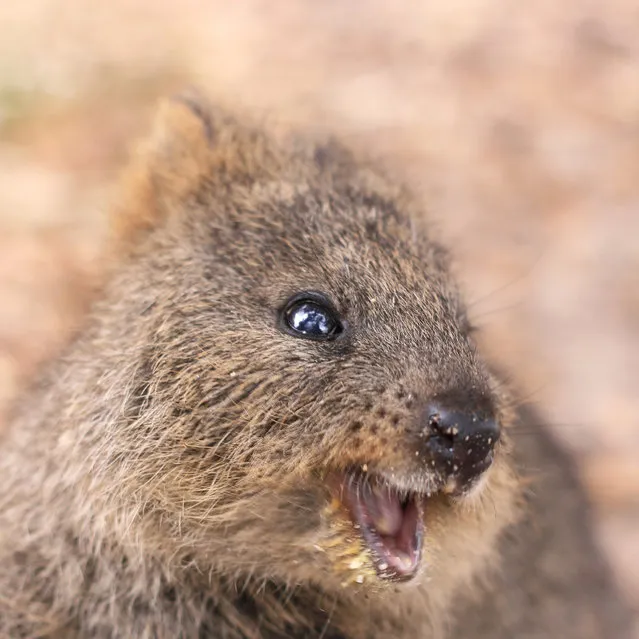
The quokka the only member of the genus Setonix, is a small macropod about the size of a domestic cat. Like other marsupials in the macropod family (such as the kangaroos and wallabies), the quokka is herbivorous and mainly nocturnal.
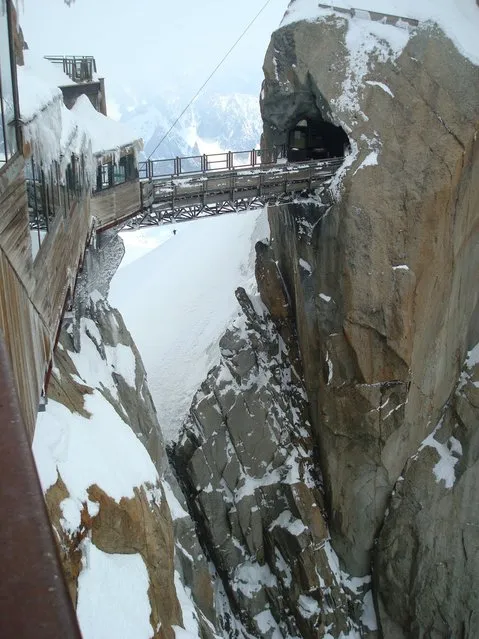
The name “Aiguille du Midi” translates literally as “Needle of the Noon” or “Needle of the South”. It gets its name from its tapered form and from its position when viewed from Chamonix: it approximately indicates noon when the sun passes over its summit.