Loading...
Done
Spectators jump in a makeshift swimming pool set up along the race route as the pack of riders (peloton) cycles past, during the 9th stage of the 112th edition of the Tour de France cycling race, 174.1 km between Chinon and Chateauroux, central France, on July 13, 2025. (Photo by Marco Bertorello/AFP Photo)

Spectators jump in a makeshift swimming pool set up along the race route as the pack of riders (peloton) cycles past, during the 9th stage of the 112th edition of the Tour de France cycling race, 174.1 km between Chinon and Chateauroux, central France, on July 13, 2025. (Photo by Marco Bertorello/AFP Photo)
Details
26 Jul 2025 02:33:00
Ambra Sabatini (ITA) and Monica Graziana Contrafatto (ITA) fall at the finish line ahead of Elena Kratter (SUI) and Noelle Lambert (USA) in the Para Athletics Women’s 100m -T63 Final during the Paris 2024 Paralympic Summer Games at Stade de France, on September 7, 2024. (Photo by Adrian Dennis/OIS via Imagn Images)

Ambra Sabatini (ITA) and Monica Graziana Contrafatto (ITA) fall at the finish line ahead of Elena Kratter (SUI) and Noelle Lambert (USA) in the Para Athletics Women’s 100m -T63 Final during the Paris 2024 Paralympic Summer Games at Stade de France, on September 7, 2024. (Photo by Adrian Dennis/OIS via Imagn Images)
Details
24 Dec 2025 10:16:00
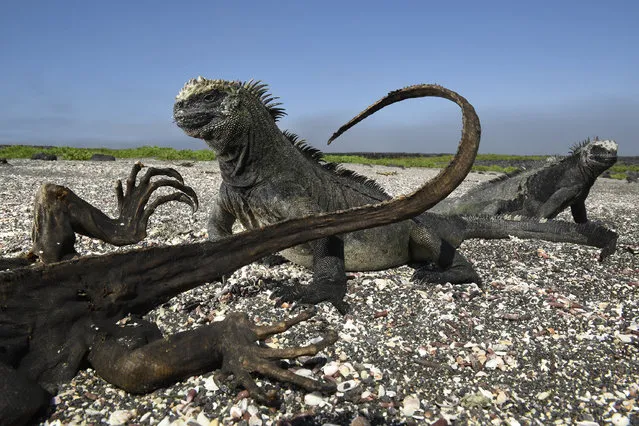
Galapagos – Rocking the Cradle: Four major ocean currents converge along the Galapagos archipelago, creating the conditions for an extraordinary diversity of animal life, April 25, 2016. The islands are home to at least 7,000 flora and fauna species, of which 97 percent of the reptiles, 80 percent of the land birds, 50 percent of the insects and 30 percent of the plants are endemic. The local ecosystem is highly sensitive to the changes in temperature, rainfall and ocean currents that characterize the climatic events known as El Niño and La Niña. These changes cause marked fluctuations in weather and food availability. Many scientists expect the frequency of El Niño and La Niña to increase as a result of climate change, making the Galapagos a possible early-warning location for its effects. (Photo by Thomas P. Peschak for National Geographic/World Press Photo)

Galapagos – Rocking the Cradle: Four major ocean currents converge along the Galapagos archipelago, creating the conditions for an extraordinary diversity of animal life, April 25, 2016. The islands are home to at least 7,000 flora and fauna species, of which 97 percent of the reptiles, 80 percent of the land birds, 50 percent of the insects and 30 percent of the plants are endemic. (Photo by Thomas P. Peschak for National Geographic/World Press Photo)
Details
16 Apr 2018 00:01:00
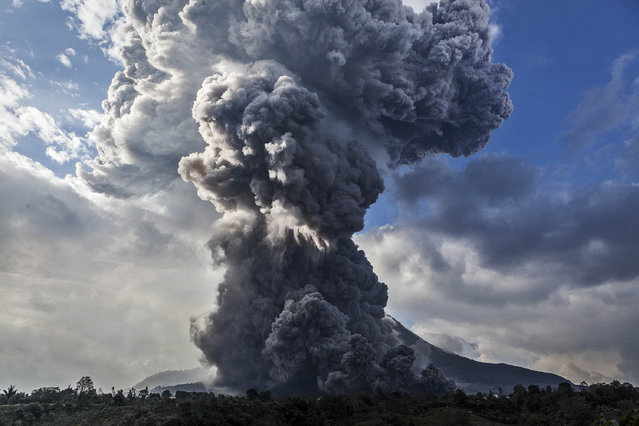
Mount Sinabung spews pyroclastic smoke, seen from Tiga Pancur village on October 13, 2014 in Berastagi, Karo district, North Sumatra, Indonesia. Mount Sinabung, which has lain dormant for over 400 years, has been intermittently erupting since September 15 last year, killing 15 people and forcing hundreds to flee their homes. According to The National Disaster Mitigation Agency, more than 3,000 residents are still displaced. (Photo by Ulet Ifansasti/Getty Images)

Mount Sinabung spews pyroclastic smoke, seen from Tiga Pancur village on October 13, 2014 in Berastagi, Karo district, North Sumatra, Indonesia. Mount Sinabung, which has lain dormant for over 400 years, has been intermittently erupting since September 15 last year, killing 15 people and forcing hundreds to flee their homes. According to The National Disaster Mitigation Agency, more than 3,000 residents are still displaced. (Photo by Ulet Ifansasti/Getty Images)
Details
14 Oct 2014 10:58:00
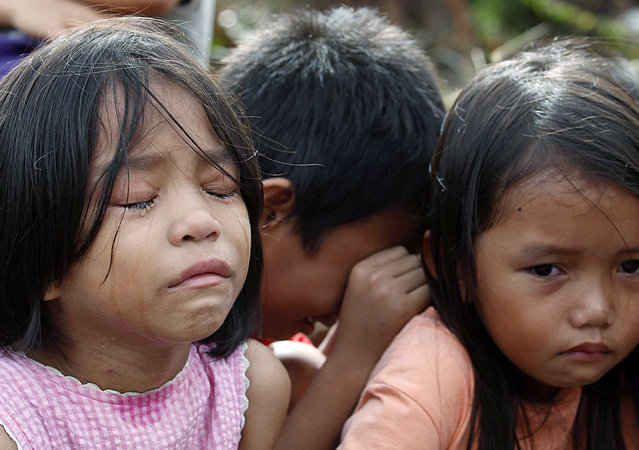
Filipino typhoon survivor children, who escaped after their village was attacked by allegedly armed men, wait for social workers in the super typhoon devastated city of Tacloban, Leyte province, Philippines, 13 November 2013. (Photo by Dennis M. Sabangan/EPA)

Filipino typhoon survivor children, who escaped after their village was attacked by allegedly armed men, wait for social workers in the super typhoon devastated city of Tacloban, Leyte province, Philippines, 13 November 2013. Aid workers and relief supplies were being poured into eastern provinces hit by Typhoon Haiyan, which aid agencies and officials estimated has left thousands dead and staggering destruction in its wake. The official death toll in the Philippines from one of the world’s strongest typhoons rose to 1,833, the national disaster relief agency said with many towns still unaccounted for. (Photo by Dennis M. Sabangan/EPA)
Details
14 Nov 2013 12:42:00
In this handout photo provided by Warner Brothers Pictures and Village Roadshow Pictures, Tom Cruise plays Lieutenant Colonel Bill Cage, a soldier who replays his last day while trying to fight aliens, in director Doug Liman's “All You Need Is Kill”. The film is set to premiere on March 14, 2014. (Photo by David James/Warner Brothers Pictures)

In this handout photo provided by Warner Brothers Pictures and Village Roadshow Pictures, Tom Cruise plays Lieutenant Colonel Bill Cage, a soldier who replays his last day while trying to fight aliens, in director Doug Liman's “All You Need Is Kill”. The film is set to premiere on March 14, 2014. (Photo by David James/Warner Brothers Pictures)
Details
26 Nov 2012 13:14:00
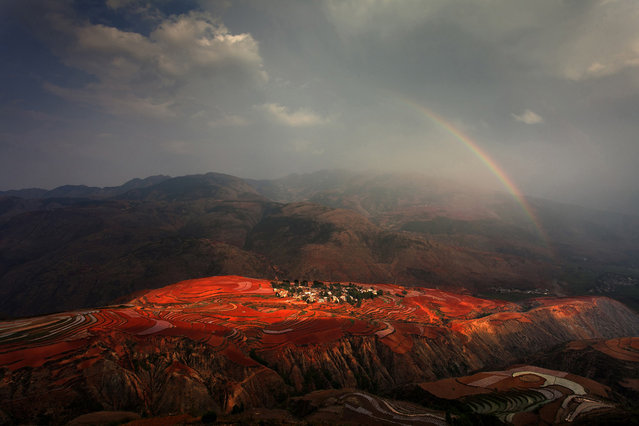
“Red Land: Sunset Cloud Village is one of the most picturesque places in Red Land, China. As its name indicates, it's best to see before sunset. The reddish brown soil turns redder after rainfall and after farmers plow the land”. (Photo and comment by Peng Jiang/National Geographic Photo Contest via The Atlantic)

“Red Land: Sunset Cloud Village is one of the most picturesque places in Red Land, China. As its name indicates, it's best to see before sunset. The reddish brown soil turns redder after rainfall and after farmers plow the land”. (Photo and comment by Peng Jiang/National Geographic Photo Contest via The Atlantic)


Details
05 Dec 2012 11:07:00
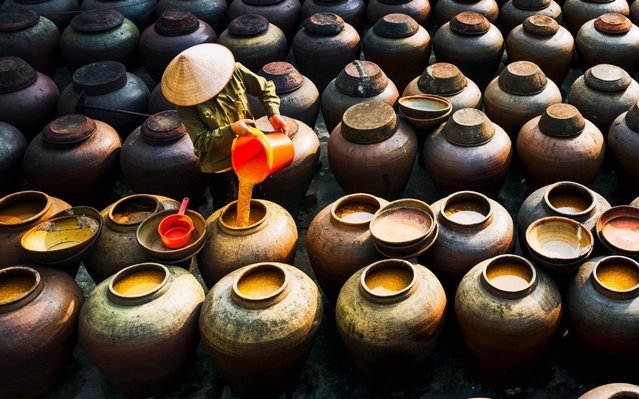
Workers stir hundreds of large ceramic pots as they spend months making a traditional soy sauce on October 14, 2020. Arranged in rows, the containers can hold up to 50 litres of Ban Soy sauce. During the drawn out process the sauce is stirred every two days for two to six months. Ban Yen Nhan village in the Hung Yen Province of Vietnam is famous for its traditional and distinctive method of making the sauce. (Photo by Nguyen Quy/Solent News)

Workers stir hundreds of large ceramic pots as they spend months making a traditional soy sauce on October 14, 2020. Arranged in rows, the containers can hold up to 50 litres of Ban Soy sauce. During the drawn out process the sauce is stirred every two days for two to six months. Ban Yen Nhan village in the Hung Yen Province of Vietnam is famous for its traditional and distinctive method of making the sauce. (Photo by Nguyen Quy/Solent News)
Details
30 Oct 2020 00:05:00