Loading...
Done
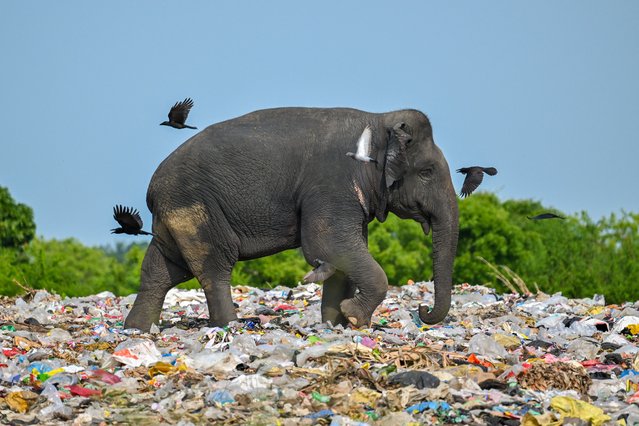
A wild elephant eats garbage containing plastic waste at a dump in Sri Lanka's eastern district of Ampara on June 3, 2023. Sri Lanka is set to launch a nation-wide clean up of plastic waste ahead of new laws banning the sale of single use plastics, the Environmental ministry said, after a spate of deaths of elephants and deer in the island's northeast after foraging at open garbage tips filled with plastic waste, whilst shrinking habitat has led to jumbos raiding villages looking for food. (Photo by Ishara S. Kodikara/AFP Photo)

A wild elephant eats garbage containing plastic waste at a dump in Sri Lanka's eastern district of Ampara on June 3, 2023. Sri Lanka is set to launch a nation-wide clean up of plastic waste ahead of new laws banning the sale of single use plastics, the Environmental ministry said, after a spate of deaths of elephants and deer in the island's northeast after foraging at open garbage tips filled with plastic waste, whilst shrinking habitat has led to jumbos raiding villages looking for food. (Photo by Ishara S. Kodikara/AFP Photo)
Details
30 Sep 2024 04:49:00
Tourists take photographs as a wild sika deer eats a bag on June 6, 2019 in Nara, Japan. Nara's free-roaming deer have become a huge attraction for tourists. However, an autopsy on a deer that was recently found dead near one of the city's famous temples discovered 3.2kg of plastic in its stomach and caused concern at the effect of tourism as Japan struggles to cope with a huge increase in domestic and international tourists. Alongside a growing Japanese tendency to holiday domestically, a record 31 million people visited the country in 2018 up 8.7 percent from the previous year, with many people now worrying about the environmental impact caused by such large visitor numbers. (Photo by Carl Court/Getty Images)

Tourists take photographs as a wild sika deer eats a bag on June 6, 2019 in Nara, Japan. Nara's free-roaming deer have become a huge attraction for tourists. However, an autopsy on a deer that was recently found dead near one of the city's famous temples discovered 3.2kg of plastic in its stomach and caused concern at the effect of tourism as Japan struggles to cope with a huge increase in domestic and international tourists. (Photo by Carl Court/Getty Images)
Details
19 Jun 2019 00:03:00
Photographers: Joel Robison

“Hi! I'm Joel, I live in a valley in British Columbia's Rocky Mountains, as close to the forest as I could possibly be! I love to run, bike, jump, eat and create and I hope that you enjoy my work as much as I enjoy creating it!” – Joel Robison.

Photo: “Under Peaceful Skies”, 2011. (Photo by: Joel Robison; Source: Flickr)
Details
24 May 2012 10:44:00
Artists watch burning an effigy of Lady Maslenitsa as they celebrate Maslenitsa, or Pancake Week, in Baikonur, Kazakhstan, March 13, 2016. (Photo by Shamil Zhumatov/Reuters)

Artists watch burning an effigy of Lady Maslenitsa as they celebrate Maslenitsa, or Pancake Week, in Baikonur, Kazakhstan, March 13, 2016. Maslenitsa is widely viewed as a pagan holiday marking the end of winter and is celebrated with pancake eating and shows of strength, while the Orthodox Church considers it as the week of feasting before Lent. (Photo by Shamil Zhumatov/Reuters)
Details
14 Mar 2016 10:37:00
Photographers: Joel Robison Part2

“Hi! I'm Joel, I live in a valley in British Columbia's Rocky Mountains, as close to the forest as I could possibly be! I love to run, bike, jump, eat and create and I hope that you enjoy my work as much as I enjoy creating it!” – Joel Robison. (Photo by: Joel Robison; Source: Flickr)


See Also:Photographers: Joel Robison Part1
Details
01 Nov 2013 10:40:00
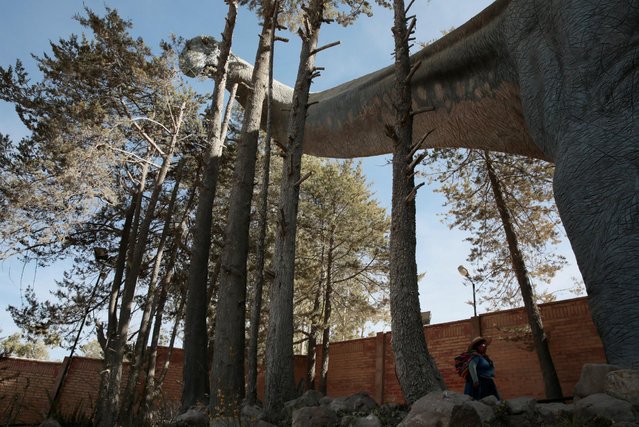
A visitor walks underneath a replica of a Titanosaur at the Cretaceous park in Cal Orcko, on the outskirts of Sucre, Bolivia, July 22, 2016. (Photo by David Mercado/Reuters)

A visitor walks underneath a replica of a Titanosaur at the Cretaceous park in Cal Orcko, on the outskirts of Sucre, Bolivia, July 22, 2016. A footprint measuring over a meter wide that was made by a meat-eating predator some 80 million years ago has been discovered in Bolivia, one of the largest of its kind ever found. (Photo by David Mercado/Reuters)
Details
28 Jul 2016 13:32:00
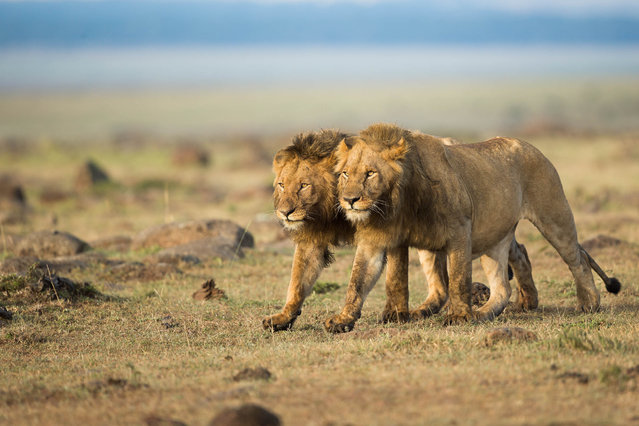
“Two Brothers”. We found about 20 lions eating a buffalo. When the male leaved the group we anticipated him to take photos. It is 8AM, light is perfect and the position too. The lion stops and looks down from the hill, another lion is coming up, it stiffens, I think that will be a fight, i'm tense, the camera is OK, the shots previously made perfect. Photo location: Masai Mara, Kenya. (Photo and caption by Massimo Mei/National Geographic Photo Contest)

“Two Brothers”. We found about 20 lions eating a buffalo. When the male leaved the group we anticipated him to take photos. It is 8AM, light is perfect and the position too. The lion stops and looks down from the hill, another lion is coming up, it stiffens, I think that will be a fight, i'm tense, the camera is OK, the shots previously made perfect. The two meet, looking directly into their eyes, they sniff, rub against their heads, the tension drops, they start walking with the same step as when they were puppies, they are two brothers. Photo location: Masai Mara, Kenya. (Photo and caption by Massimo Mei/National Geographic Photo Contest)
Details
02 Jul 2014 09:45:00
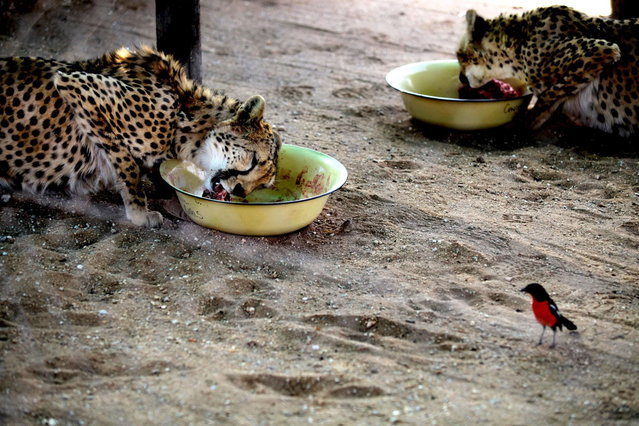
Young cheetahs eat meat at The Cheetah Conservation Fund (CCF) center in Otjiwarongo, Namibia, on August 13, 2013. The CCF started breeding Anatolian livestock dogs to promote cheetah-friendly farming after some 10,000 big cats – the current total worldwide population – were killed or moved off farms in the 1980s.  Up to 1,000 cheetahs were being killed a year, mostly by farmers who saw them as livestock killers. But the use of dogs has slashed losses for sheep and goat farmers and led to less retaliation against the vulnerable cheetah. (Photo by Jennifer Bruce/AFP Photo)

Young cheetahs eat meat at The Cheetah Conservation Fund (CCF) center in Otjiwarongo, Namibia, on August 13, 2013. The CCF started breeding Anatolian livestock dogs to promote cheetah-friendly farming after some 10,000 big cats – the current total worldwide population – were killed or moved off farms in the 1980s. Up to 1,000 cheetahs were being killed a year, mostly by farmers who saw them as livestock killers. But the use of dogs has slashed losses for sheep and goat farmers and led to less retaliation against the vulnerable cheetah. (Photo by Jennifer Bruce/AFP Photo)
Details
29 Aug 2013 10:56:00