Loading...
Done
Bra-clad Uber passenger was caught on camera stealing from a driver’s tip jar, while brazenly looking into the car’s security camera in New York City, USA in August (issued November 7, 2017). The unnamed rider was with two others. When they got out she looked around as she grabbed dollars out of the jar. The driver then looked down after the three got out, but it was too late. The publication later reported that the woman’s name is Gabita, and she’s 18 years old. (Photo by YouTube/The Epochtimes)

Bra-clad Uber passenger was caught on camera stealing from a driver’s tip jar, while brazenly looking into the car’s security camera in New York City, USA in August (issued November 7, 2017). The unnamed rider was with two others. When they got out she looked around as she grabbed dollars out of the jar. The driver then looked down after the three got out, but it was too late. The publication later reported that the woman’s name is Gabita, and she’s 18 years old. (Photo by YouTube/The Epochtimes)
Details
16 Nov 2017 08:22:00
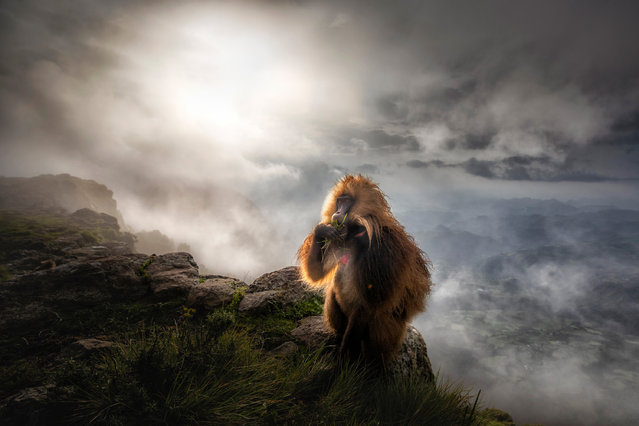
Highly commended, mammals: Gelada after the storm – Marco Gaiotti (Italy). “Gelada baboons are the only monkey species in the world that feed on grasses. They are native to the tableland of Ethiopia. Every morning large family groups wander from their sleeping places in the steep rock face, up to 1,000 metres high, to the feeding grounds at the tablelands. This image clearly depicts their feeding strategy: they pull out bunches of grass, sort the stalks and then lift them to their mouth. This shot was taken towards the end of the rainy season after a heavy storm”. (Photo by Marco Gaiotti/2019 GDT European Wildlife Photographer of the Year)

Highly commended, mammals: Gelada after the storm – Marco Gaiotti (Italy). “Gelada baboons are the only monkey species in the world that feed on grasses. They are native to the tableland of Ethiopia. Every morning large family groups wander from their sleeping places in the steep rock face, up to 1,000 metres high, to the feeding grounds at the tablelands. This image clearly depicts their feeding strategy: they pull out bunches of grass, sort the stalks and then lift them to their mouth. This shot was taken towards the end of the rainy season after a heavy storm”. (Photo by Marco Gaiotti/2019 GDT European Wildlife Photographer of the Year)
Details
31 Oct 2019 00:03:00
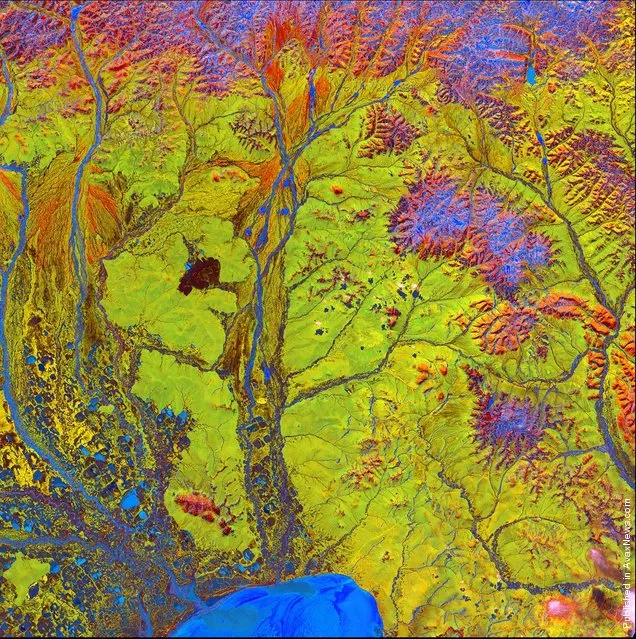
Vivid colors and bizarre shapes come together in a false-color image that could be an illustration for a fantasy story

Vivid colors and bizarre shapes come together in a false-color image that could be an illustration for a fantasy story. This labyrinth of exotic features winds its way along the edge of Russia’s Chaunskaya Bay in northeastern Siberia, seen as a vivid blue half-circle at the bottom of the image Two major rivers, the Chaun and Palyavaam, flow into the bay, which in turn opens into the Arctic Ocean. Ribbon lakes and bogs are present throughout the area, created by depressions left by receding glaciers. (Photo by USGS/NASA)
Details
14 Apr 2012 11:02:00
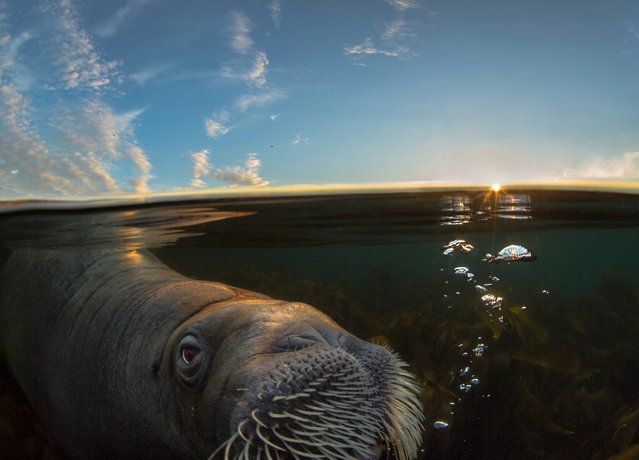
The Wildscreen festival is the world’s biggest celebration of screen-based natural history storytelling which takes place every two years in Bristol. Here: “Walrus in Midnight Sun”. Walrus feed mostly on bivalves in productive, shallow and often sandy habitats in the Arctic. This individual, though, arrived on a beach outside Tromsø, northern Norway, and found comfort on a stranded dead sperm whale. After two weeks he approached Audun, and only half a metre away he stretched his tusk forward and touched his hand gently. “This was one of the most memorable moments of my life”, Rikardsen says. He named the 500kg male Buddy. After two months, the dead whale was decomposed and Buddy suddenly disappeared. (Photo by Audun Rikardsen/Wildscreen 2016)

The Wildscreen festival is the world’s biggest celebration of screen-based natural history storytelling which takes place every two years in Bristol. Here: “Walrus in Midnight Sun”. Walrus feed mostly on bivalves in productive, shallow and often sandy habitats in the Arctic. This individual, though, arrived on a beach outside Tromsø, northern Norway, and found comfort on a stranded dead sperm whale. After two weeks he approached Audun, and only half a metre away he stretched his tusk forward and touched his hand gently. “This was one of the most memorable moments of my life”, Rikardsen says. He named the 500kg male Buddy. After two months, the dead whale was decomposed and Buddy suddenly disappeared. (Photo by Audun Rikardsen/Wildscreen 2016)
Details
07 Oct 2016 10:02:00
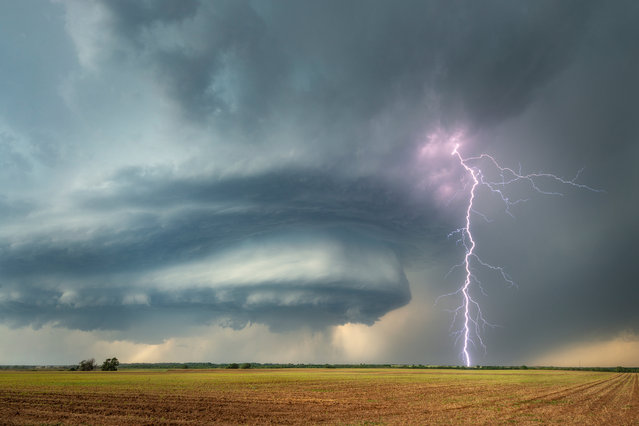
“The Supercell”. This shortlisted image by Dennis Oswald Huge farmland of was taken in south-west Oklahoma, US. (Photo by Dennis Oswald/2019 Weather Photographer of the Year/RMetS)

“The Supercell”. This shortlisted image by Dennis Oswald Huge farmland of was taken in south-west Oklahoma, US. (Photo by Dennis Oswald/2019 Weather Photographer of the Year/RMetS)
Details
30 Oct 2019 00:03:00
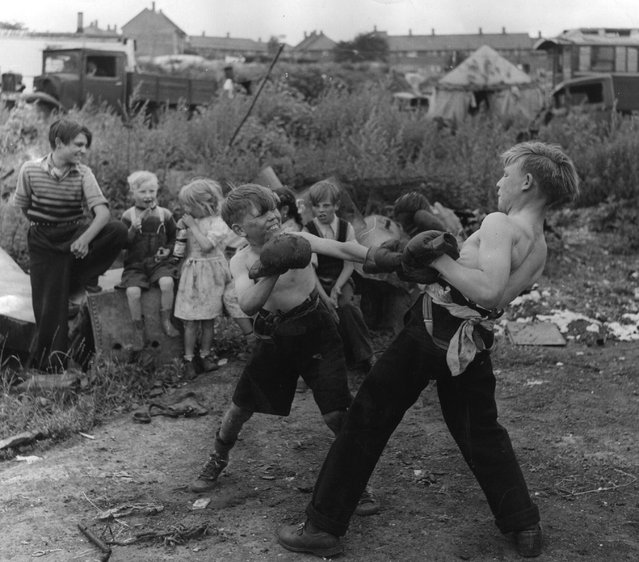
The unromantic gypsies. Children boxing in a gypsy camp in Kent, England on July 1, 1951. Like all boys these gypsy lads like to try their hand at boxing. Encouraged by their friends they fight it out on Corke's Meadow. Few Romanies now live a life of wandering romance. Most are like the three hundred squatters of Corke's Meadow, Kent, which is part of a “gypsy problem” that involves about 100,000 today. Of those about 25,000 can be rightly called gypsies, the rest are Mumpers and Posh-rats and Hobos. Corke's Meadow has both kinds. “Picture Post” cameraman Bert Hardy photographs the Corke's Meadow gypsies in their encampment. (Photo by Hulton-Deutsch Collection/Corbis via Getty Images)

The unromantic gypsies. Children boxing in a gypsy camp in Kent, England on July 1, 1951. Like all boys these gypsy lads like to try their hand at boxing. Encouraged by their friends they fight it out on Corke's Meadow. Few Romanies now live a life of wandering romance. Most are like the three hundred squatters of Corke's Meadow, Kent, which is part of a “gypsy problem” that involves about 100,000 today. Of those about 25,000 can be rightly called gypsies, the rest are Mumpers and Posh-rats and Hobos. Corke's Meadow has both kinds. “Picture Post” cameraman Bert Hardy photographs the Corke's Meadow gypsies in their encampment. (Photo by Hulton-Deutsch Collection/Corbis via Getty Images)
Details
12 Mar 2017 00:01:00
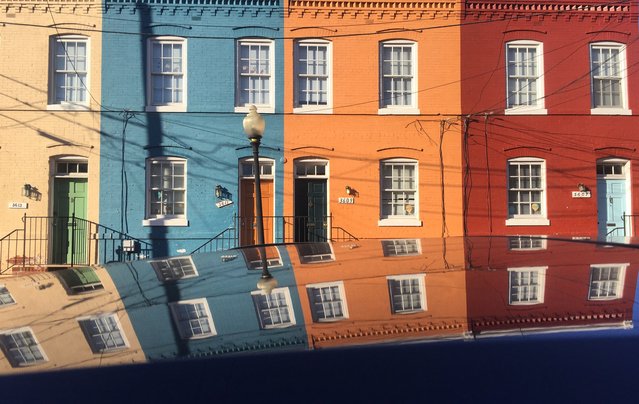
A group of colorful row houses are reflected on to the top of a black car parked on 3600 block of N street in  the Georgetown section of Washington DC, February 16, 2017. (Photo by John McDonnell/The Washington Post)

A group of colorful row houses are reflected on to the top of a black car parked on 3600 block of N street in the Georgetown section of Washington DC, February 16, 2017. (Photo by John McDonnell/The Washington Post)
Details
13 May 2017 09:28:00
Cosplayers wearing face masks pose for a picture at the China Digital Entertainment Expo and Conference (ChinaJoy) in Shanghai, following the coronavirus disease (COVID-19) outbreak, China on July 31, 2020. (Photo by Aly Song/Reuters)

Cosplayers wearing face masks pose for a picture at the China Digital Entertainment Expo and Conference (ChinaJoy) in Shanghai, following the coronavirus disease (COVID-19) outbreak, China on July 31, 2020. (Photo by Aly Song/Reuters)
Details
02 Aug 2020 00:07:00