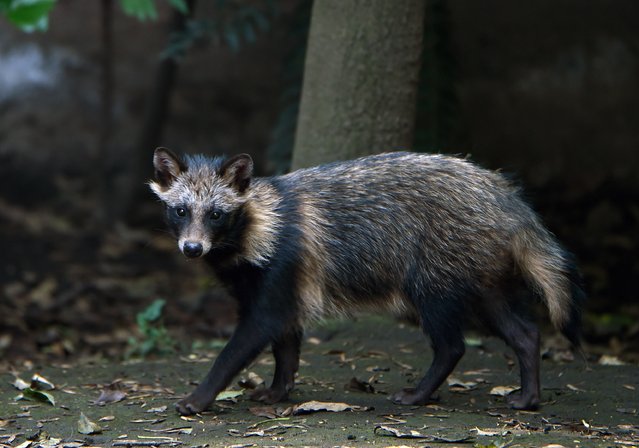
View of a raccoon dog or Tanuki (Nyctereutes procyonoides) at the Chapultpec Zoo in Mexico City on August 06, 2015. This species is native from Japan and China. (Photo by Alfredo Estrella/AFP Photo)
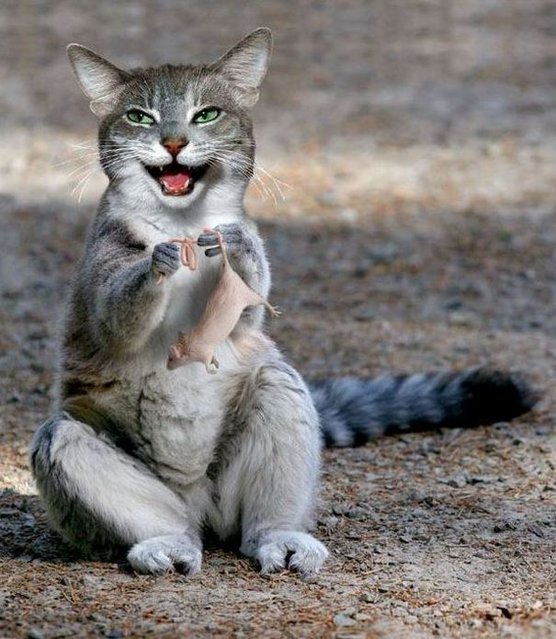
We’re showcasing photo-manipulation by Jan Oliehoek, a Dutch artist with a love for animals, photography and Photoshop. Oliehoek loves creating animal species that somehow never made it into our biology books, such as felines with rodent heads, lambs with the body of a squirrel, zebra rhinos and hippo-frogs! He’s currently having two of his pictures featured in Crazy Photography, an upcoming title from Vivays Publishing
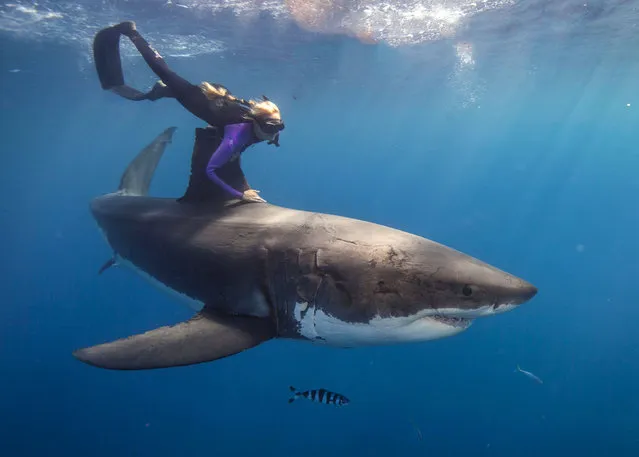
“Meet the woman dispelling the myths about one of the worlds most feared ocean predators by swimming without protection with great white sharks. Petite beauty Ocean Ramsey travels the globe swimming with many species of sharks hoping to prove they are nothing like their Jaws film reputation”. – Caters News. Photo: Ocean Ramsey freediving with a shark. (Photo by Juan Oliphant/Caters News)
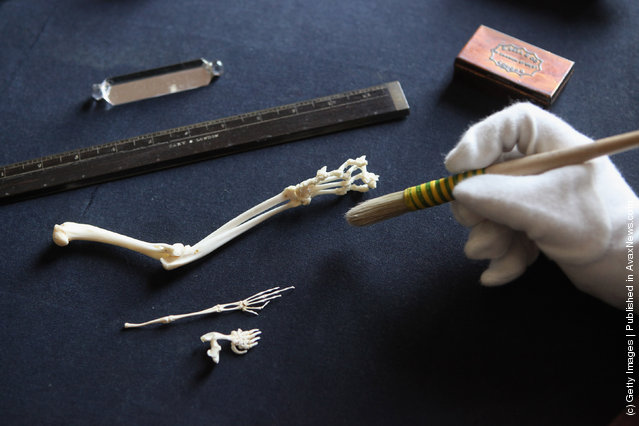
Emily Hasler, an English Heritage employee at Charles Darwin's home, Down House, cleans a rabbit bone in his old study on April 2, 2011 in Downe, England. Staff at the house are cleaning and preparing the property ahead of their peak visitor season. The house contains the study where Darwin wrote “On the Origin of Species”, as well as family rooms and an extensive garden that inspired the renowned scientist. (Photo by Oli Scarff/Getty Images)
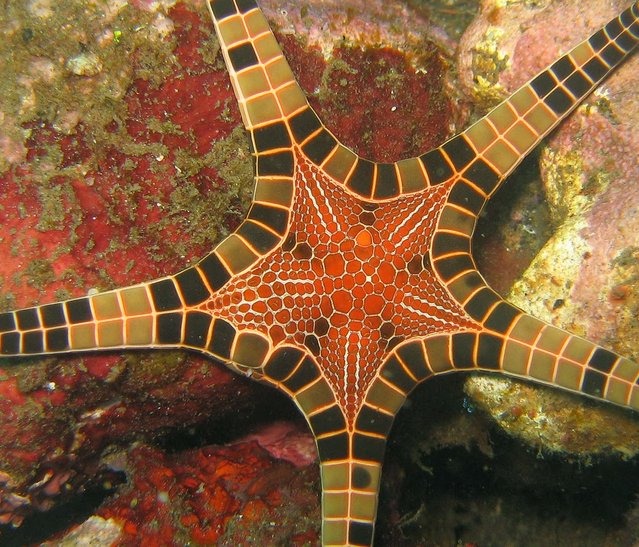
Iconaster longimanus, the icon star or double star, is a species of starfish in the family Goniasteridae. It is found in the west and central Indo-Pacific Ocean. The genus name comes from the Greek eikon, meaning portrait or image and possibly referring to the way the marginal plates frame the disc, and aster, meaning star. The specific name comes from the Latin longus manus and refers to the long, slender arms.
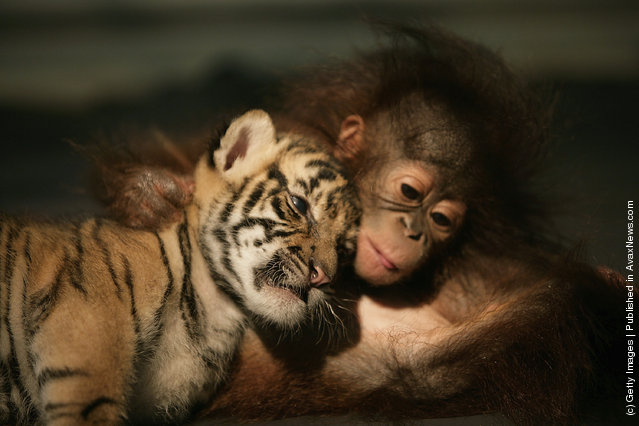
Dema and Manis, the 26-day-old endangered Sumatran Tiger cubs play together at the “Taman Safari Indonesia” Animal Hospital, on February 26, 2007 in Cisarua, Bogor Regency, West Java, Indonesia. The two Sumatran tiger-cubs recently born at the hospital have been rejected by their mother Cicis, while baby Orangutans, Irma and Nia have also been rejected by their mothers. All babies are being looked after by staff at the Animal Hospital. (Photo by: Dimas Ardian/Getty Images)
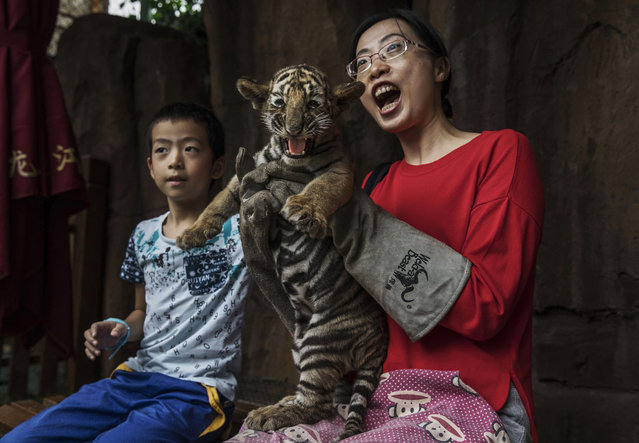
A Chinese tourist wears protective gloves as she holds a baby Siberian tiger as they pose for pictures at the Heilongjiang Siberian Tiger Park on August 16, 2017 in Harbin, northern China. The center is one of two Siberian tiger parks in the Chinese province of Heilongjiang, about 500 kilometers (300 miles) from the border with Russia. It is considered the world's largest for breeding the Siberian, or Amur, tiger which is listed as endangered by the World Wildlife Federation. (Photo by Kevin Frayer/Getty Images)
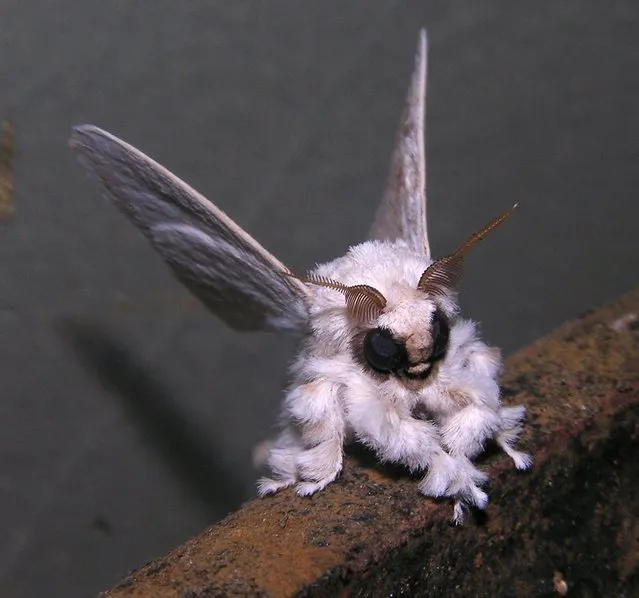
The Venezuelan Poodle Moth is a possible new species of moth discovered in 2009 by Dr. Arthur Anker of Bishkek, Kyrgyzstan, in the Gran Sabana region of Venezuela. It bears similarities to the Diaphora mendica, the Muslin Moth, but most likely belongs to the lepidopteran family Artace.