Loading...
Done
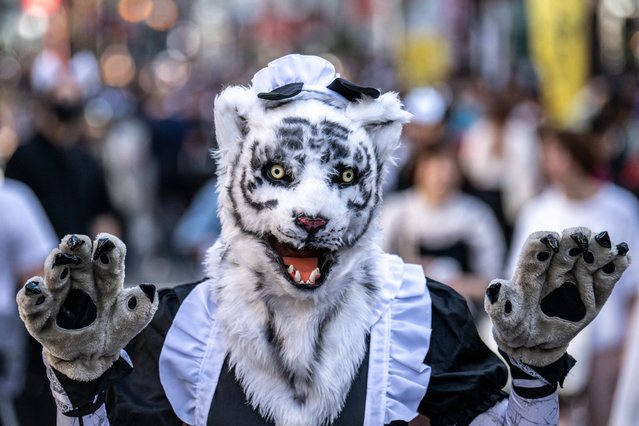
A participant in a tiger-themed costume walks during the “bakeneko” or supernatural cat festival as a Halloween parade in the Kagurazaka district of Tokyo on October 13, 2024. (Photo by Philip Fong/AFP Photo)

A participant in a tiger-themed costume walks during the “bakeneko” or supernatural cat festival as a Halloween parade in the Kagurazaka district of Tokyo on October 13, 2024. (Photo by Philip Fong/AFP Photo)
Details
17 Oct 2024 03:09:00
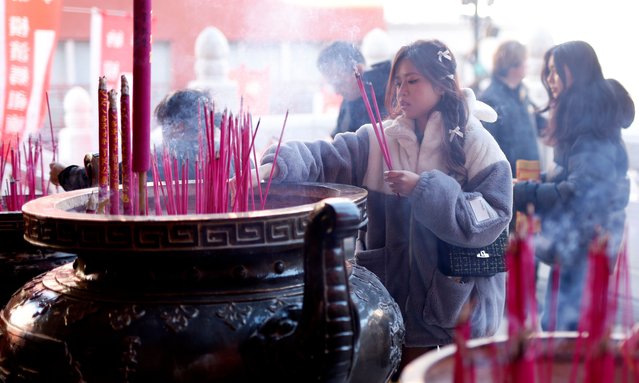
A woman offers prayers at a temple during the Chinese New Year celebrations in Yokohama Chinatown, near Tokyo, Japan, 29 January 2025. The celebrations of the Chinese Lunar New Year, or Spring Festival, which falls on 29 January 2025, are held in Yokohama Chinatown, Japan's largest Chinatown. (Photo by Franck Robichon/EPA/EFE)

A woman offers prayers at a temple during the Chinese New Year celebrations in Yokohama Chinatown, near Tokyo, Japan, 29 January 2025. The celebrations of the Chinese Lunar New Year, or Spring Festival, which falls on 29 January 2025, are held in Yokohama Chinatown, Japan's largest Chinatown. (Photo by Franck Robichon/EPA/EFE)
Details
10 Feb 2025 04:36:00
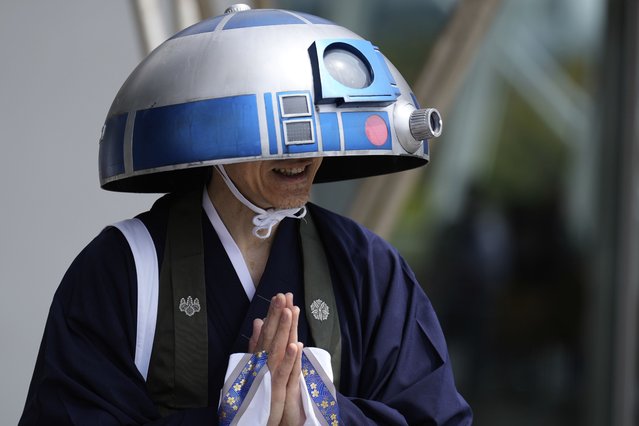
A Star Wars fan in an R2-D2 costume poses for a photo outside the venue during a fan convention called the Star Wars Celebration in Chiba, near Tokyo, Friday, April 18, 2025. (Photo by Hiro Komae/AP Photo)

A Star Wars fan in an R2-D2 costume poses for a photo outside the venue during a fan convention called the Star Wars Celebration in Chiba, near Tokyo, Friday, April 18, 2025. (Photo by Hiro Komae/AP Photo)
Details
22 May 2025 02:25:00
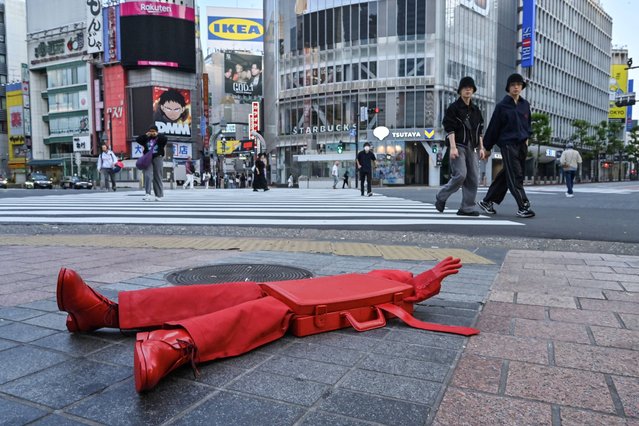
Pedestrians walk past an art installation by French street artist James Colomina called the “The Briefcase” (bottom) at Shibuya Crossing in the Shibuya district of central Tokyo on May 20, 2025. The display shows a red briefcase – a symbol of work and conformity – with arms, legs and a tie poking out on the ground to illustrate a “salaryman” who has lost his identity, swallowed by his daily routine. (Photo by Richard A. Brooks/AFP Photo)

Pedestrians walk past an art installation by French street artist James Colomina called the “The Briefcase” (bottom) at Shibuya Crossing in the Shibuya district of central Tokyo on May 20, 2025. The display shows a red briefcase – a symbol of work and conformity – with arms, legs and a tie poking out on the ground to illustrate a “salaryman” who has lost his identity, swallowed by his daily routine. (Photo by Richard A. Brooks/AFP Photo)
Details
15 Jul 2025 02:40:00
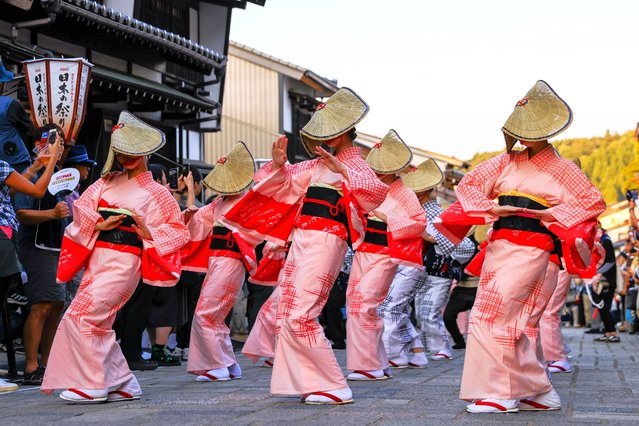
Women wearing braided straw hats dance as the Owara Kaze-no-Bon dance festival begins on September 1, 2025 in Toyama, Japan. The festival, believed to have more than 300 years history, continues till September 3. (Photo by The Asahi Shimbun via Getty Images)

Women wearing braided straw hats dance as the Owara Kaze-no-Bon dance festival begins on September 1, 2025 in Toyama, Japan. The festival, believed to have more than 300 years history, continues till September 3. (Photo by The Asahi Shimbun via Getty Images)
Details
20 Sep 2025 03:35:00
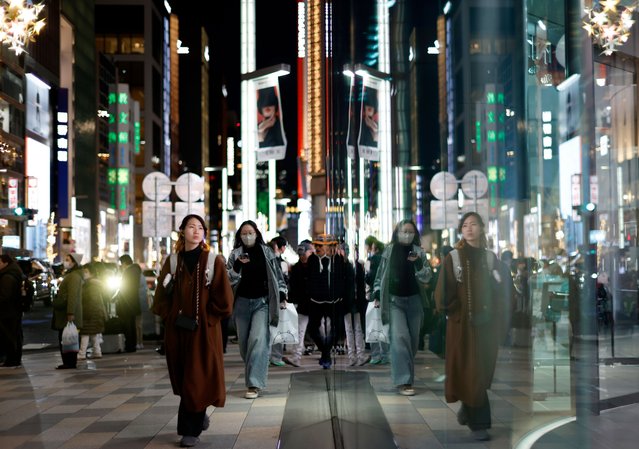
People walk through Ginza’s shopping district in Tokyo, Japan, 15 December 2025. Japan’s economic focus is on the upcoming Bank of Japan (BOJ) meeting where the central bank is expected to raise its policy rate to combat inflation. The BOJ signaled a rate hike bar is cleared with the wage momentum still intact. (Photo by Franck Robichon/EPA)

People walk through Ginza’s shopping district in Tokyo, Japan, 15 December 2025. Japan’s economic focus is on the upcoming Bank of Japan (BOJ) meeting where the central bank is expected to raise its policy rate to combat inflation. The BOJ signaled a rate hike bar is cleared with the wage momentum still intact. (Photo by Franck Robichon/EPA)
Details
23 Dec 2025 11:51:00
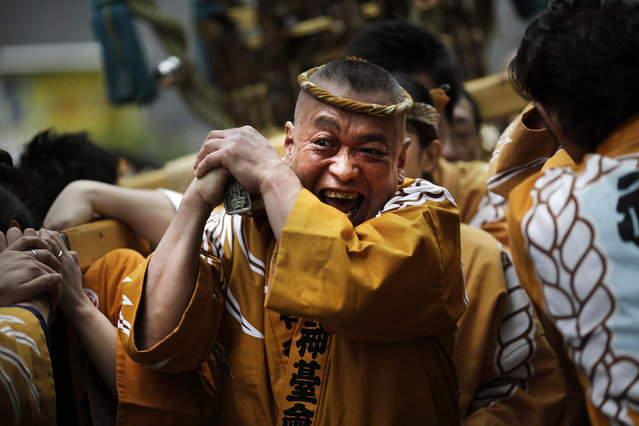
Carrying a portable shrine on their shoulders, participants all clad in traditional happi coats, parade through precincts of the Kanda Myojin shrine during the annual summer festival in Tokyo, Saturday, May 9, 2015. (Photo by Eugene Hoshiko/AP Photo)

Carrying a portable shrine on their shoulders, participants all clad in traditional happi coats, parade through precincts of the Kanda Myojin shrine during the annual summer festival in Tokyo, Saturday, May 9, 2015. (Photo by Eugene Hoshiko/AP Photo)
Details
11 May 2015 11:35:00
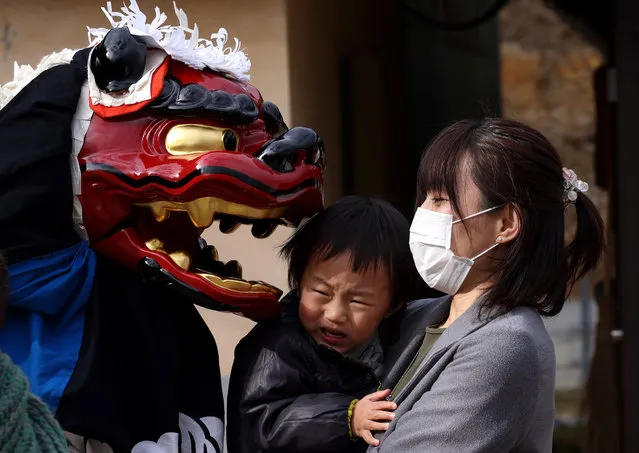
A performer wearing a lion mask performs the Ise Daikagura lion dance at the remote village of Yamanawa on February 08, 2021 in Ryuo, Japan. Ise Daikagura is a group of traditional Lion Dance performers who pray in front of farmers houses and businesses for good grain harvests and disease-free lives. Performers play sacred music using drums and flutes with two lion mask dancers. A lion mask is considered a symbol of God, who enters the house and performs in front of the Shinto God, a statue placed inside the house, mostly in the kitchen. These prayers are called “Kamodo Barai”. After the prayers, they are gifted with money, rice, sake and Japanese sweets from the householders. A group can travel for more than one hundred days to thousands of households and businesses throughout rural-villages in western Japan, and pray to those who are unable to visit the country’s most sacred shrine, the Grand Ise Shrine in Mie Prefecture. The group started its performance in the Edo era between 1603 to 1868 according to Japanese history. The Japanese government designated it as an important folk cultural national property in 1981. (Photo by Buddhika Weerasinghe/Getty Images)

A performer wearing a lion mask performs the Ise Daikagura lion dance at the remote village of Yamanawa on February 08, 2021 in Ryuo, Japan. Ise Daikagura is a group of traditional Lion Dance performers who pray in front of farmers houses and businesses for good grain harvests and disease-free lives. (Photo by Buddhika Weerasinghe/Getty Images)
Details
18 Feb 2021 09:27:00