Loading...
Done
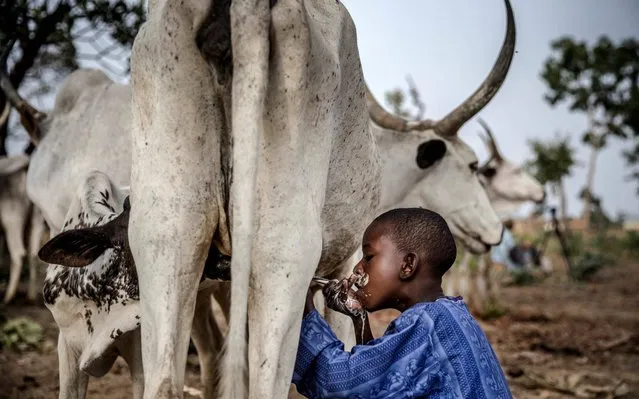
8-year-old Fulani boy Suleiman Yusuf drinks milk from a cow belonging to his father cattle near his family's house at Kachia Grazing Reserve, Kaduna State, Nigeria, on April 16, 2019. Kachia Grazing Reserve is an area set aside for the use of Fulani pastoralist and it is intended to be the foci of livestock development. The purpose for the grazing reserves is the settlement of nomadic pastoralists and inducement to sedentarisation through the provision of land for grazing and permanent water as way to avoid conflict. (Photo by Luis Tato/AFP Photo)

8-year-old Fulani boy Suleiman Yusuf drinks milk from a cow belonging to his father cattle near his family's house at Kachia Grazing Reserve, Kaduna State, Nigeria, on April 16, 2019. Kachia Grazing Reserve is an area set aside for the use of Fulani pastoralist and it is intended to be the foci of livestock development. The purpose for the grazing reserves is the settlement of nomadic pastoralists and inducement to sedentarisation through the provision of land for grazing and permanent water as way to avoid conflict. (Photo by Luis Tato/AFP Photo)
Details
10 Jul 2019 00:01:00
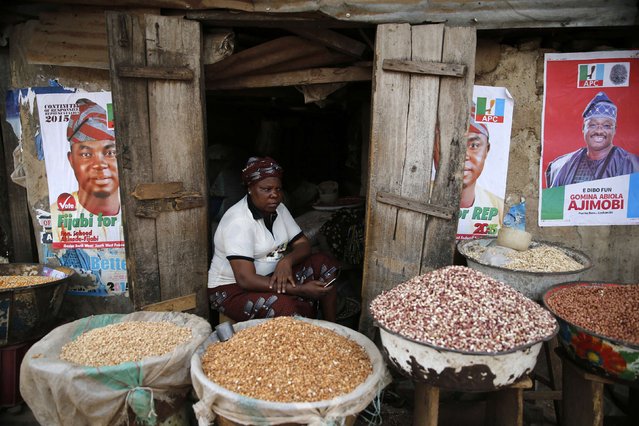
Latefat Alao, 56, a ethnic Yoruba Muslim woman, waits for customers in front of her in Beere market in Ibadan, southwest Nigeria, January 29, 2015. Much of the grain and wheat traders like Alao sell comes from the north and Boko Haram's campaign has negatively affected farmers and food markets. (Photo by Akintunde Akinleye/Reuters)

Latefat Alao, 56, a ethnic Yoruba Muslim woman, waits for customers in front of her in Beere market in Ibadan, southwest Nigeria, January 29, 2015. Much of the grain and wheat traders like Alao sell comes from the north and Boko Haram's campaign has negatively affected farmers and food markets. Reuters photographer Akintunde Akinleye photographed Nigerians and asked them about their views on the elections as well as their hopes and concerns for the country. (Photo by Akintunde Akinleye/Reuters)
Details
12 Feb 2015 12:44:00
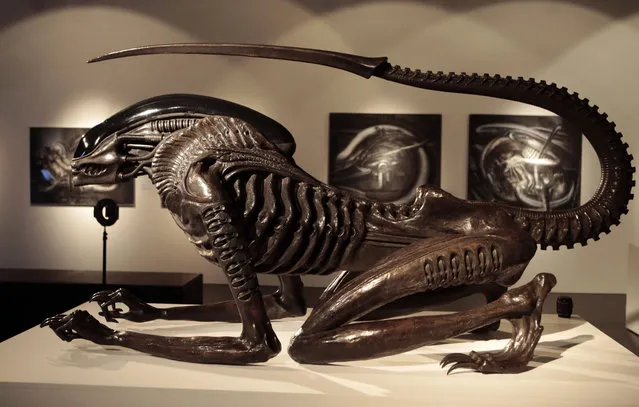
View at one of the sculptures by Swiss artist H.R. Giger during the opening of the Ars Electronica 2013 exhibition “HR Giger. The Art of Biomechanics” in Linz, Austria, 04 September 2013. (Photo by EPA/RUBRA)

View at one of the sculptures by Swiss artist H.R. Giger during the opening of the Ars Electronica 2013 exhibition “HR Giger. The Art of Biomechanics” in Linz, Austria, 04 September 2013. (Photo by EPA/RUBRA)

SEE ALSO: «Surreal Art by Alien Creator H. R. Giger»

Details
15 May 2014 12:05:00
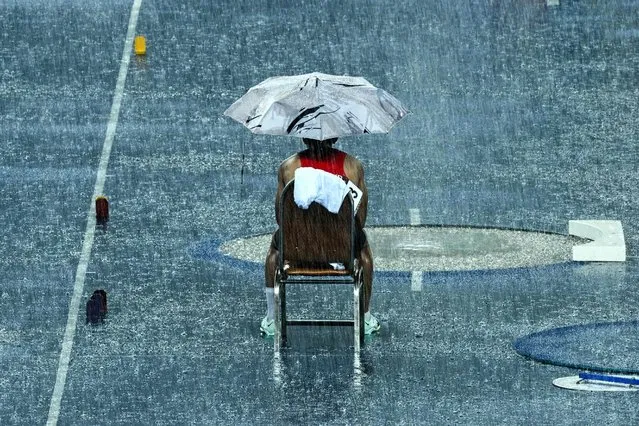
Thailand's Patsapong Amsam-ang waits under an umbrella during a break due to heavy rains in the men's pole vault final during the 32nd Southeast Asian Games (SEA Games) in Phnom Penh on May 8, 2023. (Photo by Mohd Rasfan/AFP Photo)

Thailand's Patsapong Amsam-ang waits under an umbrella during a break due to heavy rains in the men's pole vault final during the 32nd Southeast Asian Games (SEA Games) in Phnom Penh on May 8, 2023. (Photo by Mohd Rasfan/AFP Photo)
Details
29 Jun 2023 02:54:00
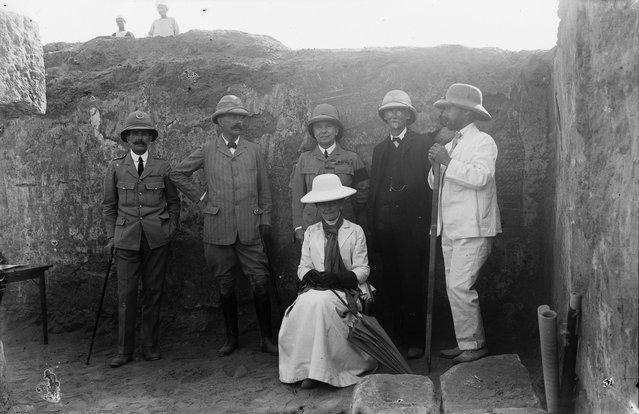
Remarkable discoveries were made, like the decapitated head of a bronze statue of Roman emperor Augustus, sacked from a raid on Roman garrisons further north in Egypt. Here: A group visiting the excavations at Meroë, including (from left) Midwinter Bey, director of Sudan Railways; Lord Kitchener; General Sir Francis Reginald Wingate, Sirdar of the Egyptian Army; Professor Archibald Sayce; John Garstang; and Lady Catherine Wingate, 1911. (Photo by Garstang Museum of Archaeology)

The city of Meroë laid undiscovered for two millennia before British archaeologist John Garstang excavated it in the early 20th century. Garstang took the radical decision to document his discoveries with photography – and immortalised an ancient world. “Meroë: Africa’s Forgotten Empire” is being shown until 14 September at Garstang Museum of Archaeology, Liverpool. Here: A group visiting the excavations at Meroë, including (from left) Midwinter Bey, director of Sudan Railways; Lord Kitchener; General Sir Francis Reginald Wingate, Sirdar of the Egyptian Army; Professor Archibald Sayce; John Garstang; and Lady Catherine Wingate, 1911. (Photo by Garstang Museum of Archaeology)
Details
15 Jun 2016 14:49:00
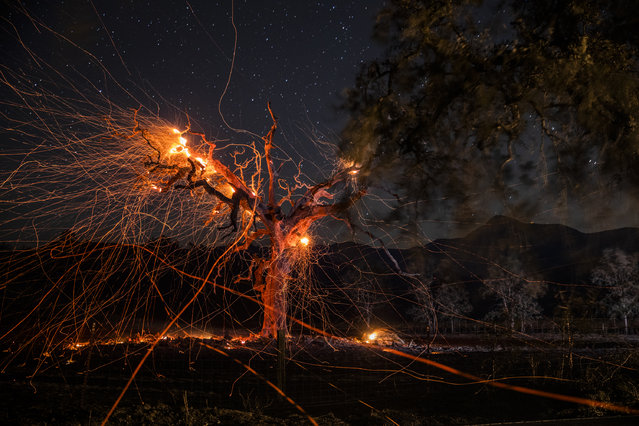
A long exposure photograph shows a tree burning during the Kincade fire off Highway 128, east of Healdsburg, California on October 29, 2019. California braced on October 29 for the most powerful winds this season that threaten to spread destructive fires raging in the state and could spark new blazes. (Photo by Philip Pacheco/AFP Photo)

A long exposure photograph shows a tree burning during the Kincade fire off Highway 128, east of Healdsburg, California on October 29, 2019. California braced on October 29 for the most powerful winds this season that threaten to spread destructive fires raging in the state and could spark new blazes. (Photo by Philip Pacheco/AFP Photo)
Details
01 Nov 2019 00:03:00
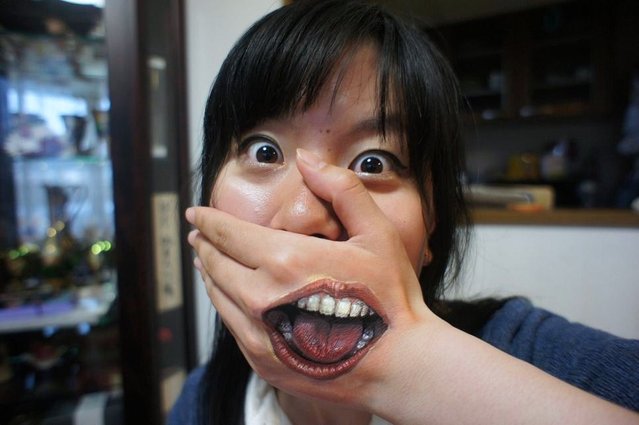
A frightening-realistic Body Art by Chooo-San

“The images might look like they are digitally altered using Photoshop, but they are actually hand drawn pieces of incredibly realistic body art by Japanese artist and student Chooo-San”. (Via Enpundit.com)
Details
30 Jun 2012 12:13:00
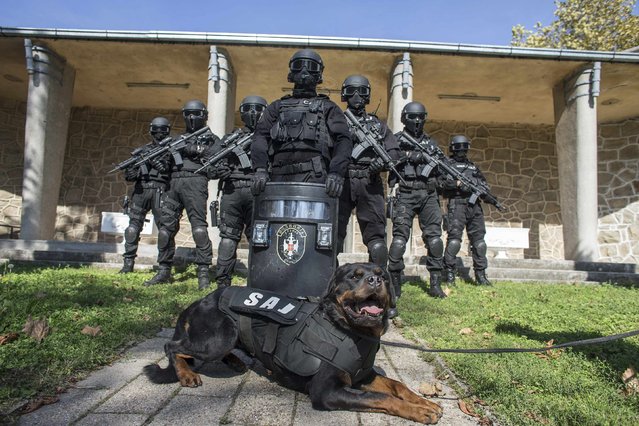
Serbian police officers of the Special Anti-Terrorist Unit pose for a picture in their base outside Belgrade October 8, 2014. (Photo by Marko Djurica/Reuters)

Serbian police officers of the Special Anti-Terrorist Unit pose for a picture in their base outside Belgrade October 8, 2014. When the killing of an unarmed black teenager by a white policeman in Ferguson, Missouri, in August sparked sometimes violent protests, the response of police in camouflage gear and armoured vehicles wielding stun grenades and assault rifles seemed more like a combat operation than a public order measure. Some U.S. police departments have recently acquired U.S. military-surplus hardware from wars abroad, but there are many law enforcers around the world whose rules of engagement also allow the use of lethal force with relatively few restrictions. But for every regulation that gives police wide scope to use firearms, there is another code that sharply limits their use. In Serbia, police may use measures ranging from batons to special vehicles, water cannon and tear gas on groups of people who have gathered illegally and are behaving in a way that is violent or could cause violence, but they may use firearms only when life is endangered. (Photo by Marko Djurica/Reuters)
Details
27 Nov 2014 14:53:00