Loading...
Done
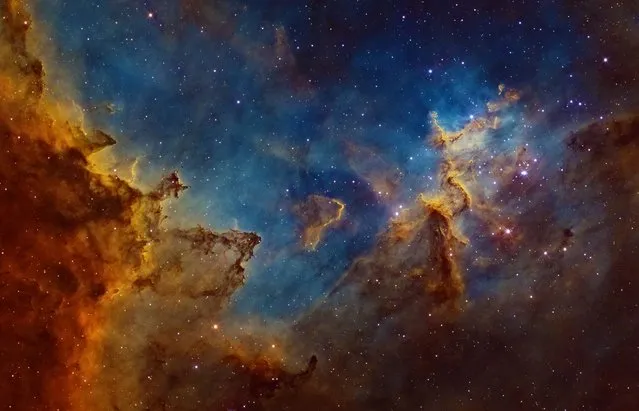
Centre of the Heart Nebula by Ivan Eder (Hungary). Situated 7500 light years away in the ‘W’-shaped constellation of Cassiopeia, the Heart Nebula is a vast region of glowing gas, energized by a cluster of young stars at its centre. The image depicts the central region, where dust clouds are being eroded and moulded into rugged shapes by the searing cosmic radiation. (Photo by Ivan Eder)

The competition, which is run by the Royal Observatory Greenwich in association with BBC Sky at Night Magazine, is now in its sixth year and has received over 2,500 entries. Photo: Centre of the Heart Nebula by Ivan Eder (Hungary). Situated 7500 light years away in the “W”-shaped constellation of Cassiopeia, the Heart Nebula is a vast region of glowing gas, energized by a cluster of young stars at its centre. The image depicts the central region, where dust clouds are being eroded and moulded into rugged shapes by the searing cosmic radiation. (Photo by Ivan Eder)
Details
03 Jul 2014 11:59:00
Empire State Building Brings Endangered Animals

New York's famed Empire State Building hosted new guests on Saturday night as images of endangered animals were flashed across its facade.
Details
07 Aug 2015 09:30:00
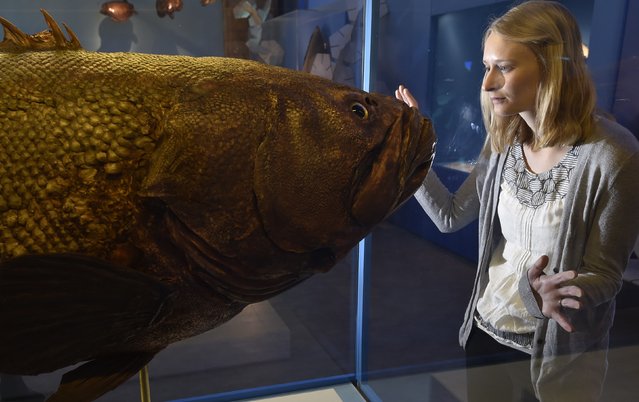
Museum employee Victoria views a giant grouper fish specimen at the Natural History Museum in west London March 25, 2015. (Photo by Toby Melville/Reuters)

Museum employee Victoria views a giant grouper fish specimen at the Natural History Museum in west London March 25, 2015. It forms part of a new exhibition, “Coral Reefs: Secret Cities of the Sea”, featuring a panoramic virtual dive and over 250 specimens from the Museum's coral, fish and marine invertebrate collection, which opens on March 27. (Photo by Toby Melville/Reuters)
Details
26 Mar 2015 11:38:00
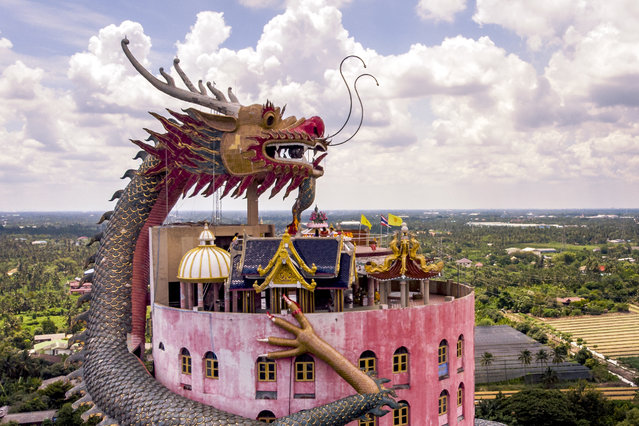
An aerial view taken on September 11, 2020 shows the Buddhist temple Wat Samphran (Dragon Temple) in Nakhon Pathom, some 40km west of Bangkok. Wat Samphran is a popular tourist destination with visitors coming to see the huge dragon figure curling around a pink cylindrical building next to the Buddha statues and places of worship of the traditional Buddhist temple complex. (Photo by Mladen Antonov/AFP Photo)

An aerial view taken on September 11, 2020 shows the Buddhist temple Wat Samphran (Dragon Temple) in Nakhon Pathom, some 40km west of Bangkok. Wat Samphran is a popular tourist destination with visitors coming to see the huge dragon figure curling around a pink cylindrical building next to the Buddha statues and places of worship of the traditional Buddhist temple complex. (Photo by Mladen Antonov/AFP Photo)
Details
25 Sep 2020 00:01:00
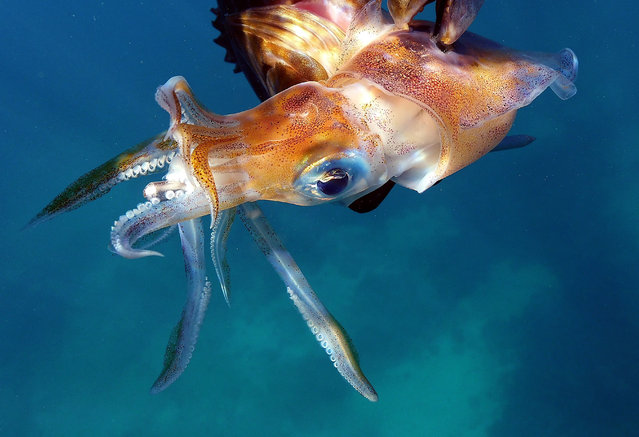
A squid swims underwater off the shore of the coastal city of Qalamun, north of the Lebanese capital Beirut, on September 24, 2019. (Photo by Ibrahim Chalhoub/AFP Photo)

A squid swims underwater off the shore of the coastal city of Qalamun, north of the Lebanese capital Beirut, on September 24, 2019. (Photo by Ibrahim Chalhoub/AFP Photo)
Details
06 Oct 2019 00:03:00


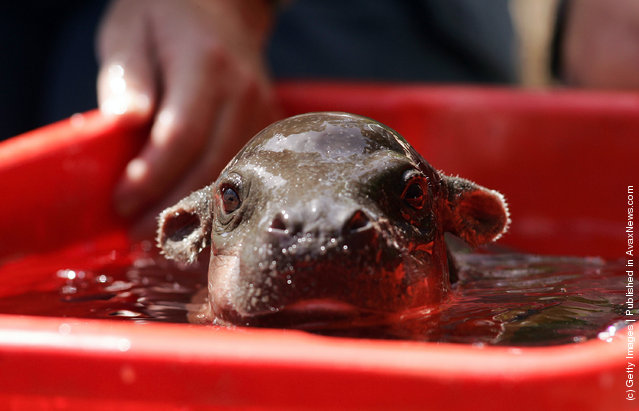
“The pygmy hippopotamus (Choeropsis liberiensis or Hexaprotodon liberiensis) is a large mammal native to the forests and swamps of western Africa (the specific name liberiensis means “of Liberia”, as this is where the vast majority live). The pygmy hippo is reclusive and nocturnal. It is one of only two extant species in the Hippopotamidae family, the other being its much larger cousin the common hippopotamus”. – Wikipedia

Photo: Monifa, a one month old baby Pygmy Hippopotamus takes a morning bath at Taronga Zoo on November 7, 2008 in Sydney, Australia. Monifa is the first Pygmy Hippopotamus to be born at Taronga Zoo in the past twenty three years. (Photo by Sergio Dionisio/Getty Images)
Details
11 Apr 2011 08:11:00
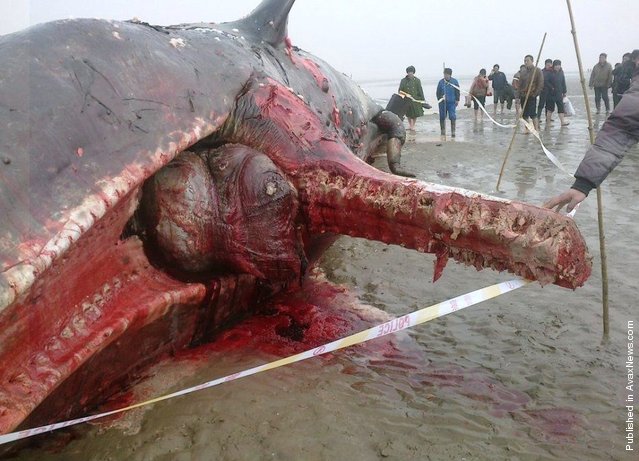
A dead sperm whale is seen on the beach on March 18, 2012 in Yancheng, Jiangsu Province of China

A dead sperm whale is seen on the beach on March 18, 2012 in Yancheng, Jiangsu Province of China. Four giant sperm whales, which were found beached on the beach of Xintan Salt Field on Friday, died on Saturday despite rescue efforts. (Photo by ChinaFotoPress)
Details
19 Mar 2012 12:30:00
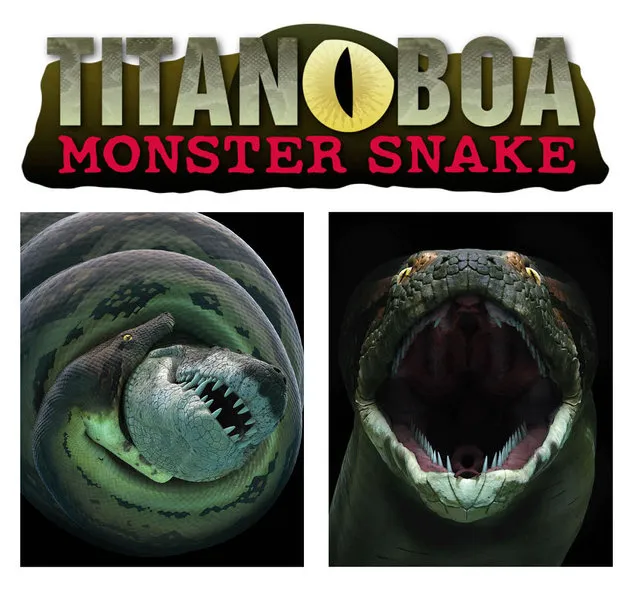
Titanoboa: Monster Snake

Titanoboa, meaning "titanic boa," is an extinct genus of snake that lived approximately 60–58 million years ago, during the Paleocene epoch, a 10-million-year period immediately following the dinosaur extinction event. The only known species is Titanoboa cerrejonensis, the largest, longest, and heaviest snake ever discovered, which supplanted the previous record holder, Gigantophis.

A full-scale model of the snake was unveiled at New York City's Grand Central station before the exhibit opens at the Smithsonian in Washington DC.
Details
06 Feb 2014 12:38:00