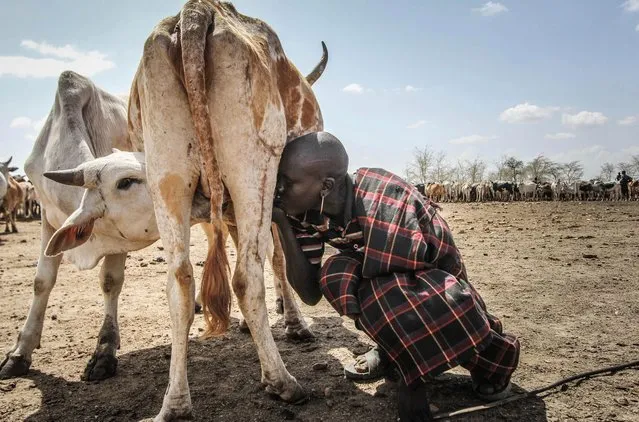
Cattle are the most important way of livelihood for the Karamojong: they provide milk, meat, blood and money when sold, Karamoja, Uganda, February 2017. (Photo by Sumy Sadurni/Barcroft Images)
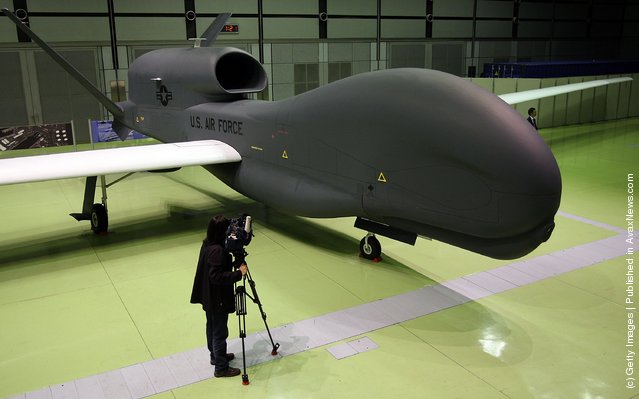
“The Northrop Grumman (formerly Ryan Aeronautical) RQ-4 Global Hawk (known as Tier II+ during development) is an unmanned aerial vehicle (UAV) used by the United States Air Force and Navy as a surveillance aircraft”. – Wikipedia
Photo: A full-scale model of The RQ-4 Global Hawk unmanned plane is displayed during a presentation at PiO Exhibition Center on March 24, 2010 in Tokyo, Japan. (Photo by Koichi Kamoshida/Getty Images)
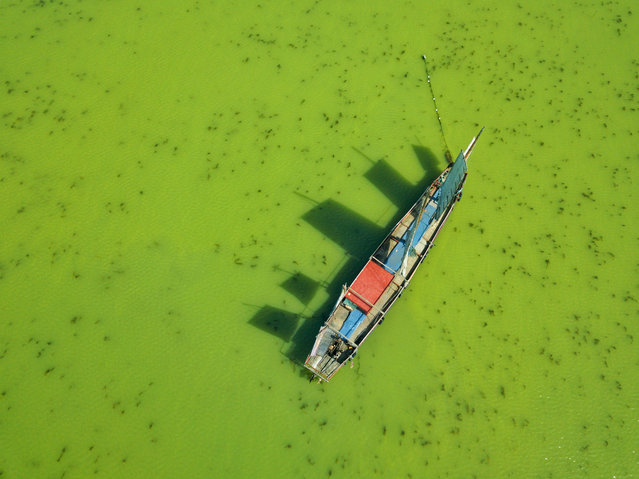
Aerial view of a boat working in the green water of Taihu Lake covered by blue-green algae, Wuxi city, Jiangsu province, China on May 23, 2018. (Photo by Imaginechina/Rex Features/Shutterstock)
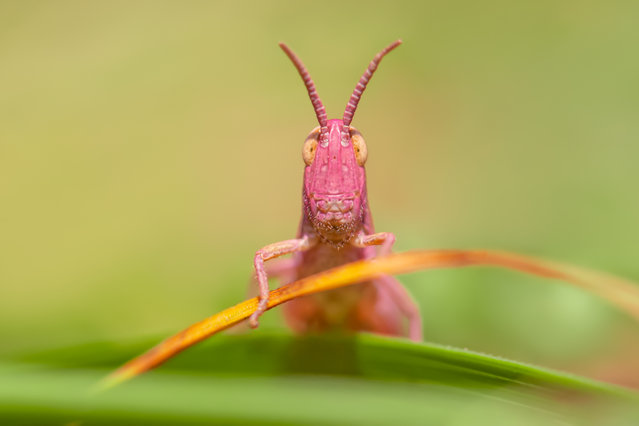
A rare grasshopper shines bright against its leafy background in North Holland, Netherlands in the first decade of October 2024. The insects are usually brown or green but turn pink due to a genetic mutation. (Photo by Roeselien Raimond/Media Drum Images)
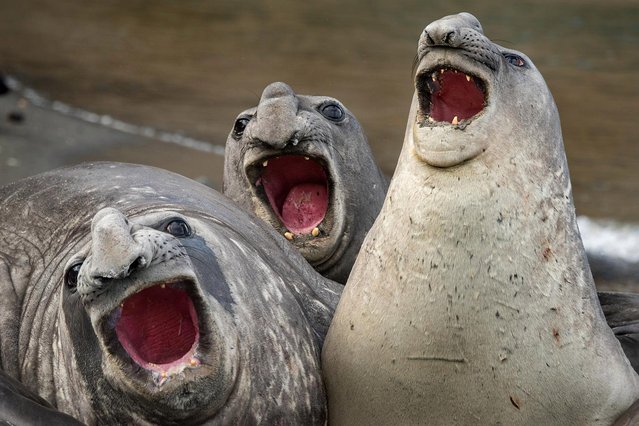
Three elephant seals put on a show in Roie Galitz's “Three Tanors”, taken on January 7, 2016 in South Georgia Island. The Comedy Wildlife Photography Awards are in full swing, so check out some of the fierce competitors jostling for the top prize this year. Photographers Paul Joynson-Hicks MBE and Tom Sullam founded the awards to spotlight wildlife conservation efforts and to inject some humour into the world of wildlife photography. (Photo by Roie Galitz/CWPA/Barcroft Images)
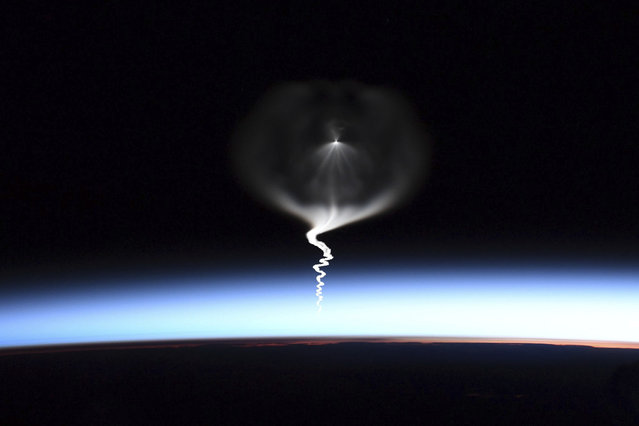
This photo provided by NASA astronaut Christina Koch shows the launch of a Russian Soyuz rocket, as seen from the International Space Station on Wednesday, September 25, 2019. (Photo by Christina Koch/NASA via AP Photo)
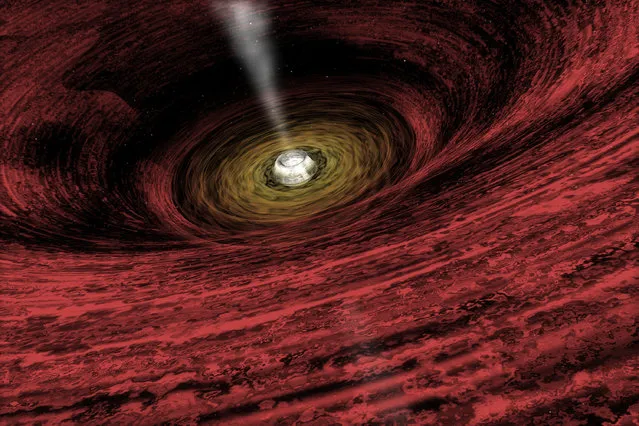
An artist's impression of a growing supermassive black hole located in the early Universe is seen in this NASA handout illustration released on June 15, 2011. Using the deepest X-ray image ever taken, astronomers found the first direct evidence that massive black holes were common in the early universe. This discovery from NASA's Chandra X-Ray Observatory shows that very young black holes grew more aggressively than previously thought, in tandem with the growth of their host galaxies. (Photo by Reuters/NASA/Chandra X-Ray Observatory/A.Hobart)