Loading...
Done
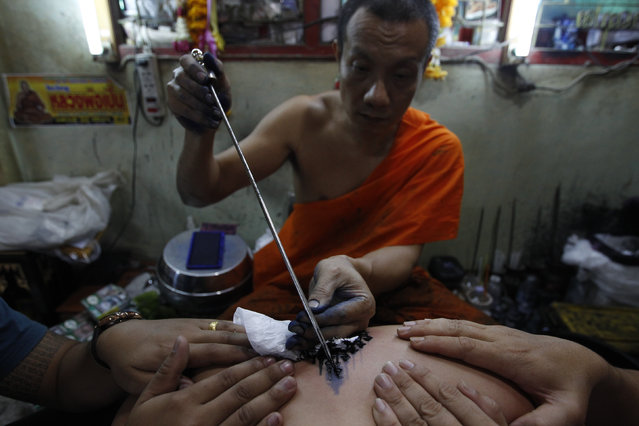
A Buddhist monk uses a traditional needle to tattoo the body of a man at Wat Bang Phra in Nakhon Pathom province on the outskirts of Bangkok, Thailand,  March 18, 2016. (Photo by Chaiwat Subprasom/Reuters)

A Buddhist monk uses a traditional needle to tattoo the body of a man at Wat Bang Phra in Nakhon Pathom province on the outskirts of Bangkok, Thailand, March 18, 2016. Believers from across Thailand travel to the monastery to have their bodies adorned with tattoos and to pay their respects to the temple's master tattooist. They believe the tattoos have mystical powers, ward off bad luck and protect them from harm. (Photo by Chaiwat Subprasom/Reuters)
Details
19 Mar 2016 12:44:00
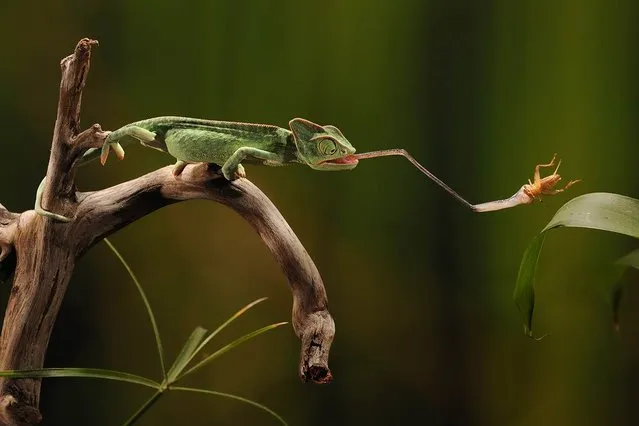
A veiled chameleon extends its tongue to catch a cricket

“Scott Linstead is an internationally published, freelance wildlife photographer/writer. His clients include Natural History Magazine, Hewlett Packard, Ranger Rick Magazine and a number of wildlife publications in North America and Europe. Scott's column on the techniques of bird photography appears in every issue of Outdoor Photography Canada”.

Photo: A veiled chameleon extends its tongue to catch a cricket. Canadian wildlife photographer Scott Linstead, formerly an aerospace engineer and high school teacher, uses a device called Phototrap “to not only photograph the elusive, but also the unimaginably quick”. (Photo by Scott Linstead)
Details
22 May 2012 11:32:00
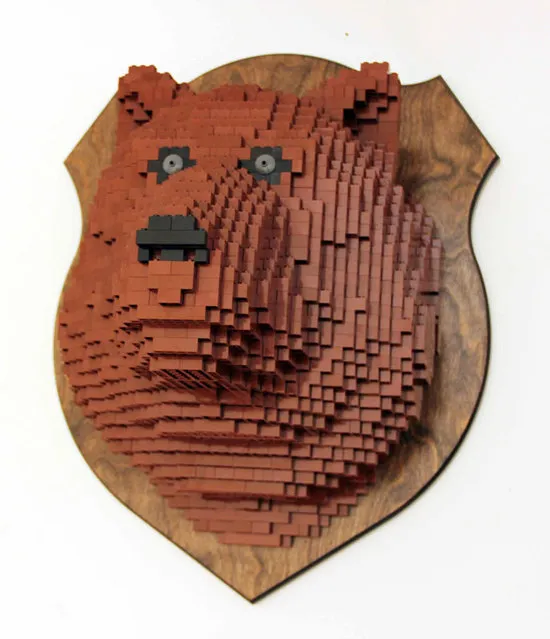
Art lego

New York sculptor Nathan Sawaya has become renowned in the modern art world for his groundbreaking fusion of pop art and surrealism in pieces comprised solely of LEGO® bricks. His most recent work represents a new phase of artistic expression within this medium, as he explores themes of identity. All his new sculpture is in one way or another autobiographical, addressing the issue of self through symbolism to express his surrealistic ideology.
Details
15 Apr 2015 09:00:00
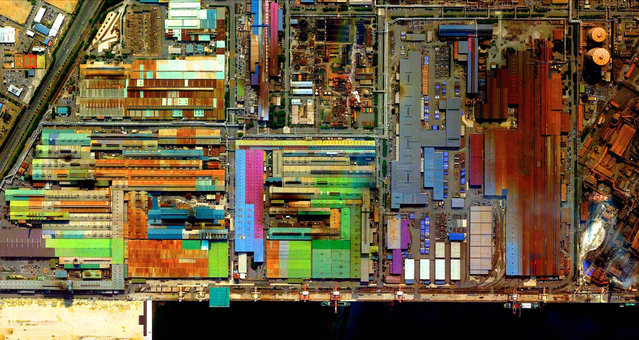
Industrial Sector, Tokai, Japan. (Photo by Benjamin Grant/Digital Globe/Caters News)

This series of pictures shot by satellite, show the man-made world as astronauts see it. Artist Benjamin Grant uses Google Earth to find the most compelling satellite images of human civilization. The stunning pictures of sprawling metropolises and vast reservoirs are sometimes unidentifiable until zoomed in. In order to find an extraordinary picture in the practically endless supply of satellite data, Benjamin focuses on the themes of current events or environmental issues. Here: Industrial Sector, Tokai, Japan. (Photo by Benjamin Grant/Digital Globe/Caters News)
Details
04 Feb 2015 12:21:00
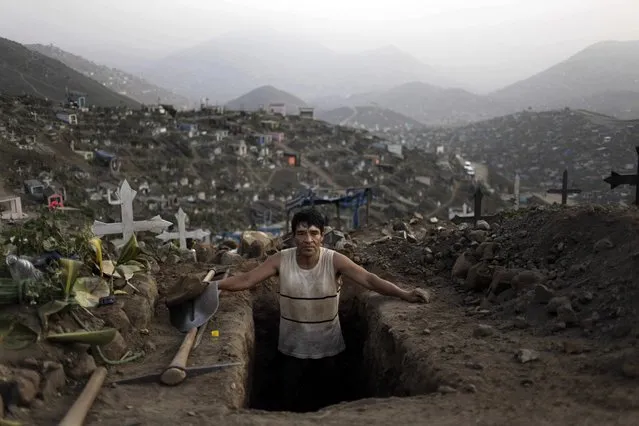
FILE- In this Sept. 9, 2013 file photo, grave digger Juan Luis Cabrera takes a break from his work at the "Nueva Esperanza" cemetery in Lima, Peru. (AP Photo/Rodrigo Abd, File)

Cemetery overcrowding is an issue that resonates around the world, particularly in its most cramped cities and among religions that forbid or discourage cremation. The reality of relying on finite land resources to cope with the endless stream of the dying has brought about creative solutions... (Photo by Rodrigo Abd/AP Photo)
Details
17 Oct 2014 12:16:00
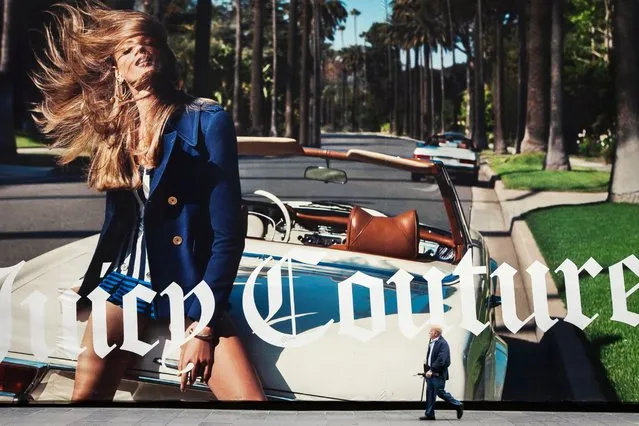
Natan Dvir, an Israeli photographer, focuses on the human aspects of political, social and cultural issues. For his “Coming Soon” series, Dvir says that in recent years, a kaleidoscopic net of huge billboards has enveloped the commercial hubs of New York. Seen here, a man looks at a Juicy Couture billboard while passing it on 52nd street close to 5th Avenue in New York, June 5, 2012. (Photo by Natan Dvir/Polaris)

Natan Dvir, an Israeli photographer, focuses on the human aspects of political, social and cultural issues. For his “Coming Soon” series, Dvir says that in recent years, a kaleidoscopic net of huge billboards has enveloped the commercial hubs of New York. Seen here, a man looks at a Juicy Couture billboard while passing it on 52nd street close to 5th Avenue in New York, June 5, 2012. (Photo by Natan Dvir/Polaris)
Details
05 Jun 2015 10:39:00
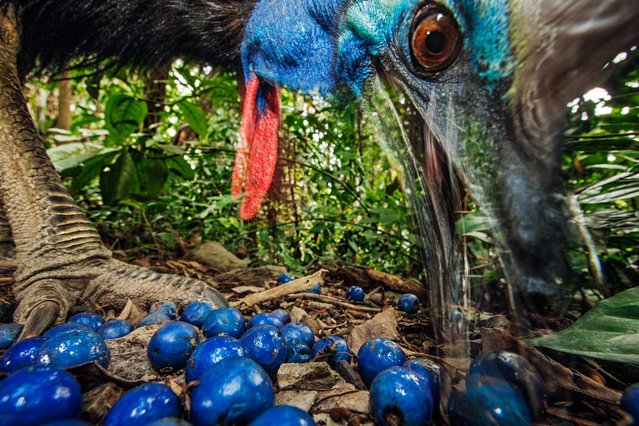
“Cassowaries are large, flightless birds related to emus and (more distantly) to ostriches, rheas, and kiwis”, writes Olivia Judson in the September issue of National Geographic magazine. (Photo by Christian Ziegler/National Geographic)

“Cassowaries are large, flightless birds related to emus and (more distantly) to ostriches, rheas, and kiwis”, writes Olivia Judson in the September issue of National Geographic magazine. How large? People-size: Adult males stand well over five foot five and top 110 pounds. Females are even taller, and can weigh more than 160 pounds. Dangerous when roused, they’re shy and peaceable when left alone. But even birds this big and tough are prey to habitat loss. The dense New Guinea and Australia rain forests where they live have dwindled. Today cassowaries might number 1,500 to 2,000. And because they help shape those same forests – by moving seeds from one place to another – “if they vanish”, Judson writes, “the structure of the forest would gradually change” too. (Photo by Christian Ziegler/National Geographic)
Details
06 Jan 2014 12:21:00
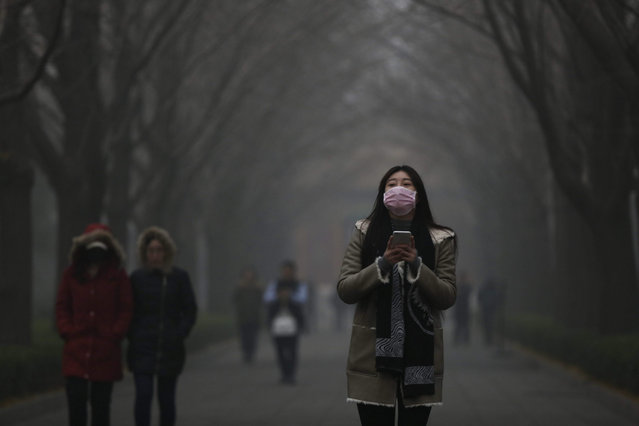
A woman wearing a mask walk in a street in a Yonghegong Lama temple compound seen shrouded in smog in Beijing, China, 30 November 2015. Beijing issued an orange alert for heavy smog 30 November, the highest level this year. Authorities in the Chinese capital warned of 'severe pollution' and advised the capital's 20 million inhabitants to stay indoors. (Photo by How Hwee Young/EPA)

A woman wearing a mask walk in a street in a Yonghegong Lama temple compound seen shrouded in smog in Beijing, China, 30 November 2015. Beijing issued an orange alert for heavy smog 30 November, the highest level this year. Authorities in the Chinese capital warned of 'severe pollution' and advised the capital's 20 million inhabitants to stay indoors. (Photo by How Hwee Young/EPA)
Details
02 Dec 2015 08:01:00