Loading...
Done
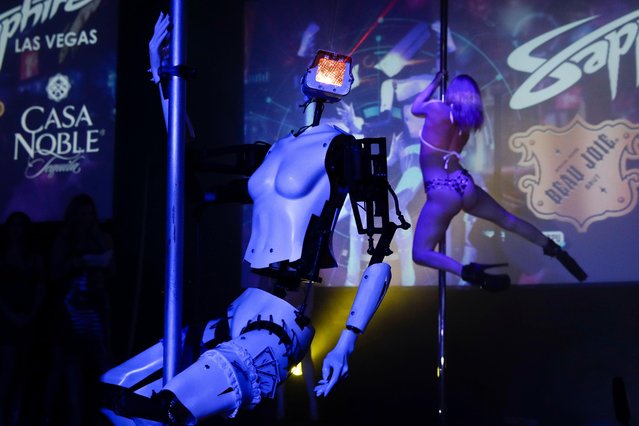
A pole-dancing robot built by British artist Giles Walker performs at a gentlemen's club Monday, January 8, 2018, in Las Vegas. The event was held to coincide with CES International. (Photo by Jae C. Hong/AP Photo)

A pole-dancing robot built by British artist Giles Walker performs at a gentlemen's club Monday, January 8, 2018, in Las Vegas. The event was held to coincide with CES International. (Photo by Jae C. Hong/AP Photo)
Details
10 Jan 2018 09:16:00
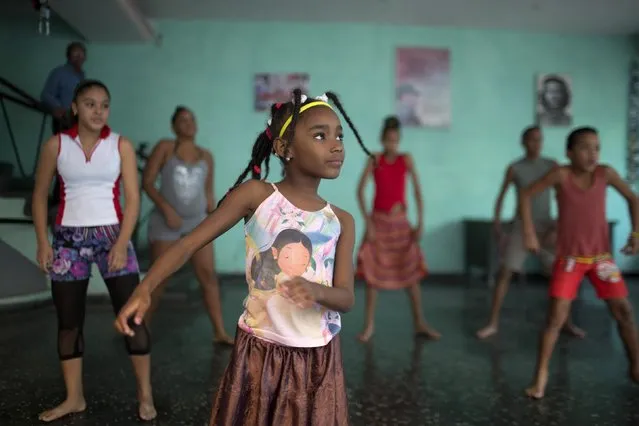
Sakia Corona, 8, (C) takes part in a rehearsal of the Contemporary Haitian Dance in a communal center in downtown Havana January 30, 2015. (Photo by Alexandre Meneghini/Reuters)

Sakia Corona, 8, (C) takes part in a rehearsal of the Contemporary Haitian Dance in a communal center in downtown Havana January 30, 2015. Nearly 25 people, from the Haitian Contemporary Dance Company Petit Fey or Small Leaf, in Haitian Creole, rehearse a play called Papa Guede for future presentations in Havana. (Photo by Alexandre Meneghini/Reuters)
Details
02 Feb 2015 10:04:00
Nick Krist makes a funny face as he and his son, Noah, 8, take a selfie before a baseball game between the Los Angeles Angels and the Minnesota Twins, Wednesday, July 22, 2015, in Anaheim, Calif. (Photo by Jae C. Hong/AP Photo)

Nick Krist makes a funny face as he and his son, Noah, 8, take a selfie before a baseball game between the Los Angeles Angels and the Minnesota Twins, Wednesday, July 22, 2015, in Anaheim, Calif. (Photo by Jae C. Hong/AP Photo)
Details
24 Jul 2015 12:04:00
Surgeons Prepare To Separate Conjoined Twin Toddlers

Conjoined twins Angelica (C) and Angelina Sabuco (L) play with child life specialist Allison Brooks during a press conference at the Lucile Packard Children's Hospital at Stanford on October 31, 2011 in Palo Alto, California. Two year-old conjoined twins Angelica and Angelina Subaco who are connected at the chest and abdomen are preparing for separation surgery by Dr. Gary Hartman. The surgery will last between 6 and 8 hours that is followed by three hours of reconstructive surgery for each girl. (Photo by Justin Sullivan/Getty Images)
Details
01 Nov 2011 11:10:00


“Itasha (痛車), literally “painmobile”, is a Japanese term for an otaku fad of individuals decorating the bodies of their cars with fictional characters of anime, manga, or video games (especially bishōjo game or eroge). These characters are predominately “cute” female. The decorations usually involve paint schemes and stickers. Automobiles are called Itasha, while similar motorcycles and bicycles are called itansha (痛単車) and itachari (痛チャリ), respectively”. – Wikipedia


Photo: A visitor takes pictures of an anime-decorated «Itasha» car displayed during the “Moe Fes in Washimiya” at Washimiya Town Hall on July 18, 2009 in Washimiya, Saitama, Japan. Itasha, a word derived from “itai” (painful) and “sha” (car), are vehicles decorated with mostly female characters from Japanese manga, anime and video games. (Photo by Kiyoshi Ota/Getty Images)

Details
02 May 2011 08:38:00
A woman plays on a swing on the beach in Santa Monica, Calif., Wednesday, June 22, 2022. (Photo by Jae C. Hong/AP Photo)

A woman plays on a swing on the beach in Santa Monica, Calif., Wednesday, June 22, 2022. (Photo by Jae C. Hong/AP Photo)
Details
25 Jul 2022 10:09:00
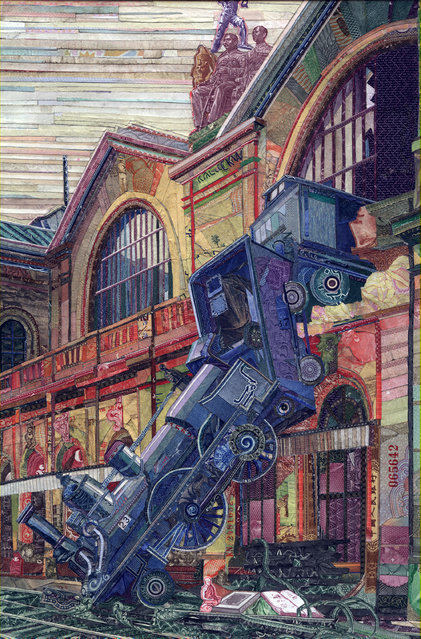
“Great Crash”. (Photo by C. K. Wilde)

Artist C. K. Wilde creates intricate collage compositions using pieces of paper currency from all over the world. His collages have referenced subjects ranging from space exploration, to mythology, religion, slavery, ecology, the history of warfare, the history of money, and art history. Photo: “Great Crash”. (Photo by C. K. Wilde)
Details
11 Jul 2014 12:06:00
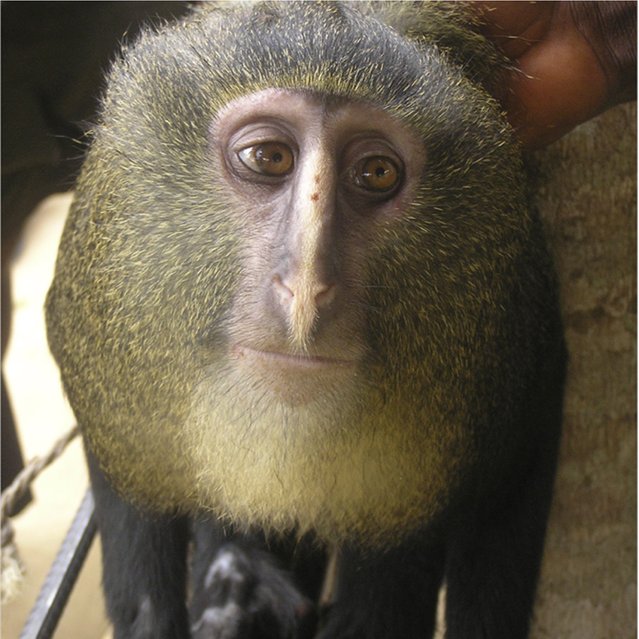
A new species of monkey found in the Democratic Republic of the Congo and identified as Lesula (Cercopithecus lomamiensis) is seen in this undated photograph from an article published September 12, 2012 in the science journal PLOS One. (Photo by Hart J. A., Detwiler K. M., Gilbert C. C./Reuters)

A new species of monkey found in the Democratic Republic of the Congo and identified as Lesula (Cercopithecus lomamiensis) is seen in this undated photograph from an article published September 12, 2012 in the science journal PLOS One. The monkey was first seen in 2007 by researchers John and Terese Hart of the Peabody Museum of Natural History at Yale Research Project. The finding of C. lomamiensis represents only the second new species of African monkey to be discovered in the past 28 years, according to the research article. (Photo by Hart J. A., Detwiler K. M., Gilbert C. C./Reuters)
Details
27 Sep 2012 08:17:00