Loading...
Done
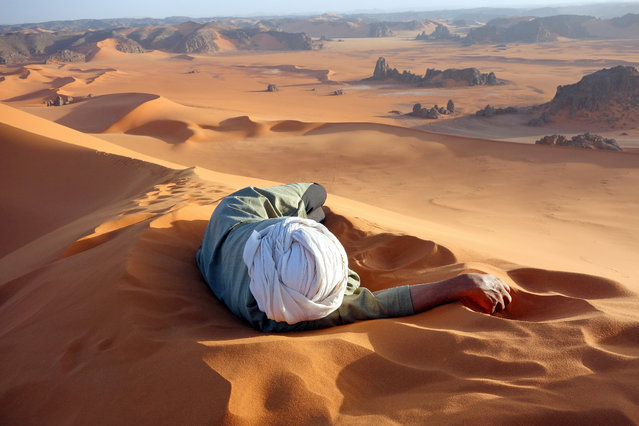
“A Well Earned Rest in the Sahara”. This photo of Moussa Macher, our Tuareg guide, was taken at the summit of Tin-Merzouga, the largest dune (or erg) in the Tadrat region of the Sahara desert in southern Algeria. Moussa rested while waiting for us to finish our 45-minute struggle to the top. Photo location: Summit of Tin-Merzouga, Tadrat, Tassili N'Ajjer National Park, Algeria. (Photo and caption by Evan Cole/National Geographic Photo Contest)

Merit Prize Winner: “A Well Earned Rest in the Sahara”. This photo of Moussa Macher, our Tuareg guide, was taken at the summit of Tin-Merzouga, the largest dune (or erg) in the Tadrat region of the Sahara desert in southern Algeria. Moussa rested while waiting for us to finish our 45-minute struggle to the top. It only took ten minutes of rolling, running, and jumping to get back down. The Tadrat is part of the Tassili N'Ajjer National Park World Heritage area, famous for its red sand and engravings and rock paintings of cattle, elephants, giraffes, and rhinos that lived there when the climate was milder. Photo location: Summit of Tin-Merzouga, Tadrat, Tassili N'Ajjer National Park, Algeria. (Photo and caption by Evan Cole/National Geographic Photo Contest)
Details
01 Aug 2014 11:38:00
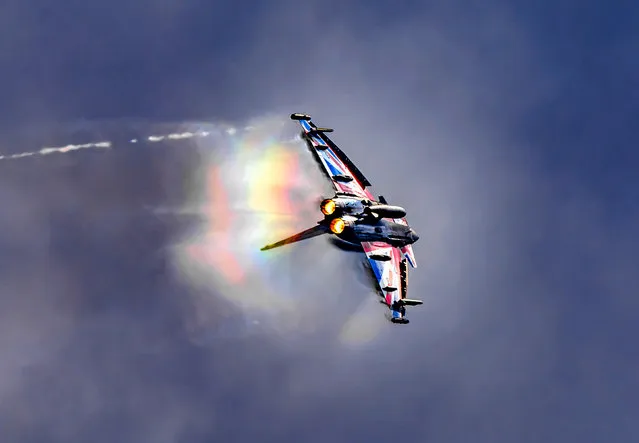
Standalone picture dated June 7th, 2022 shows Flt Lt Adam O’Hare rehearsing in the iconic Typhoon plane over Lincolnshire yesterday (Tues) as he trains for this summers airshows with vapour trails over the wing. The phenomenon is caused by low pressure areas created on the aircraft's skin and wings as it moves through moist air. As the pressure drops so does the temperature, and if the temperature reaches the saturation point, water vapor is created. (Photo by Claire Hartley/Bav Media)

Standalone picture dated June 7th, 2022 shows Flt Lt Adam O’Hare rehearsing in the iconic Typhoon plane over Lincolnshire yesterday (Tues) as he trains for this summers airshows with vapour trails over the wing. The phenomenon is caused by low pressure areas created on the aircraft's skin and wings as it moves through moist air. As the pressure drops so does the temperature, and if the temperature reaches the saturation point, water vapor is created. (Photo by Claire Hartley/Bav Media)
Details
14 Nov 2022 05:17:00
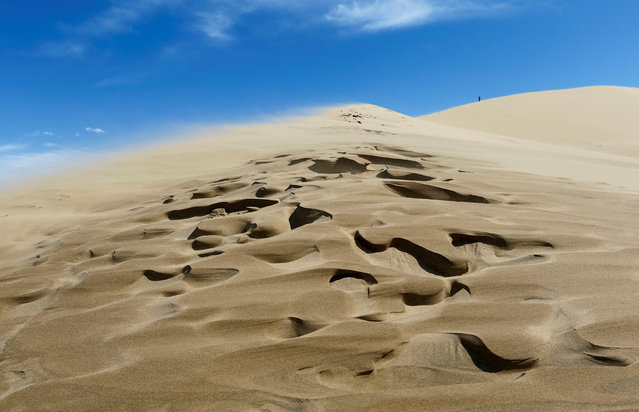
A tourist stands at an edge of the singing sand, the 150-metre-high by three-kilometre-long dune that generates a low-pitched, organ-like rumble in dry weather, in Altyn-Emel national park in Almaty region, Kazakhstan, May 12, 2016. (Photo by Shamil Zhumatov/Reuters)

A tourist stands at an edge of the singing sand, the 150-metre-high by three-kilometre-long dune that generates a low-pitched, organ-like rumble in dry weather, in Altyn-Emel national park in Almaty region, Kazakhstan, May 12, 2016. (Photo by Shamil Zhumatov/Reuters)
Details
18 Jun 2016 13:20:00
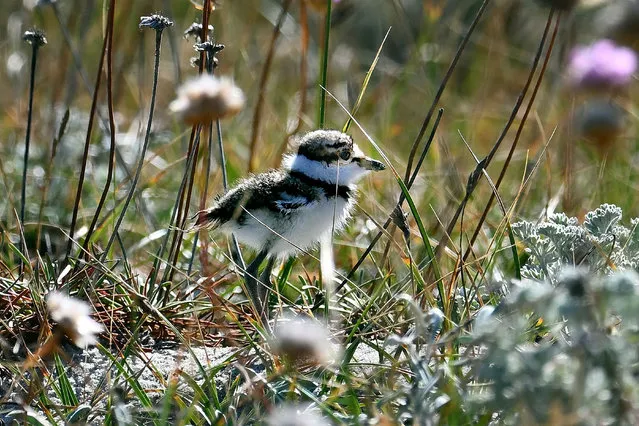
A killdeer (Charadrius vociferus) chick on sand dunes in Pacific Grove, California, US on June 21, 2023. The killdeer gets its name from its shrill, loud call. (Photo by Rory Merry/ZUMA Press Wire/Rex Features/Shutterstock)

A killdeer (Charadrius vociferus) chick on sand dunes in Pacific Grove, California, US on June 21, 2023. The killdeer gets its name from its shrill, loud call. (Photo by Rory Merry/ZUMA Press Wire/Rex Features/Shutterstock)
Details
02 Jul 2023 03:03:00
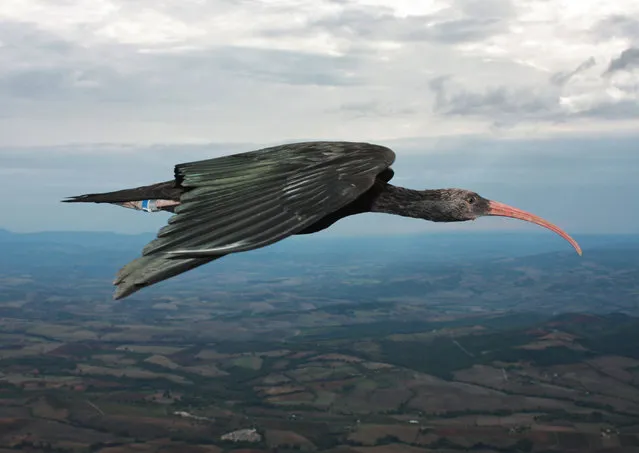
In this undated photo made available by journal Nature on January 15, 2014, a northern bald ibis (Geronticus eremita) flies in Tuscany, Italy. A new study released Wednesday, January 15, 2014 says the birds choreograph the flapping of their wings, getting a boost from an updraft of air in the wake of the flapping wings by flying behind the first bird and off to the side. When a flock of birds take advantage of these aerodynamics, they form a V. (Photo by Markus Unsöld/AP Photo)

In this undated photo made available by journal Nature on January 15, 2014, a northern bald ibis (Geronticus eremita) flies in Tuscany, Italy. A new study released Wednesday, January 15, 2014 says the birds choreograph the flapping of their wings, getting a boost from an updraft of air in the wake of the flapping wings by flying behind the first bird and off to the side. When a flock of birds take advantage of these aerodynamics, they form a V. (Photo by Markus Unsöld/AP Photo)
Details
18 Jan 2014 13:54:00
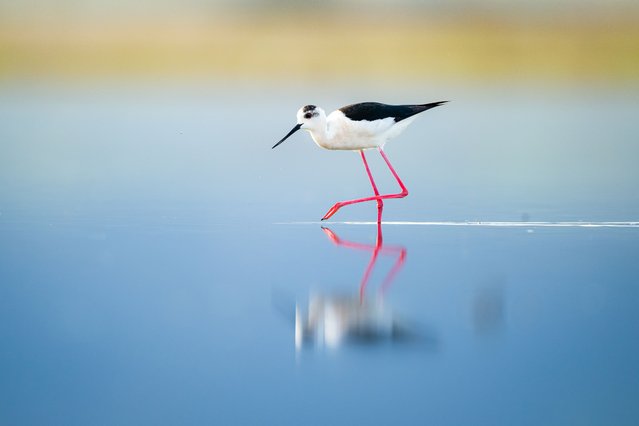
Black Winged Stilt is seen on Kavak Delta, a natural and ecologically important wetland for many migratory birds, in Canakkale, Turkiye on May 13, 2025. (Photo by Alper Tuydes/Anadolu via Getty Images)

Black Winged Stilt is seen on Kavak Delta, a natural and ecologically important wetland for many migratory birds, in Canakkale, Turkiye on May 13, 2025. (Photo by Alper Tuydes/Anadolu via Getty Images)
Details
25 May 2025 03:33:00
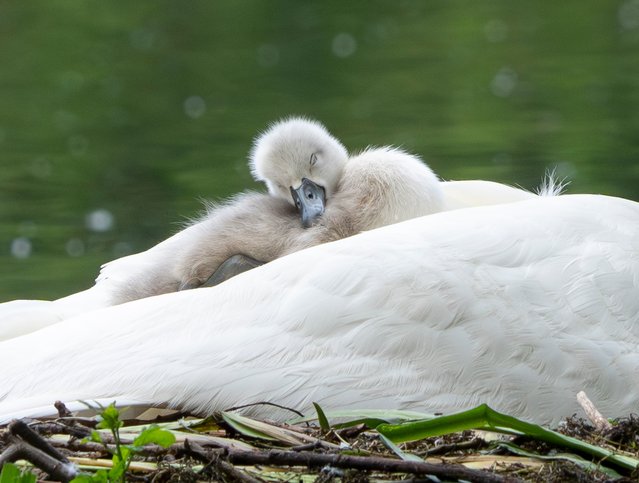
A cygnet keeps snug under its mother’s wing at Heronry Pond in Wanstead Park in east London in the last decade of May 2024. (Photo by Jeff Moore/The Times)

A cygnet keeps snug under its mother’s wing at Heronry Pond in Wanstead Park in east London in the last decade of May 2024. (Photo by Jeff Moore/The Times)
Details
09 Jun 2024 05:31:00
In this September 16, 2017 photo, a music fan poses for the photo against an angel wings' mural at the Rock in Rio music festival in Rio de Janeiro, Brazil. (Photo by Leo Correa/AP Photo)

In this September 16, 2017 photo, a music fan poses for the photo against an angel wings' mural at the Rock in Rio music festival in Rio de Janeiro, Brazil. (Photo by Leo Correa/AP Photo)
Details
22 Sep 2017 07:34:00