Loading...
Done
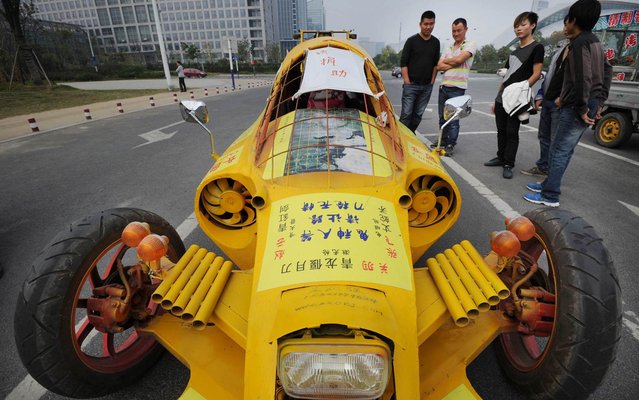
A car made from parts taken from used vehicles is shown in street Hefei, Anhui Province in China, on Oktober 21, 2013. The machine, which reaches 60 km/h, is the brainchild of self-taught inventor Zhu Runqiang. (Photo by Reuters/China Daily)

A car made from parts taken from used vehicles is shown in street Hefei, Anhui Province in China, on Oktober 21, 2013. The machine, which reaches 60 km/h, is the brainchild of self-taught inventor Zhu Runqiang. (Photo by Reuters/China Daily)

P.S. All pictures are presented in high resolution. To see Hi-Res images – just TWICE click on any picture. In other words, click small picture – opens the BIG picture. Click BIG picture – opens VERY BIG picture (if available; this principle works anywhere on the site AvaxNews)
Details
26 Oct 2013 11:41:00
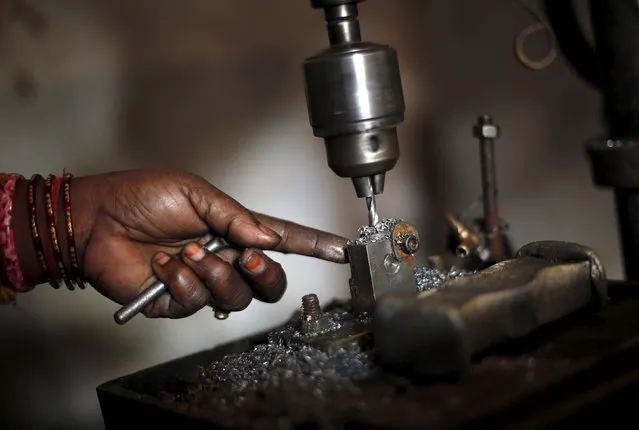
A worker makes auto parts on a machine inside a workshop in Faridabad, India, December 24, 2015. (Photo by Adnan Abidi/Reuters)

A worker makes auto parts on a machine inside a workshop in Faridabad, India, December 24, 2015. Car makers such as Maruti Suzuki India and Hyundai Motor see huge growth in India, set to become the world's third-largest auto market by 2020 as millions buy their first new car. Price tags can be as low as $3,000 for a new Tata Motors Nano mini-car. India is also becoming a low-cost export hub for global car makers such as General Motors and Ford Motor. As the sector expands, some of the work is sub-contracted out to small factories operating on paper-thin margins, where poor contract workers often have little or no access to safety equipment or health benefits. (Photo by Adnan Abidi/Reuters)
Details
23 Jan 2016 13:31:00
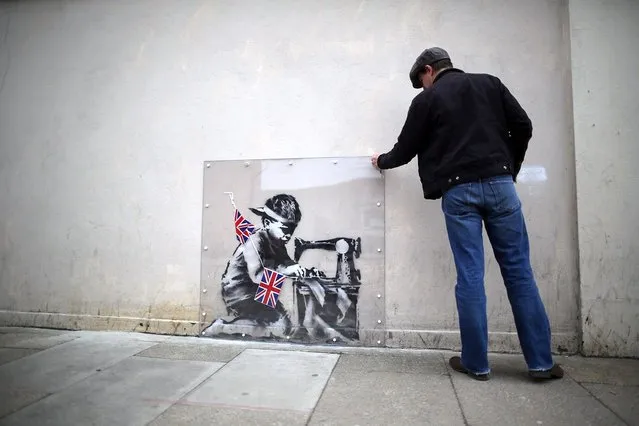
Banksy Artwork Appears In North London

A man inspects a plastic cover placed over an artwork attributed to Banksy on May 17, 2012 in London, England. The stencilled image depicts a poor child making Union Jack flags on a sewing machine and is located on the wall of a Poundland discount shop in the Wood Green area of north London. (Photo by Peter Macdiarmid)
Details
18 May 2012 11:18:00
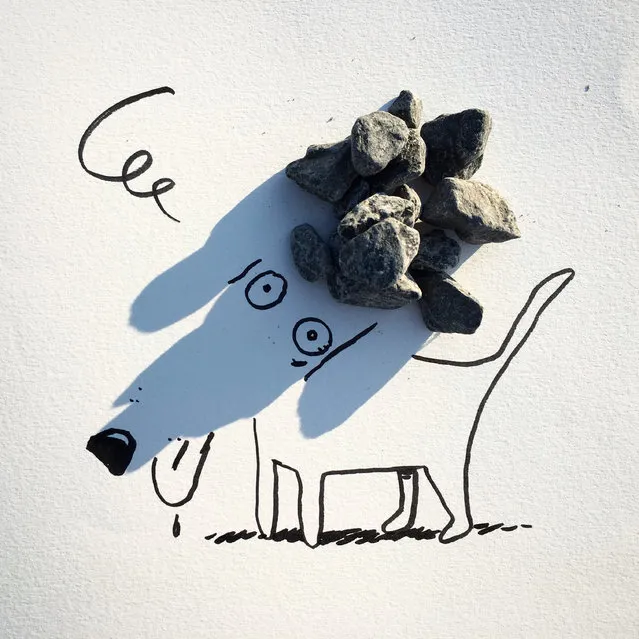
“Stonedog”. (Photo by Vincent Bal/The Guardian)

Earlier this year, Belgian film-maker and artist Vincent Bal stumbled upon an uncanny resemblance to an elephant in the shadow of his tea cup. This gave him the idea for Shadowology, a series of doodles that interact with the shadows of simple, everyday objects: a banknote, some ice cubes and a flower, for example, can turn into a church, a woman and a hippy. “I draw a few lines and I get my image. It’s really the shadows that inspire me”, Bal says. Here: “Stonedog”. (Photo by Vincent Bal/The Guardian)
Details
02 Oct 2016 08:28:00
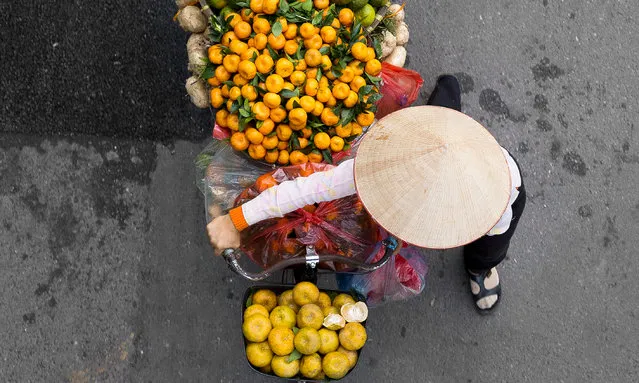
Photographer Loes Heerink spent hours waiting on bridges in Hanoi to capture the street vendors who walked underneath. She recently launched a Kickstarter project to publish a book of these images. Here: “In Hanoi there are a lot of street vendors who roam the city with their bicycles trying to sell goods, from vegetables to flowers”. (Photo by Loes Heerink/The Guardian)

Photographer Loes Heerink spent hours waiting on bridges in Hanoi to capture the street vendors who walked underneath. She recently launched a Kickstarter project to publish a book of these images. Here: “In Hanoi there are a lot of street vendors who roam the city with their bicycles trying to sell goods, from vegetables to flowers”. (Photo by Loes Heerink/The Guardian)
Details
05 Nov 2016 12:16:00
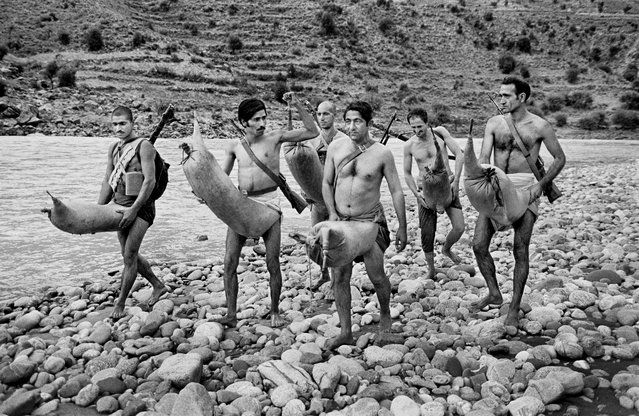
Kunar province, 1980. Armed mujahideen carry animal skins to use as inflatable buoys to cross rapids. (Photo by  Steve McCurry/Taschen/Magnum Photos/The Guardian)

Afghanistan, published by Taschen later July, is a retrospective portfolio of the Magnum photographer Steve McCurry’s most striking images of the country, from 1979 to 2016. Here: Kunar province, 1980. Armed mujahideen carry animal skins to use as inflatable buoys to cross rapids. (Photo by Steve McCurry/Taschen/Magnum Photos/The Guardian)
Details
12 Aug 2017 05:54:00
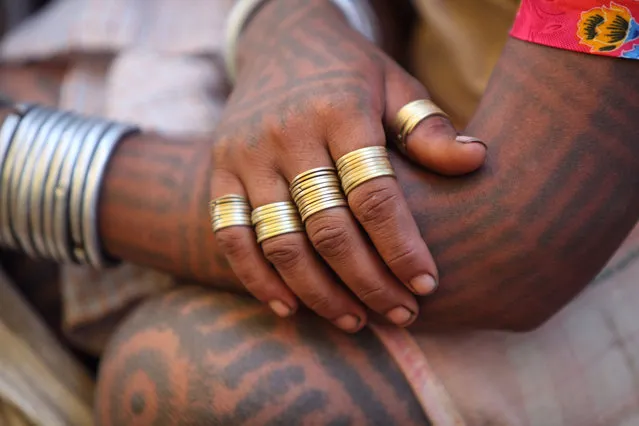
Once applied, the designs are washed using warm water and cow dung. Herbs are applied to promote faster healing. (Photo by Ronny Sen/WaterAid/The Guardian)

For more than 2,000 years, women from the Baiga tribe in the highland district of Dindori, in central India’s Madhya Pradesh state, have been tattooed. Sumintra, 25, from Bona village, has the markings across her forehead, legs and arms. The women who work as tattoo artists are knowledgable about the different types of designs and pigments preferred by various tribes, and their meanings are passed to them by their mothers. The tattooing ‘season’ begins with the approach of winter. (Photo by Ronny Sen/WaterAid/The Guardian)
Details
19 Aug 2017 08:48:00
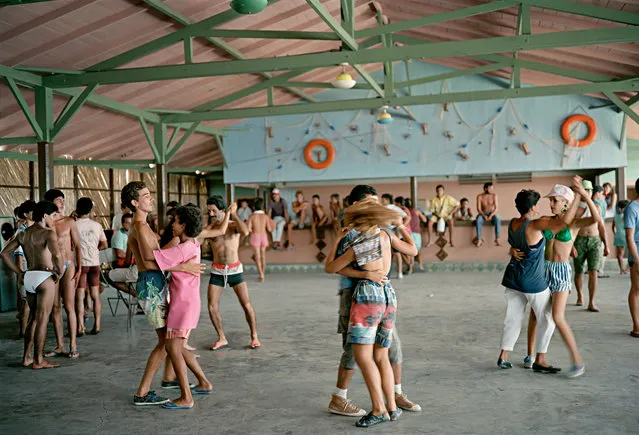
Giovan set out to capture the people’s resilience, during what Fidel Castro, with typical hyperbole, called the “special period”. (Photo by Tria Giovan/The Guardian)

As an American in 1990s Cuba, Tria Giovan risked being branded a traitor. But the photographer continued to visit and, from the dance hall to the hair salon, she captured the resilient spirit of the Cuban people. The 120 images in Tria Giovan’s “The Cuba Archive” are from the period in the 90s when, as an American, travel to Cuba could have seen her branded a traitor, as the country was subject to a US trade embargo. Her trip required lots of planning – and patience. (Photo by Tria Giovan/The Guardian)
Details
21 Sep 2017 09:04:00