Loading...
Done
The Machines Of The Isle Of Nantes

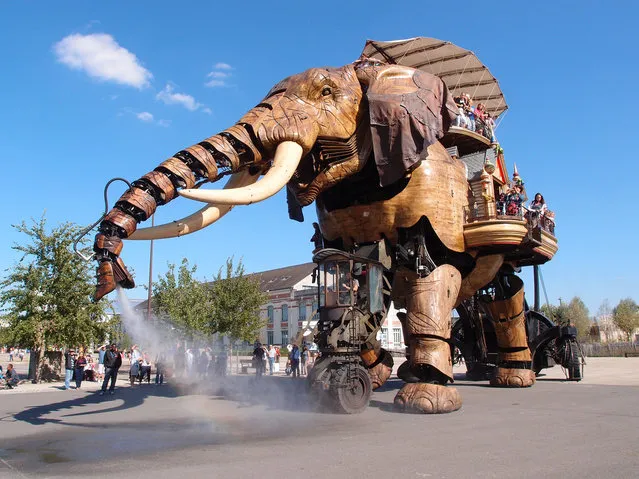
Due to the influence of Sci-Fi movies, many of us have an obsession with giant robots. How cool would it be to ride a gigantic robotic dinosaur or elephant? It would be even cooler to control one! Regretfully, the modern technologies are not yet sophisticated enough to fulfill this dream. Pierre Orefice and François Delarozière, however, came very close. These two artists have made it their goal to turn Nantes, France, into a hot tourist destination spot for people who love robots. In their project of Machines de l'île in Nantes, they have created a whole park of robotic monstrosities, ranging from a giant 3 story high elephant to a 2 meter long centipede crawling on a rail track.
Details
05 Jan 2015 13:21:00
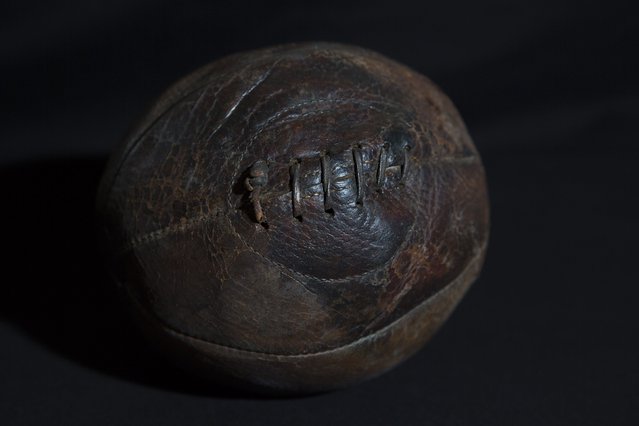
An original 1850 puntabout rugby football is displayed at Rugby School in central England, March 18, 2015. (Photo by Neil Hall/Reuters)

An original 1850 puntabout rugby football is displayed at Rugby School in central England, March 18, 2015. Rugby School is known as the spiritual home of rugby. According to a popular version of the game's origins, it was on the school's playing field that in 1823, in a game that could loosely be described as football but was more like a brawl, a pupil called William Webb Ellis caught the ball and, instead of kicking towards the goal, sprinted with it – breaking the code and laying the way for modern-day rugby. (Photo by Neil Hall/Reuters)
Details
23 Apr 2015 11:57:00


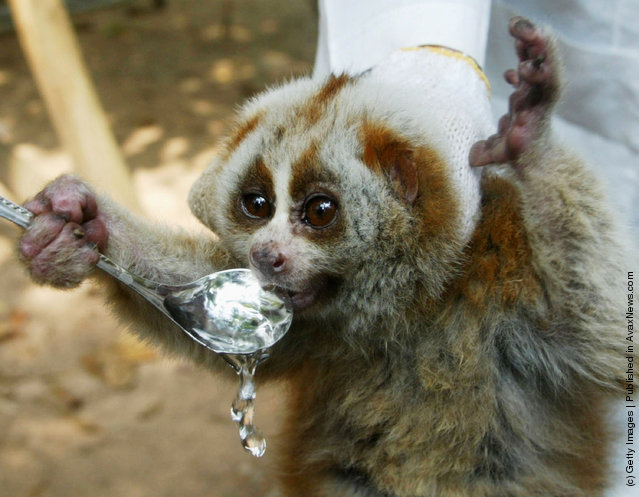
Workers feed water to a Slow Loris at the Guangdong Wild Animal Rescue Centre on December 21, 2004 in Guangzhou, China. Many protected species at the Centre have been seized by Police from illegal traders. (Photo by China Photos/Getty Images)
Details
17 Jun 2011 12:10:00
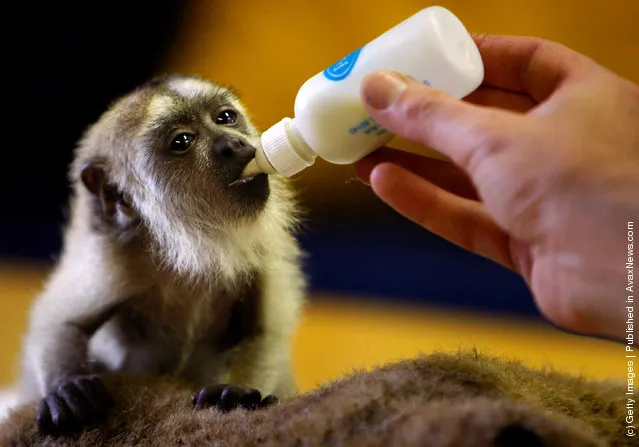
A Baby Black Howler Monkey

A zoo keeper feeds Diego, a three month old howler monkey, which is reared at Edinburgh Zoo, July 29, 2008 in Scotland. (Photo by Jeff J. Mitchell/Getty Images)
Details
18 Dec 2011 11:36:00
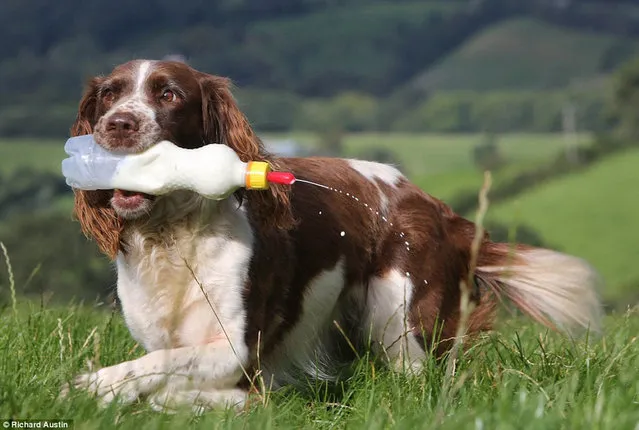
Spaniel Plays Mum For Lambs

A springer spaniel is helping out on her owner's farm – by playing mum for four lambs. Jess even feeds the Dorset Horn lambs, which could not be fed by their own mother, using a bottle held in her mouth.
Details
05 Dec 2012 13:39:00
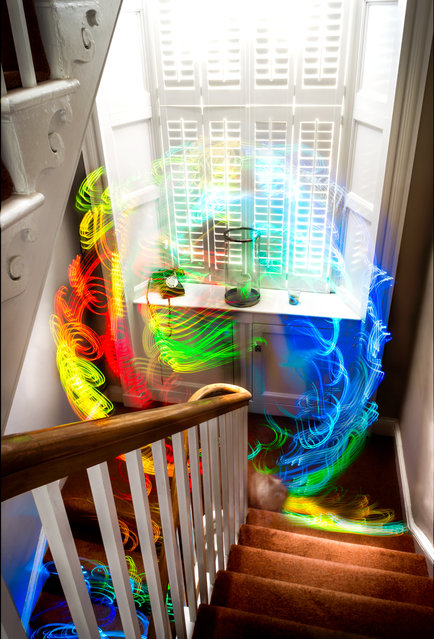
His goal with the project is to make the invisible visible. (Photo by Luis Hernan)

Luis Hernan was always curious about how wireless technologies like radio are transmitted through the air. So after finishing up his studies in architecture, computer science, and design, Hernan decided to research these invisible signals through a PhD at Newcastle University. Hernan set up a system that turned the wireless signals around him into colourful, ghostlike images using long-exposure photography, allowing people to see the strength of the signals around them. (Photo by Luis Hernan)
Details
13 Aug 2014 09:38:00
“Cold Feet” Project by Photographer Davide Luciano

“Animals take on human characteristics in this photo series by Davide Luciano. Davide’s goal was to achieve personification of these animals’ body parts without the use of motion. Using photography’s ability to manipulate time, Davide presents a snippet of these creature “active” lives by photographing a process, thus creating the illusion of life in these lifeless animal limbs. Recreating the uncomfortable into quizzical and whimsical photos that are bold, colorful, and always comical and satirical”. (Photos and caption by Davide Luciano)
Details
12 Mar 2014 12:08:00
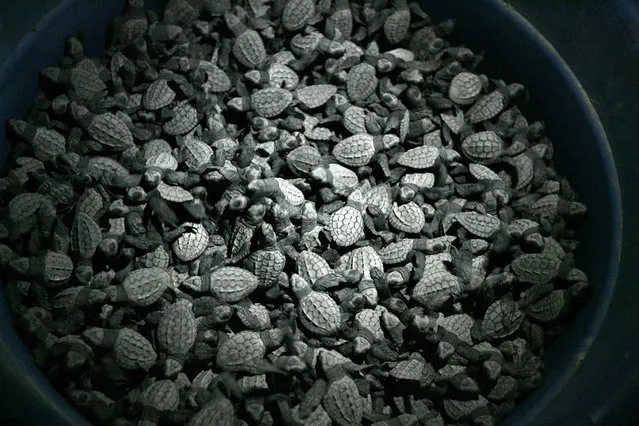
Olive Ridley turtle hatchlings (Lepidochelys olivacea) sit in baskets and trays at the turtle camp La Gloria, before their release into the ocean in Tomatlan November 15, 2013. (Photo by Alejandro Acosta/Reuters)

Olive Ridley turtle hatchlings (Lepidochelys olivacea) sit in baskets and trays at the turtle camp La Gloria, before their release into the ocean in Tomatlan November 15, 2013. Twenty years ago, Mexico's government implemented ecological plans to protect the sea turtles from being hunted for their leather and meat and established conservation areas and a pay system for local residents to protect turtle nests. Millions of baby turtles hatch on the shores in November and December, according to an environmental group. It is estimated that in 2012, there were 20 million newborns. Hatching season is still underway, but officials say they expect there will be even more turtles born this year. (Photo by Alejandro Acosta/Reuters)
Details
25 Nov 2013 08:54:00