“Why do you keep blowing the trumpet, young man?
You'd better lie in a coffin, young man!”
On that life-affirming note, let me congratulate you (yes, it's been a tough year, and the next one will be even tougher better). Happy New Year! And now disco.
An artist takes part in the festival “Statues en Marche” in Marche-en-Famenne, Belgium, July 20, 2019. Living statues are a common sight in many city centers, but it is rare to see such a diverse range of this peculiar form of street art for which performers must keep still for painfully long periods of time to create the desired illusion. (Photo by Yves Herman/Reuters)
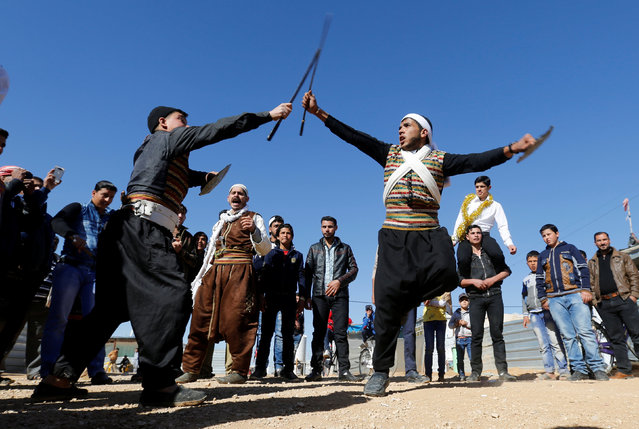
The Syrian refugee folklore troupe Abu Rustom perform at a wedding show at Zaatari refugee camp in the Jordanian city of Mafraq, near the border with Syria February 20, 2017. The Syrian troupe is trying to keep its country's traditions alive by holding traditional dances and performing celebratory sword fights during weddings and other occasions, according to the troupe's leader. (Photo by Muhammad Hamed/Reuters)
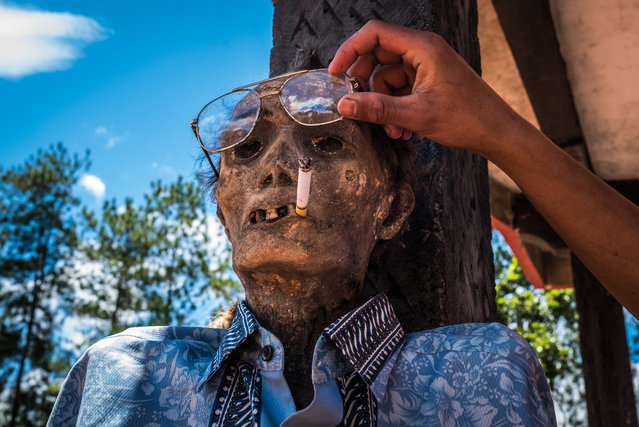
For the Torajan people of Indonesia, death is part of a spiritual journey: families keep the mummified remains of their deceased relatives in their homes for years – and traditionally invite them to join for lunch on a daily basis – before they are eventually buried. Here: Todeng died in 2009. A young relative of his, Sam, lights him a cigarette and changes his glasses. (Photo by Claudio Sieber Photography/The Guardian)
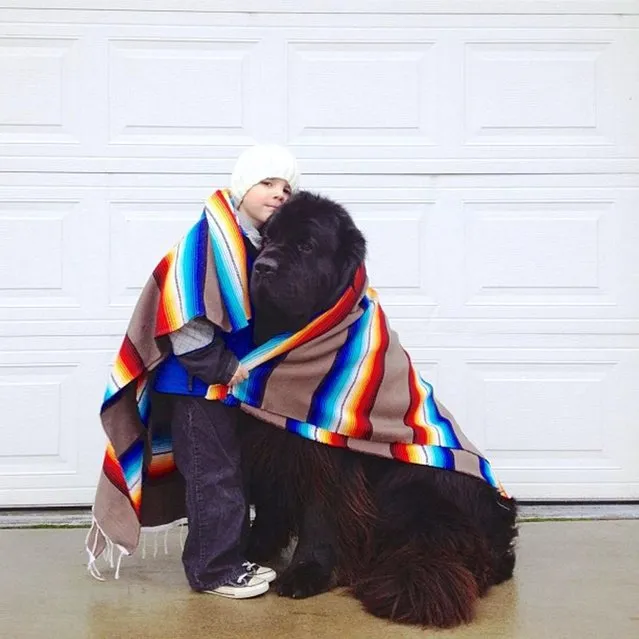
Five-year-old Julian Becker and his 165 pound pet Newfoundland Max have been best buds around all their lives. To commemorate the friendship and to keep Julian's father, a Naval officer who is often away, in the loop, Julian's mom Stasha began taking photos. Photo: Hats off (or on) to Julian for sharing his blanket with his good buddy. Not that the furry beast needs it... (Photo by Stasha Becker/Rex Features)
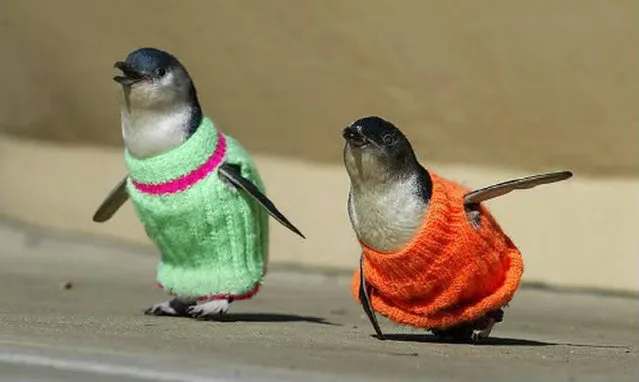
Penguin sweaters, also known as penguin jumpers, are sweaters which are knitted for penguins that have been caught in oil slicks. When an oil spill affects penguins, they are dressed in knitted sweaters to stop them preening their feathers and to keep them warm, since the spilled oil destroys their natural oils. This also prevents them from poisoning themselves by ingesting the oil. The sweaters are removed and discarded as soon as the penguins can be washed. The original project has been completed, but the knitting pattern is still available on-line, as subsequent oil spills make it necessary. The extra sweaters are kept on behalf of the Wildlife Rescue Team.
California-based photographer Seth Casteel made his name taking photographs of dogs underwater, but before that, he was snapping cats on land. In fact, they were his first animal subjects. Casteel’s new book, Pounce – a follow-up to his bestselling Underwater Dogs and Underwater Puppies – features more than 80 photographs of playful cats doing what they do best. Here: Fuzzbucket. (Photo by Seth Casteel/Hachette Australia)
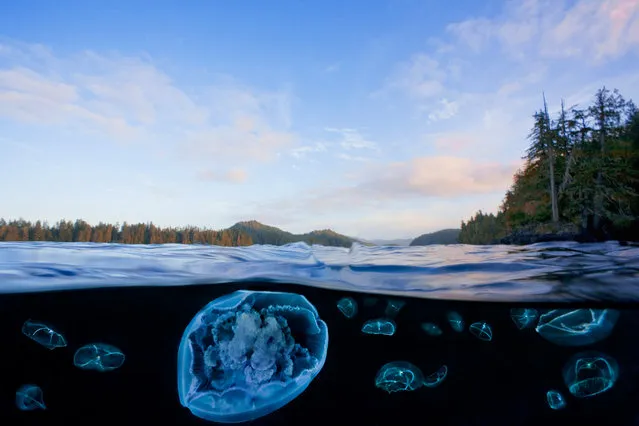
David Hall’s photographs of scenery and creatures off the coast of Canada in the Pacific Northwest portray serenity under the water, which belie the extreme challenges he faces to get his images. For each shoot, Hall wears a dry suit, a neoprene body suit that covers all of his body but his head and traps air inside to keep him warm. Water temperature in Canada’s British Columbia typically ranges between 45 and 50 degrees Fahrenheit. Photo: Moon jellyfish and cross jellies. (Photo by David Hall)