Loading...
Done
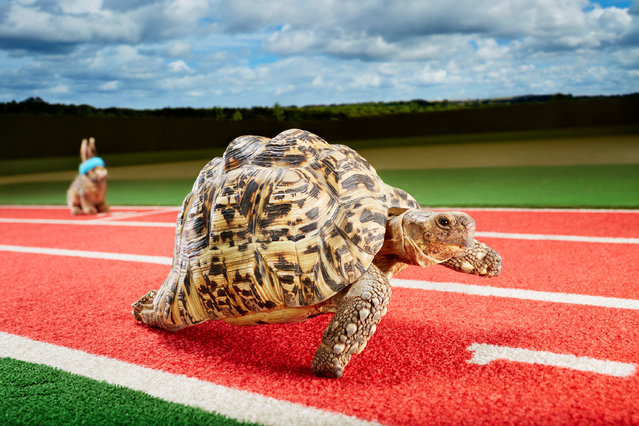
The Guinness World Record for the fastest tortoise in the world is held by Bertie, a South African leopard tortoise, who covered 5.49 metres in 19.59 seconds. (Photo by Paul Michael Hughes/Guinness World Records/PA Wire Press Association)

The Guinness World Record for the fastest tortoise in the world is held by Bertie, a South African leopard tortoise, who covered 5.49 metres in 19.59 seconds. (Photo by Paul Michael Hughes/Guinness World Records/PA Wire Press Association)
Details
16 Sep 2025 04:17:00
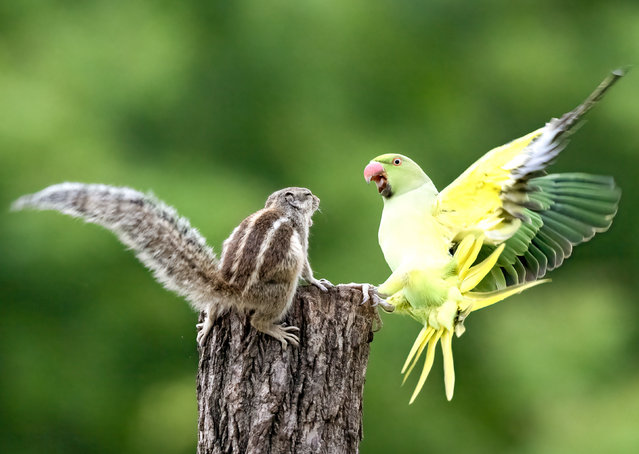
A palm squirrel and ring-rosed parakeet compete for space on a stump in a residential area of Chandigarh, India in the last decade of August 2024. (Photo by Anuj Jain/Solent News)

A palm squirrel and ring-rosed parakeet compete for space on a stump in a residential area of Chandigarh, India in the last decade of August 2024. (Photo by Anuj Jain/Solent News)
Details
15 Sep 2024 04:34:00
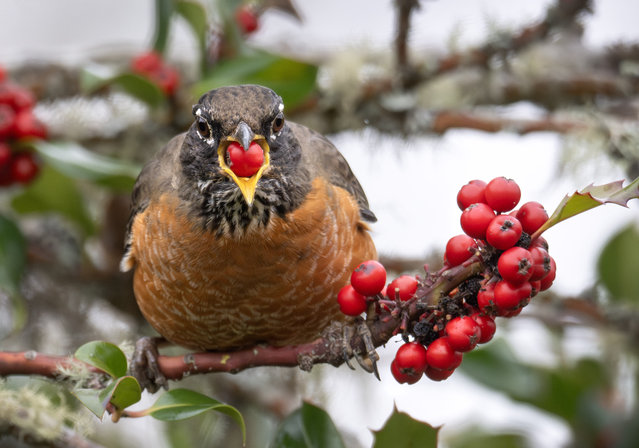
An American robin feeds on holly berries in a thicket near Elkton in southwestern Oregon on November 16, 2024. Many birds can safely consume holly berries, including blackbirds, redwings, and thrushes. There is an old wives tale that if you see a bird eating a berry, it is safe for humans to eat, but this is not true. Birds consume many plants that are poisonous to humans, holly berries included. (Photo by Robin Loznak/ZUMA Press Wire/Rex Features/Shutterstock)

An American robin feeds on holly berries in a thicket near Elkton in southwestern Oregon on November 16, 2024. Many birds can safely consume holly berries, including blackbirds, redwings, and thrushes. There is an old wives tale that if you see a bird eating a berry, it is safe for humans to eat, but this is not true. Birds consume many plants that are poisonous to humans, holly berries included. (Photo by Robin Loznak/ZUMA Press Wire/Rex Features/Shutterstock)
Details
01 Dec 2024 01:43:00
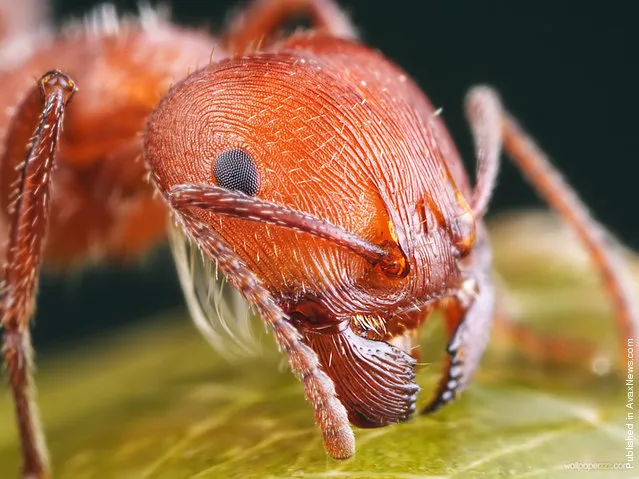
Ants

Once upon a time a myth was born that insects, unlike animals, are just a machines that not capable of learning and survive only based on their instincts. That myth has become the widespread opinion. Of course, this opinion is indeed erroneous, like many other widespread opinions. Let us try to find out which part is a myth and which part is true.
Details
30 Oct 2011 11:34:00
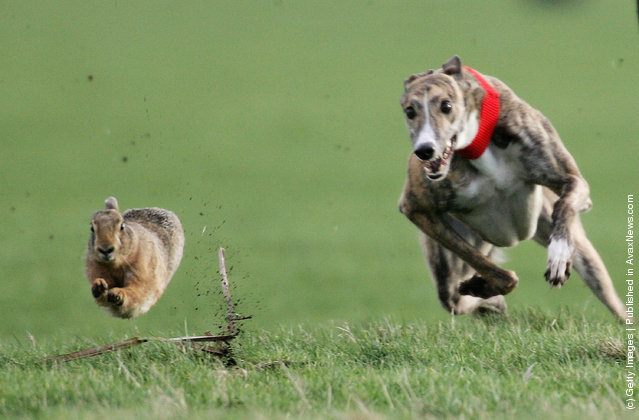
Greyhounds race after a Hare at the last Waterloo Cup Hare coursing event

“The Waterloo Cup was a coursing event. The three day event was run annually at Great Altcar in Lancashire, England from 1836 to 2005 and it used to attract tens of thousands of spectators to watch and gamble on the coursing matches. It was founded by William Philip Molyneux, 2nd Earl of Sefton, and, originally, was supported by his patronage”. – Wikipedia

Photo: A Greyhound races after Hare at the last Waterloo Cup Hare coursing event, February 14, 2005, near Liverpool, England. (Photo by Christopher Furlong/Getty Images)
Details
18 Feb 2012 11:26:00
Shaymaa Ismaa’eel, a 24-year-old Muslim woman passes by a group of angry protesters at an Islamic conference in Washington, DC on April 21, 2019. In response, she crouched in front of them and flashed a peace sign. The photo, posted on Instagram, prompted an outpouring of support. (Photo by Shaymaa Ismaa'eel/Instagram)

Shaymaa Ismaa’eel, a 24-year-old Muslim woman passes by a group of angry protesters at an Islamic conference in Washington, DC on April 21, 2019. In response, she crouched in front of them and flashed a peace sign. The photo, posted on Instagram, prompted an outpouring of support. (Photo by Shaymaa Ismaa'eel/Instagram)
Details
29 Apr 2019 00:05:00
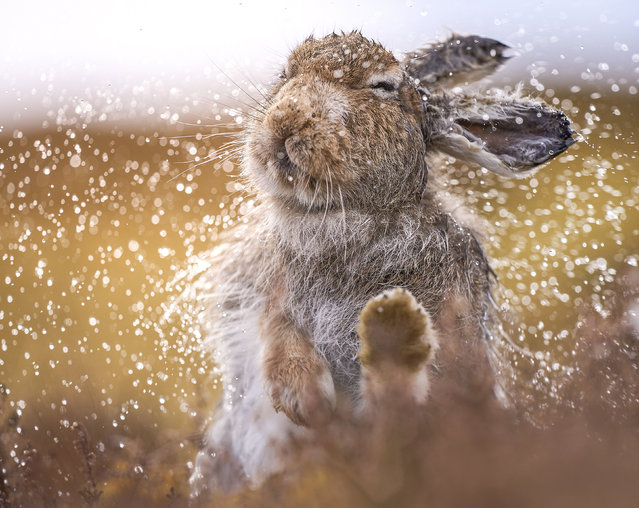
A mountain hare shakes off rain from its fur, in Findhorn Valley, Moray, Scotland in the second decade of August 2024. In summer, the hare’s coat is a grey-brown colour with a tinge of blue, making them hard to spot against the heather moorland. In winter, it changes to almost completely white for camouflage in the snow. (Photo by Will Hall/Solent News)

A mountain hare shakes off rain from its fur, in Findhorn Valley, Moray, Scotland in the second decade of August 2024. In summer, the hare’s coat is a grey-brown colour with a tinge of blue, making them hard to spot against the heather moorland. In winter, it changes to almost completely white for camouflage in the snow. (Photo by Will Hall/Solent News)
Details
25 Aug 2024 03:50:00
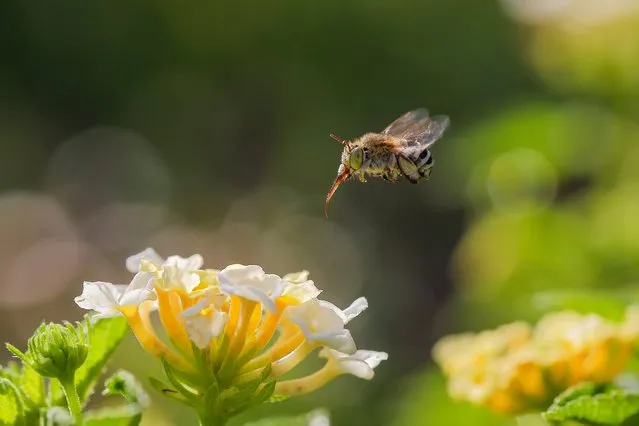
“Tasty Nature” by Dipesh Bhatt. “The blue banded bee (Amegilla cingulata) is pointing this sheath towards the flowers in preparation for sipping nectar”. Taken in Gujarat, India. (Photo by Dipesh Bhatt/2016 Royal Society of Biology Photographer of the Year competition)

“Tasty Nature” by Dipesh Bhatt. “The blue banded bee (Amegilla cingulata) is pointing this sheath towards the flowers in preparation for sipping nectar”. Taken in Gujarat, India. (Photo by Dipesh Bhatt/2016 Royal Society of Biology Photographer of the Year competition)
Details
30 Sep 2016 09:32:00