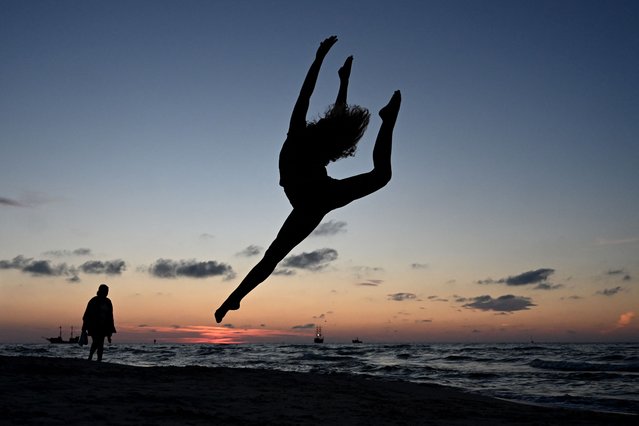
A member of the Grupa Magnifica acrobatics club poses for a photo on the Baltic Sea beach during sunset in the town of Leba, Pomeranian region, on August 6, 2024. (Photo by Sergei Gapon/AFP Photo)
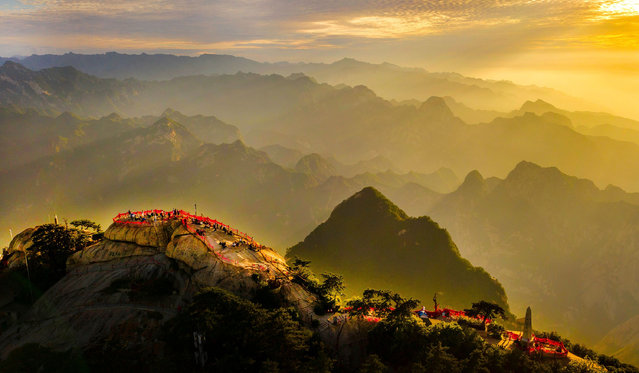
Aerial photo taken on June 19, 2021 shows the scenery of Mount Huashan in northwest China's Shaanxi Province. (Photo by Xinhua News Agency/Rex Features/Shutterstock)
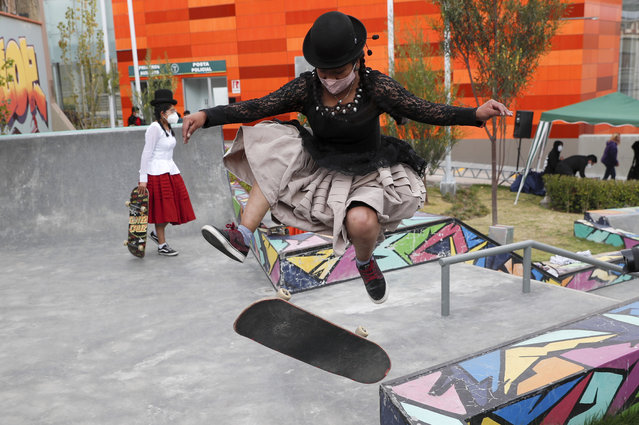
Aide Choque, wearing a mask amid the COVID-19 pandemic, jumps with her skateboard during a youth talent show in La Paz, Bolivia, Wednesday, September 30, 2020. Young women called “Skates Imillas”, using the Aymara word for girl Imilla, use traditional Indigenous clothing as a statement of pride of their Indigenous culture while playing riding their skateboards. (Photo by Juan Karita/AP Photo)
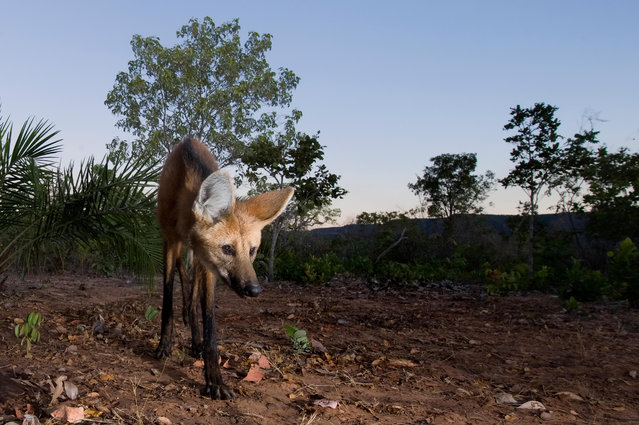
Global wildlife populations will decline by 67% by 2020 unless urgent action is taken to reduce human impact on species and ecosystems, warns the biennial Living Planet Index report from WWF (World Wide Fund for Nature) and ZSL (Zoological Society of London). From elephants to eels, here are some of the wildlife populations most affected by human activity. Here: The maned wolf is among the large mammals in the Brazilian Cerrado that are threatened by the increasing conversion of grasslands into farmland for grazing and growing crops. (Photo by Ben Cranke/Nature Picture Library/Alamy Stock Photo)
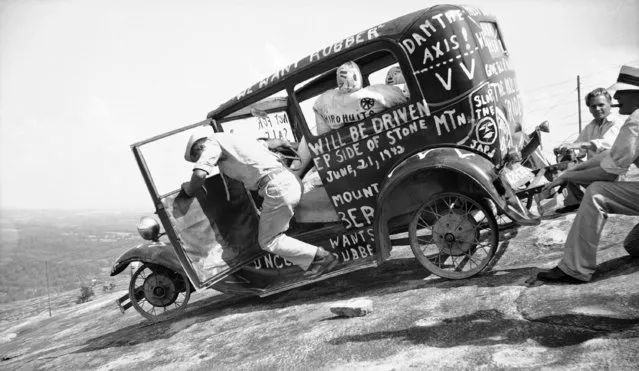
Hitler, Hirohito and Mussolini, in effigy, are about to take a mile-high plunge over Stone Mountain, near Atlanta, Georgia, June 21, 1942, as part of the scrap rubber drive. Private Elias Nour, who arranged the stunt as a farewell party on the eve of his entrance into the army, is on the running board. He guided as the “Axis” plunged to destruction. Spectators had to give a scrap of rubber as the price of admission to the spectacle. (Photo by AP Photo)