Loading...
Done
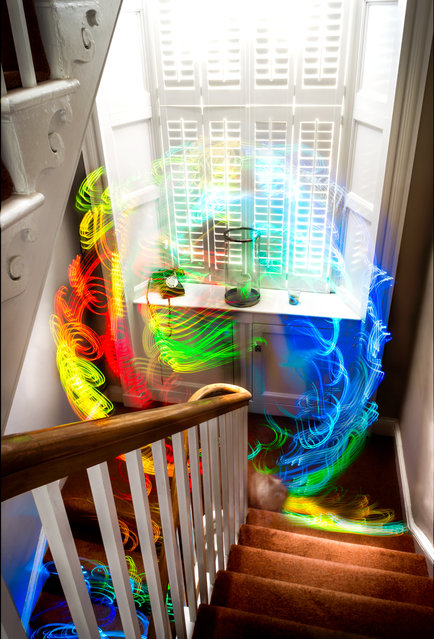
His goal with the project is to make the invisible visible. (Photo by Luis Hernan)

Luis Hernan was always curious about how wireless technologies like radio are transmitted through the air. So after finishing up his studies in architecture, computer science, and design, Hernan decided to research these invisible signals through a PhD at Newcastle University. Hernan set up a system that turned the wireless signals around him into colourful, ghostlike images using long-exposure photography, allowing people to see the strength of the signals around them. (Photo by Luis Hernan)
Details
13 Aug 2014 09:38:00
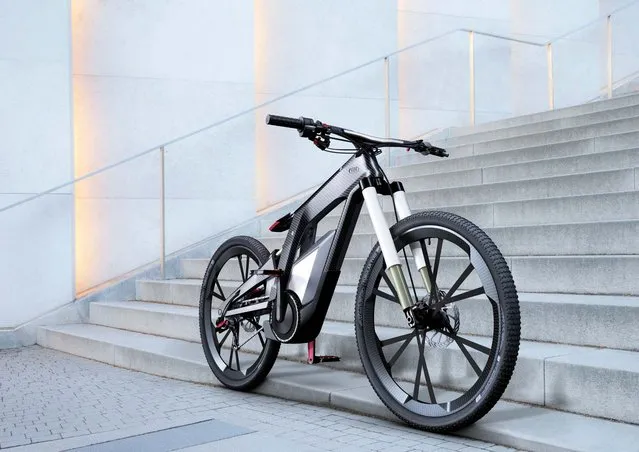
Audi E-Bike Worthersee

One of the highlights on the Audi stand is the bicycle technology concept known as the Audi e-bike Wörthersee – a sport bike that does not fit into any of the usual categories. It is neither a pedelec nor a conventional bike, but is best described as a high-end pedelec made by Audi for sport, fun and tricks. The Audi e-bike Wörthersee combines the Audi brand’s principal competences – design, ultra, connect and e-tron – and explores the limits of what is technically feasible in terms of design, lightweight construction, networking and electric mobility.
Details
11 Jul 2014 11:34:00
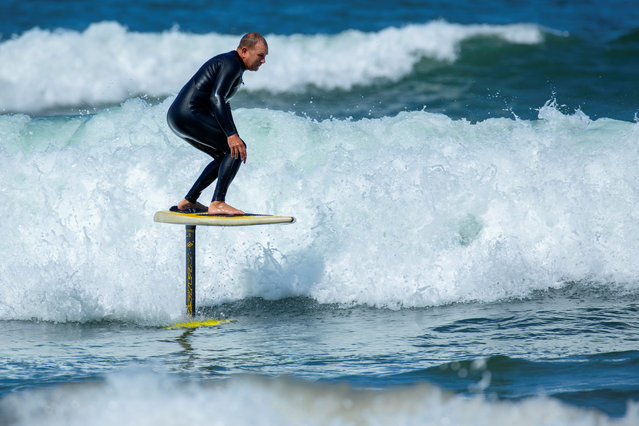
Surfer Gary Clisby rides his foil board on a morning swell of the coast of Carlsbad, California on May 23, 2018. (Photo by Mike Blake/Reuters)

Surfer Gary Clisby rides his foil board on a morning swell of the coast of Carlsbad, California on May 23, 2018. Harnessing the “foiling” technology more typically seen on racing catamarans in sailing's America's Cup, the surfboards appear to fly above the water thanks to a fin attached to the bottom of the board. (Photo by Mike Blake/Reuters)
Details
25 May 2018 00:03:00
New Zealand photographer Niki Boon captured her children, who are growing up with limited electronics, in the photo series “Childhood in the Raw Photos”. Niki Boon began taking photos as a hobby while she was working as a physiotherapist in Scotland. However, the New Zealand native found her interest in the art waning while she travelled, and it wasn’t until she had returned home and started raising a family that her passion was rekindled. “Childhood in the Raw”, an ongoing photo series of her four children’s technology-free life on her 10-acre property in New Zealand, is the perennial fruit of this passion. (Photo by Niki Boon)

New Zealand photographer Niki Boon captured her children, who are growing up with limited electronics, in the photo series “Childhood in the Raw Photos”. Niki Boon began taking photos as a hobby while she was working as a physiotherapist in Scotland. However, the New Zealand native found her interest in the art waning while she travelled, and it wasn’t until she had returned home and started raising a family that her passion was rekindled. “Childhood in the Raw”, an ongoing photo series of her four children’s technology-free life on her 10-acre property in New Zealand, is the perennial fruit of this passion. (Photo by Niki Boon)
Details
20 Apr 2016 12:01:00
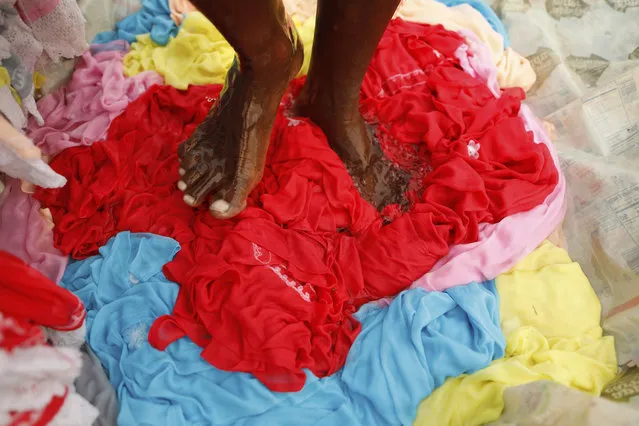
A dhobi, or a washerman washes cloths on the banks of the River Gomti in Lucknow, India, Saturday, September 12, 2020. Dhobis are traditional laundry workers who wash clothes by hand and dry them in the sun, an occupation which has been in existence for generations. Most cities in India have a Dhobi Ghat, or washermen's area, where the city's pile of clothes is laundered. This practice is still popular in India, despite of modern technology. Around 1,000 families work in Lucknow's Dhobi Ghat. However, in light of the novel coronavirus, their wages have decreased drastically. With each family earning around US$100-200 per month. (Photo by Rajesh Kumar Singh/AP Photo)

A dhobi, or a washerman washes cloths on the banks of the River Gomti in Lucknow, India, Saturday, September 12, 2020. Dhobis are traditional laundry workers who wash clothes by hand and dry them in the sun, an occupation which has been in existence for generations. Most cities in India have a Dhobi Ghat, or washermen's area, where the city's pile of clothes is laundered. This practice is still popular in India, despite of modern technology. Around 1,000 families work in Lucknow's Dhobi Ghat. However, in light of the novel coronavirus, their wages have decreased drastically. With each family earning around US$100-200 per month. (Photo by Rajesh Kumar Singh/AP Photo)
Details
25 Sep 2020 00:03:00
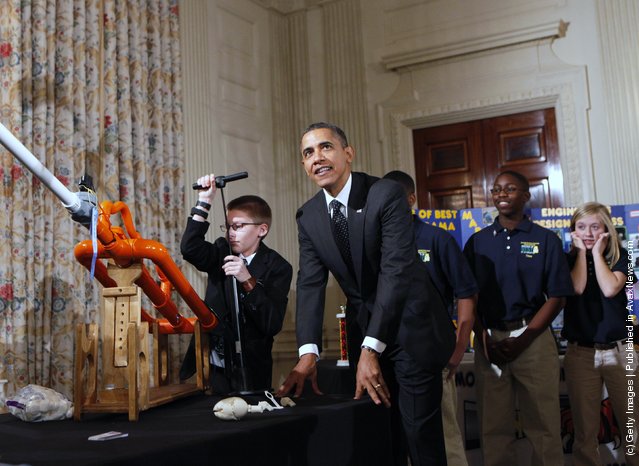
President Barack Obama watches as Joey Hudy (L), 14, from Phoenix, Arizona pumps the Extreme Marshmallow Cannon he invented, while touring student science fair projects on exhibit in the State Dining Room at the White House

President Barack Obama watches as Joey Hudy (L), 14, from Phoenix, Arizona pumps the Extreme Marshmallow Cannon he invented, while touring student science fair projects on exhibit in the State Dining Room at the White House February 7, 2012 in Washington, DC. Obama hosted the second White House Science Fair celebrating the student winners of science, technology, engineering and math (STEM) competitions from across the country. (Photo by Molly Riley-Pool/Getty Images)
Details
08 Feb 2012 10:33:00
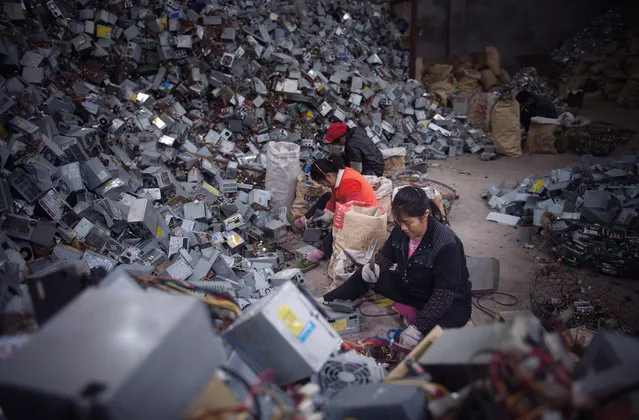
“The sustainable development goals cannot be met unless waste management is addressed as a priority”, says UK waste management charity Waste Aid. “E-waste is one of the fastest growing categories of the 7-10bn tonnes of waste produced globally every year”, adds director Mike Webster. “In our view, decent waste management is a basic right and we want governments around the world take this issue much more seriously – in 2012 only 0.2% of international aid went on improving solid waste management – it’s just not enough”. (Photo by Kai Loeffelbein/laif Agentur)

Sustainable development goal target 12.5 is to reduce waste. But with a planet increasingly dependent on technology, is that even possible? As of today, over 30m tonnes of electronic waste has been thrown out so far this year, according to the World Counts. Most e-waste is sent to landfills in Asia and Africa where it is recycled by hand, exposing the people who do it to environmental hazards. Kai Loeffelbein’s photographs of e-waste recycling in Guiyu, southern China show what happens to discarded computers. (Photo by Kai Loeffelbein/laif Agentur)
Details
19 Oct 2016 12:14:00
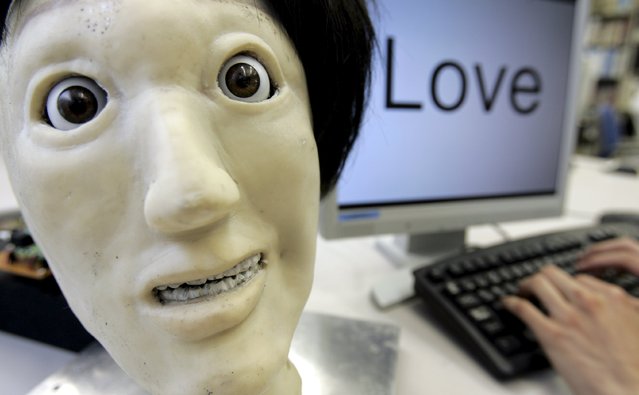
A humanoid robot named Kansei, meaning “sensibility” in Japanese, makes a facial expression depicting “happiness”, next to the word “Love” during a demonstration at a laboratory of Meiji University's Robot and Science Institute in Kawasaki, south of Tokyo in this June 4, 2007 file photo. (Photo by Yuriko Nakao/Reuters)

A humanoid robot named Kansei, meaning “sensibility” in Japanese, makes a facial expression depicting “happiness”, next to the word “Love” during a demonstration at a laboratory of Meiji University's Robot and Science Institute in Kawasaki, south of Tokyo in this June 4, 2007 file photo. Three-fourths of robot installations over the next decade are expected to be concentrated in four areas: transportation equipment, including the automotive sector; computer and electronic products; electrical equipment and machinery. Labor costs have climbed in countries such as China that have been popular for outsourcing production, while technological advances for robots allow them to be more flexible and perform more tasks. (Photo by Yuriko Nakao/Reuters)
Details
17 Apr 2015 09:39:00