Loading...
Done
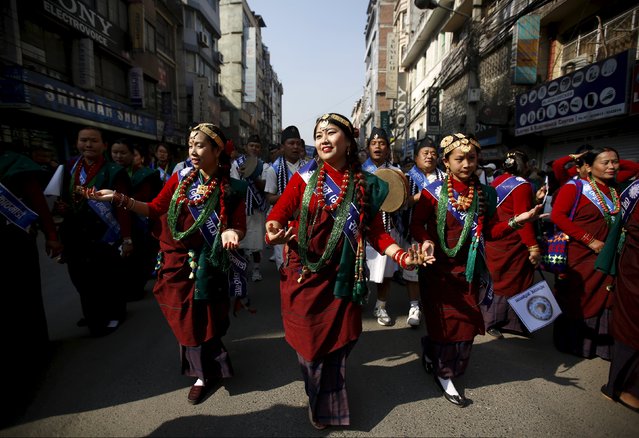
Gurung girls wearing traditional costumes dance while taking part in a New Year parade in Kathmandu, Nepal December 30, 2015. Members of the Gurung community in Nepal celebrate their Tamu Lhosar or Losar (New Year) with a feast and various cultural programs to usher in the year of the Monkey. (Photo by Navesh Chitrakar/Reuters)

Gurung girls wearing traditional costumes dance while taking part in a New Year parade in Kathmandu, Nepal December 30, 2015. Members of the Gurung community in Nepal celebrate their Tamu Lhosar or Losar (New Year) with a feast and various cultural programs to usher in the year of the Monkey. (Photo by Navesh Chitrakar/Reuters)
Details
01 Jan 2016 08:01:00
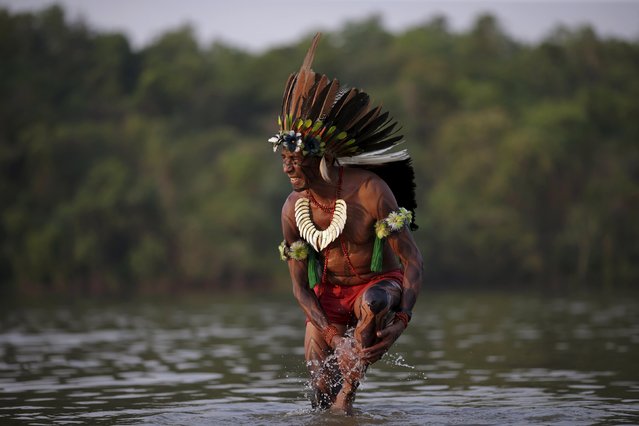
A indigenous man from the Tabajara tribe is seen in Tocantins river before the I World Games for Indigenous People in Palmas, Brazil, October 21, 2015. (Photo by Ueslei Marcelino/Reuters)

A indigenous man from the Tabajara tribe is seen in Tocantins river before the I World Games for Indigenous People in Palmas, Brazil, October 21, 2015. (Photo by Ueslei Marcelino/Reuters)
Details
25 Oct 2015 08:01:00
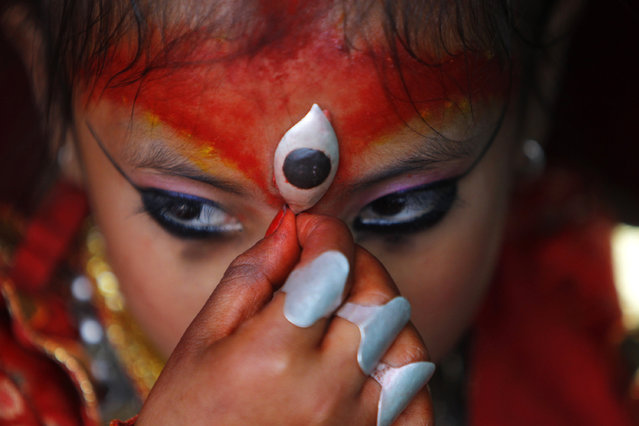
Nepal's Kumari, or living goddess, adjusts her ornament as she watches the Rato Machindranath chariot Festival in Lalitpur, Nepal, Friday, April 24, 2015. Nepal's living goddesses are young pre-pubescent girls considered by devotees to be incarnations of a Hindu goddess. Selected as toddlers, living goddesses usually keep their positions until they reach puberty. (Photo by Niranjan Shrestha/AP Photo)

Nepal's Kumari, or living goddess, adjusts her ornament as she watches the Rato Machindranath chariot Festival in Lalitpur, Nepal, Friday, April 24, 2015. Nepal's living goddesses are young pre-pubescent girls considered by devotees to be incarnations of a Hindu goddess. Selected as toddlers, living goddesses usually keep their positions until they reach puberty. (Photo by Niranjan Shrestha/AP Photo)
Details
25 Apr 2015 10:05:00
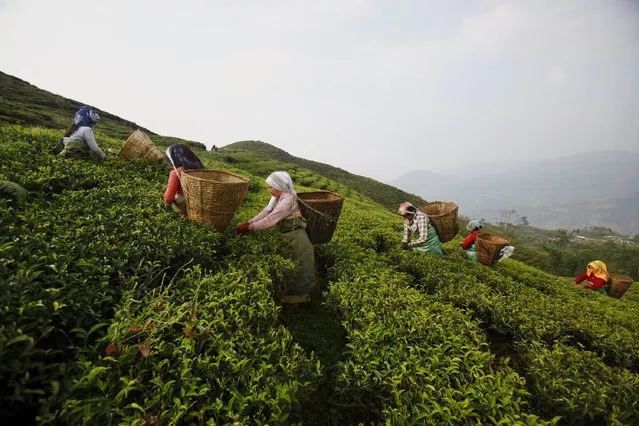
In this Sunday, November 16, 2014 photo, Nepalese women pick tea at a tea garden of Kanyam in Illam district, around 500 kilometers (310 miles) from Katmandu, Nepal. Illam is a hilly district of tea gardens and estates in eastern Nepal's Himalayan region with one of its largest and most productive tea estate being Kanyam estates. (Photo by Niranjan Shrestha/AP Photo)

In this Sunday, November 16, 2014 photo, Nepalese women pick tea at a tea garden of Kanyam in Illam district, around 500 kilometers (310 miles) from Katmandu, Nepal. Illam is a hilly district of tea gardens and estates in eastern Nepal's Himalayan region with one of its largest and most productive tea estate being Kanyam estates. The district produces orthodox tea, hand-processed or machine rolled, which is generally exported to international markets, specially Europe and the United States. Most of the tea pickers here are paid 186 Nepalese Rupees (US $ 2) for 8 hours of work everyday. (Photo by Niranjan Shrestha/AP Photo)
Details
19 Nov 2014 14:28:00
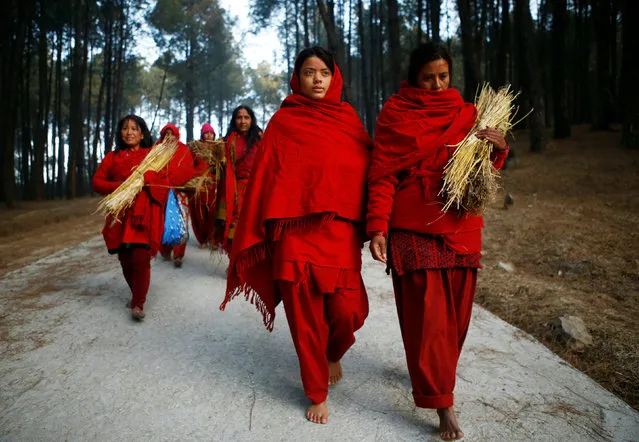
Devotees walk through the woods of Changu Narayan as they arrive to perform rituals and prayers during the Swasthani Bratakatha festival in Bhaktapur, Nepal February 8, 2017. (Photo by Navesh Chitrakar/Reuters)

Devotees walk through the woods of Changu Narayan as they arrive to perform rituals and prayers during the Swasthani Bratakatha festival in Bhaktapur, Nepal February 8, 2017. (Photo by Navesh Chitrakar/Reuters)
Details
12 Feb 2017 00:05:00
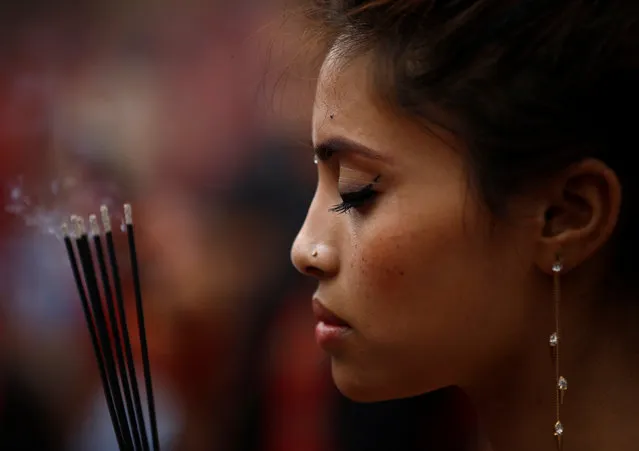
A woman offers a prayer at Pashupatinath Temple during the Teej festival in Kathmandu, Nepal September 4, 2016. (Photo by Navesh Chitrakar/Reuters)

A woman offers a prayer at Pashupatinath Temple during the Teej festival in Kathmandu, Nepal September 4, 2016. During this festival, married Hindu women observe day-long fast and pray for a happy married life while those unmarried pray for a good husband. (Photo by Navesh Chitrakar/Reuters)
Details
05 Sep 2016 11:44:00
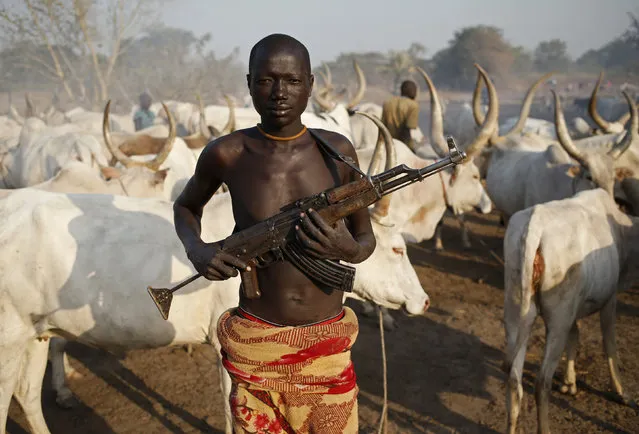
A man from Dinka tribe holds his AK 47 rifle in front of cows in a Dinka cattle herders camp near Rumbek, capital of the Lakes State in central South Sudan December 14, 2013. (Photo by Goran Tomasevic/Reuters)

A man from Dinka tribe holds his AK-47 rifle in front of cows in a Dinka cattle herders camp near Rumbek, capital of the Lakes State in central South Sudan December 14, 2013. (Photo by Goran Tomasevic/Reuters)
Details
02 Jan 2014 12:04:00
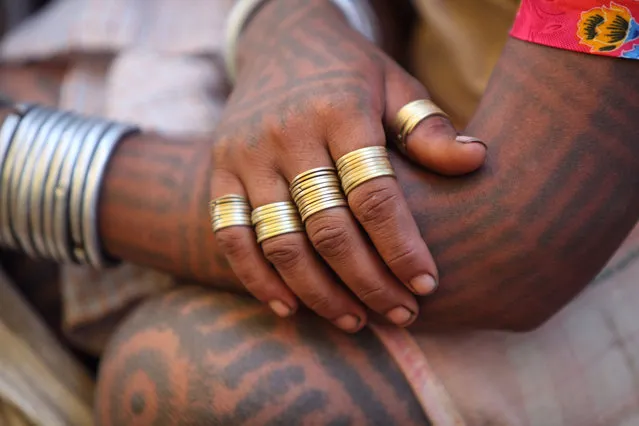
Once applied, the designs are washed using warm water and cow dung. Herbs are applied to promote faster healing. (Photo by Ronny Sen/WaterAid/The Guardian)

For more than 2,000 years, women from the Baiga tribe in the highland district of Dindori, in central India’s Madhya Pradesh state, have been tattooed. Sumintra, 25, from Bona village, has the markings across her forehead, legs and arms. The women who work as tattoo artists are knowledgable about the different types of designs and pigments preferred by various tribes, and their meanings are passed to them by their mothers. The tattooing ‘season’ begins with the approach of winter. (Photo by Ronny Sen/WaterAid/The Guardian)
Details
19 Aug 2017 08:48:00