Loading...
Done
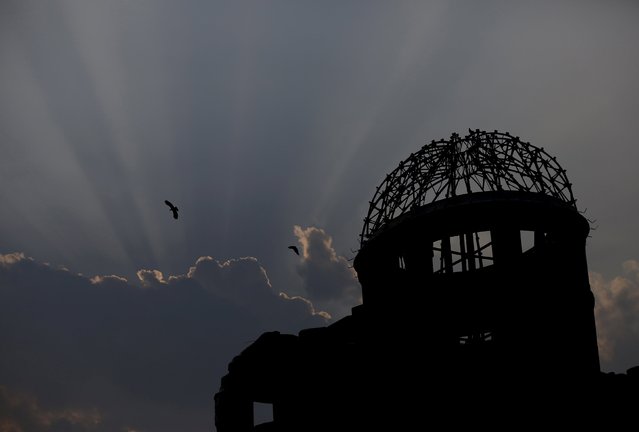
Birds fly over the Atomic Bomb Dome in Hiroshima, western Japan July 29, 2015. On August 6, 1945, the U.S. dropped the atomic bomb on Hiroshima, killing about 140,000 by the end of the year in a city of 350,000 residents, in the world's first nuclear attack. (Photo by Issei Kato/Reuters)

Birds fly over the Atomic Bomb Dome in Hiroshima, western Japan July 29, 2015. On August 6, 1945, the U.S. dropped the atomic bomb on Hiroshima, killing about 140,000 by the end of the year in a city of 350,000 residents, in the world's first nuclear attack. Three days later, a second atomic bomb was dropped on Nagasaki. Influenced by the shadows scorched into outdoor surfaces by the heat of the blasts 70 years ago, Reuters photographer Issei Kato pays homage to survivors, residents and historic buildings in both cities in a personal project that captures the shadows of today. (Photo by Issei Kato/Reuters)
Details
04 Aug 2015 12:01:00
Cardi B looking stylish as she leaves the Warner Music Grammy party in NYC on January 26, 2018. (Photo by Splash News and Pictures)

Cardi B looking stylish as she leaves the Warner Music Grammy party in NYC on January 26, 2018. (Photo by Splash News and Pictures)
Details
04 Feb 2018 06:51:00
“The White Lotus” co-stars Parker Posey (left) and Leslie Bibb reunite at the Gotham TV Awards near Wall Street in NYC on June 2, 2025. (Photo by Zach Hilty/BFA.com/Rex Features/Shutterstock)

“The White Lotus” co-stars Parker Posey (left) and Leslie Bibb reunite at the Gotham TV Awards near Wall Street in NYC on June 2, 2025. (Photo by Zach Hilty/BFA.com/Rex Features/Shutterstock)
Details
25 Jun 2025 03:42:00
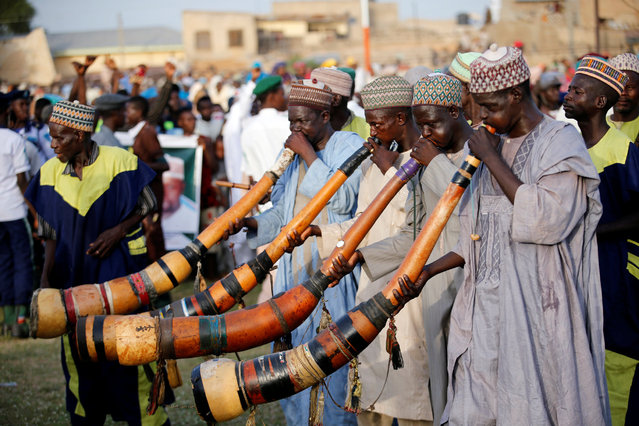
Traditional trumpeters perform during the durbar festival on the second day of Eid-al-Fitr celebrations in Nigeria's northern city of Kano, July 7, 2016. (Photo by Akintunde Akinleye/Reuters)

Traditional trumpeters perform during the durbar festival on the second day of Eid-al-Fitr celebrations in Nigeria's northern city of Kano, July 7, 2016. The Durbar festival begins with prayers, followed by a parade of the Emir and his entourage on horses, accompanied by music players, and ending at the Emir's palace. The Durbar festival had been in hausaland for more than 500 years. It was introduced by sarki muhammadu rumfa of kano in the late 14th century, as a way of demonstrating military power and skills before going to war. The festival is also an opportunity for local leaders to pay homage to emir throughout the jahi cheering. (Photo by Akintunde Akinleye/Reuters)
Details
09 Jul 2016 09:35:00
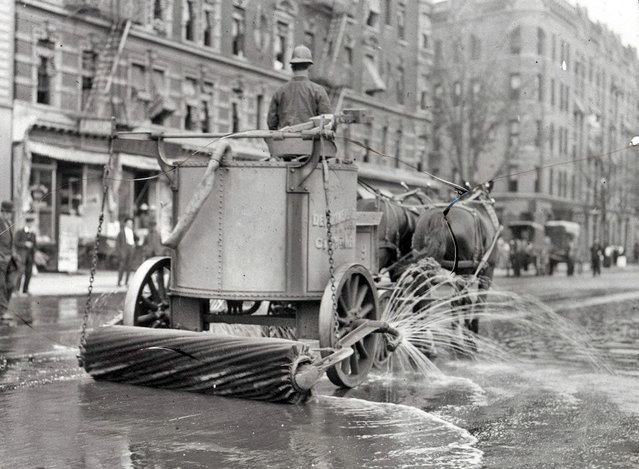
A two-horse team street cleaner, with sprayer, squeegee, and roller at rear. New York, between ca. 1910 and ca. 1915. (Photo by NYC Municipal Archives)

A two-horse team street cleaner, with sprayer, squeegee, and roller at rear. New York, between ca. 1910 and ca. 1915. (Photo by NYC Municipal Archives)
Details
07 Jun 2015 11:30:00
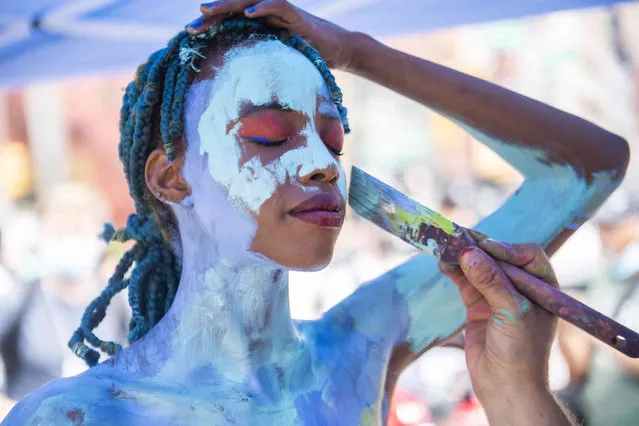
McKensi Pascall is painted by artist Tom Sebazco at Human Connection Arts 8th Annual NYC Body Painting Day in Union Square Park on Sunday, July 25, 2021 in New York. (Photo by Brittainy Newman/AP Photo)

McKensi Pascall is painted by artist Tom Sebazco at Human Connection Arts 8th Annual NYC Body Painting Day in Union Square Park on Sunday, July 25, 2021 in New York. (Photo by Brittainy Newman/AP Photo)
Details
02 Aug 2021 08:13:00
Inflatable dolls in the shape of ducks are seen in front of the National Congress during a protest against tax increases in Brasilia, Brazil, March 29, 2016. The campaign “I will not pay the Duck” is organized by the Federation of Industries of Sao Paulo (FIESP) and uses the duck symbol in reference to industries that pay high taxes. (Photo by Gregg Newton/Reuters)

Inflatable dolls in the shape of ducks are seen in front of the National Congress during a protest against tax increases in Brasilia, Brazil, March 29, 2016. The campaign “I will not pay the Duck” is organized by the Federation of Industries of Sao Paulo (FIESP) and uses the duck symbol in reference to industries that pay high taxes. (Photo by Gregg Newton/Reuters)
Details
30 Mar 2016 11:27:00
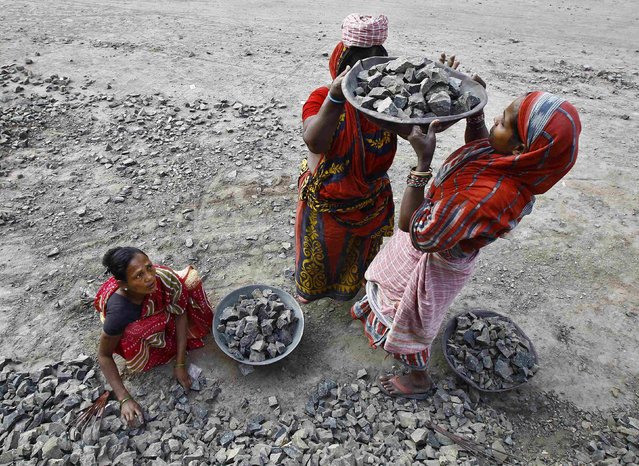
Women labourers work at the construction site of a road in Kolkata January 8, 2015. Across towns and cities in India, it is not uncommon to see women cleaning building sites, carrying bricks and or shoveling gravel - helping construct the infrastructure necessary for the country's economic and social development. (Photo by Rupak De Chowdhuri/Reuters)

Women labourers work at the construction site of a road in Kolkata January 8, 2015. Across towns and cities in India, it is not uncommon to see women cleaning building sites, carrying bricks and or shoveling gravel – helping construct the infrastructure necessary for the country's economic and social development. They help build roads, railway tracks, airports, and offices. They lay pipes for clean water supplies, cables for telecommunications, and dig the drains for sewage systems. But although women make up at least 20 percent of India's 40 million construction workers, they are less recognized than male workers with lower pay and often prone to safety hazards and sexual harassment. They are often unaware of their rights or scared to complain, say activists now trying to campaign for better treatment of women in the construction industry. (Photo by Rupak De Chowdhuri/Reuters)
Details
15 Jan 2015 13:47:00