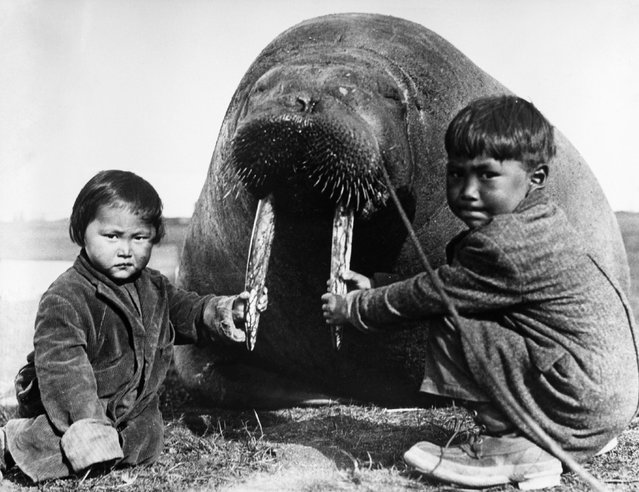
Two Inuit children at Point Barrow, Alaska, holding the tusks of a large walrus, probably killed for food, circa 1930. (Photo by General Photographic Agency/Getty Images)
A weeping South Vietnamese mother and her three children are shown on the deck of this amphibious command ship being plucked out of Saigon by U.S. Marine helicopters in Vietnam, April 29, 1975. (Photo by AP Photo)
A woman reacts as she poses with a man dressed up as the Star Wars character Chewbacca outside the Dolby Theatre, the site of the 88th Academy Awards in Hollywood, California February 26, 2016. (Photo by Adrees Latif/Reuters)
Members of the Colombian Military forces pray for members of the military that have lost their lives and peace in the country at the Military Engineers School in Bogota, Colombia on October 14, 2021. (Photo by Juancho Torres/Anadolu Agency via Getty Images)
Actress Demi Moore attends Irving “Swifty” Lazar's Oscar Party hosted at Spago on March 29, 1989 in West Hollywood, California. (Photo by Jim Smeal/WireImage)
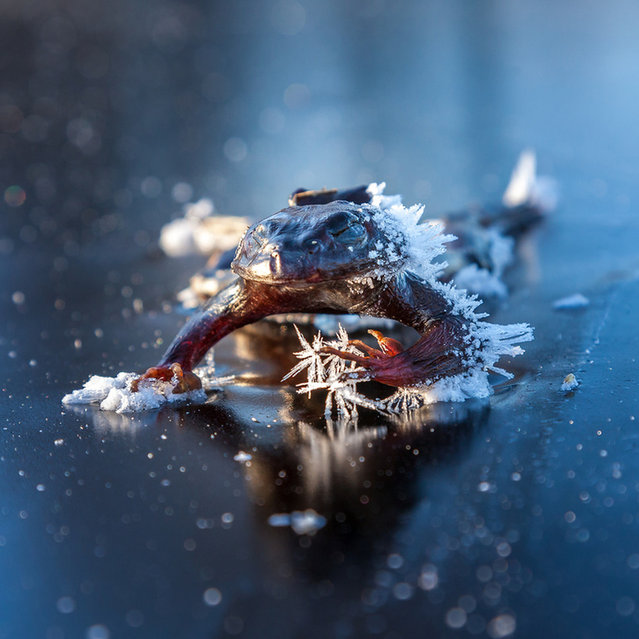
After some days with temperatures below freezing point, I was out skating at some lakes at the outskirts of Oslo in Norway. After a while I noticed something on the ice. To my astonishment it was a dead frozen frog.
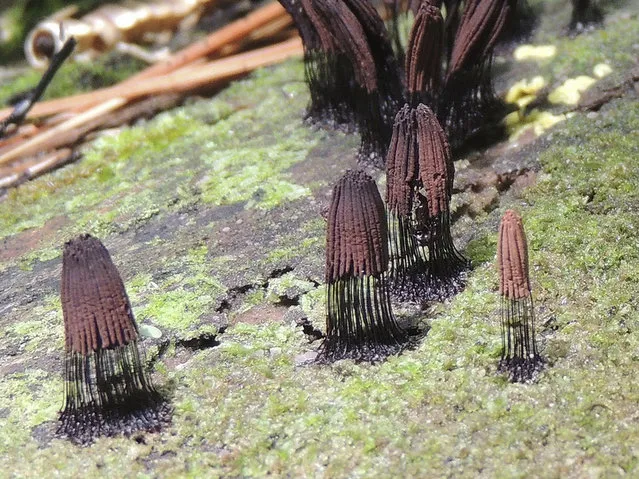
Stemonitis axifera is a species of slime mold. It fruits in clusters on dead wood, and has distinctive tall reddish-brown sporangia, supported on slender stalks. The species was first described as Trichia axifera by Jean Baptiste François Pierre Bulliard in 1791. Thomas Huston MacBride transferred it to the genus Stemonitis in 1889. Stemonitis fasciculata and Stemonitis smithii are synonyms.
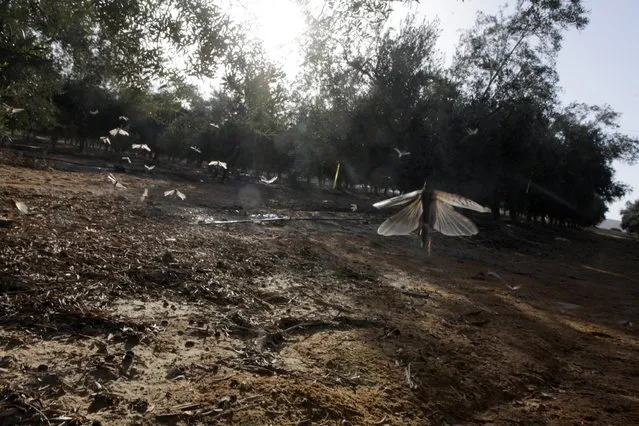
A menacing swarm of locusts that entered southern Israel earlier this week has been largely smitten, according to the Israeli government and local reports. But some of the insects' ilk may be back later this week. (Photo by Eliyahu Hershkovitz)