Loading...
Done
A 1964 Amphicar driven by James Spear of Henderson, Nevada is shown on the boat launch after a trip to Hoover Dam during the first Las Vegas Amphicar Swim-in at Lake Mead near Las Vegas, Nevada October 9, 2015. (Photo by Steve Marcus/Reuters)

A 1964 Amphicar driven by James Spear of Henderson, Nevada is shown on the boat launch after a trip to Hoover Dam during the first Las Vegas Amphicar Swim-in at Lake Mead near Las Vegas, Nevada October 9, 2015. The German-made Amphicar was produced from 1961-1968. (Photo by Steve Marcus/Reuters)
Details
13 Oct 2015 08:01:00
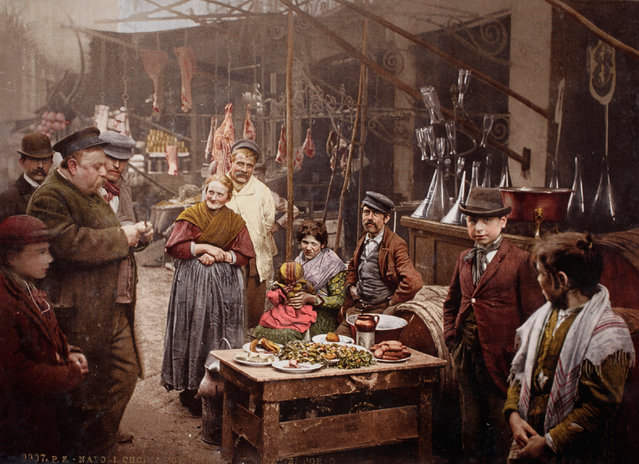
The finished photochromes were produced using at least six different tint stones, although many more were often used. Here: Street food in the Strada del Porto in Naples, Italy, 1899. (Photo by Swiss Camera Museum/The Guardian)

Photochromes are vibrant and nuanced prints hand-coloured from black-and-white negatives. Created using a process pioneered in the 1880s, these images offer a fascinating insight into the world when colour photography was still in its infancy. A Tour of the World in Photochromes is at the Swiss Camera Museum, Vevey, until 21 August. Here: Street food in the Strada del Porto in Naples, Italy, 1899. (Photo by Swiss Camera Museum/The Guardian)
Details
07 Jul 2016 10:56:00
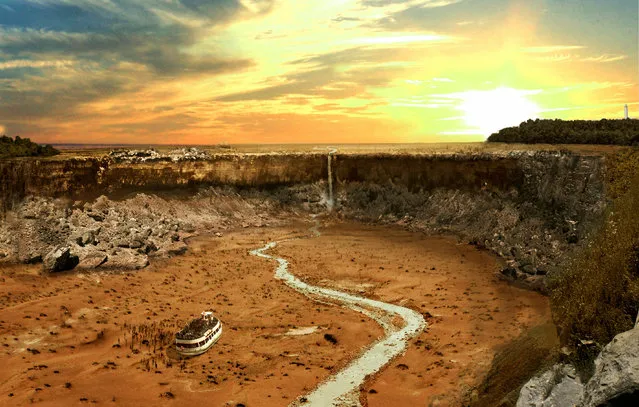
Niagara Falls, Canada, after severe drought. (Photo by Joel Krebs/Caters News)

A graphic designer has produced a haunting look at what the world’s most famous landmarks would look like if they were hit by a severe drought. Joel Krebs has intricately dried up hot spots such as the Tower Bridge in London, the Capitol in Washington, D.C., Niagara Falls and Machu Picchu. Here: Niagara Falls, Canada, after severe drought. (Photo by Joel Krebs/Caters News)
Details
14 Feb 2016 11:49:00
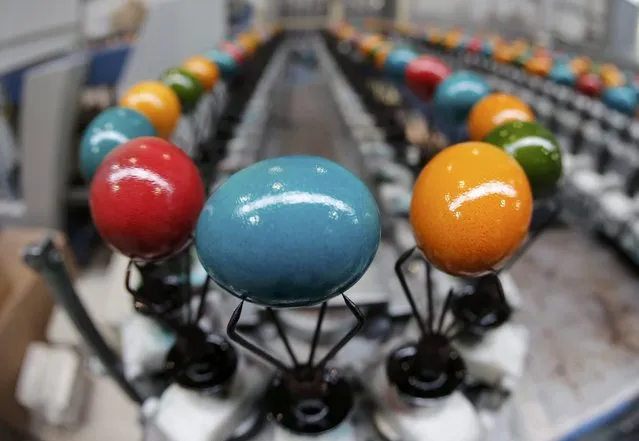
Cooked and coloured eggs travel along the production line at the Schrall coloured eggs company in the Austrian Village of Diendorf March 16, 2015. (Photo by Leonhard Foeger/Reuters)

Cooked and coloured eggs travel along the production line at the Schrall coloured eggs company in the Austrian Village of Diendorf March 16, 2015. Schrall is one of Austria's biggest Easter and coloured eggs producers and makes between eight and 10 million coloured eggs throughout year. (Photo by Leonhard Foeger/Reuters)
Details
17 Mar 2015 12:26:00
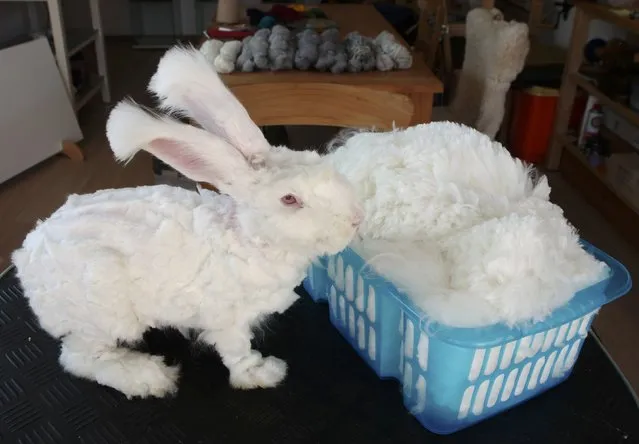
Angora rabbit Emilson sits next to its freshly shaved hair at Georgia Spausta's small farm in Herzogbirbaum, Austria March 10, 2015. (Photo by Heinz-Peter Bader/Reuters)

Angora rabbit Emilson sits next to its freshly shaved hair at Georgia Spausta's small farm in Herzogbirbaum, Austria March 10, 2015. Spausta produces hand-spun yarn from some 25 angora rabbits which is sold in small scale to enthusiasts or at local markets. The rabbits are clipped four times a year, each time giving some 300 grams of wool, about the amount needed to knit one pullover. (Photo by Heinz-Peter Bader/Reuters)
Details
26 Apr 2015 09:06:00
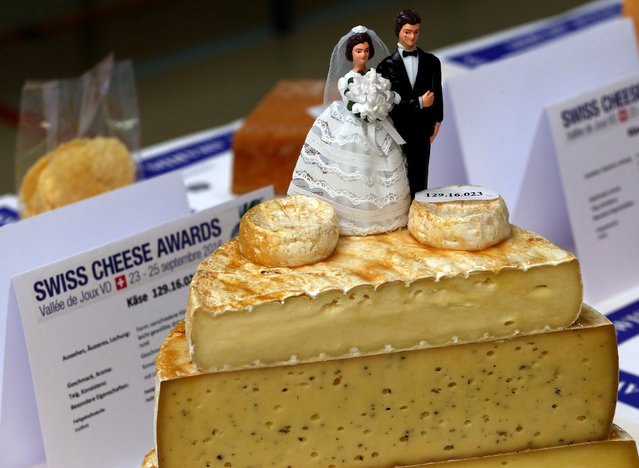
A married couple is displayed on a pile of cheeses in the “Speciality” category during the Swiss Cheese Awards competition in Le Sentier, Switzerland September 23, 2016.. (Photo by Denis Balibouse/Reuters)

A married couple is displayed on a pile of cheeses in the “Speciality” category during the Swiss Cheese Awards competition in Le Sentier, Switzerland September 23, 2016. One hundred and fourty-two experts have to choose the best out of 777 cheeses from 353 producers competing in 28 categories. (Photo by Denis Balibouse/Reuters)
Details
24 Sep 2016 10:36:00
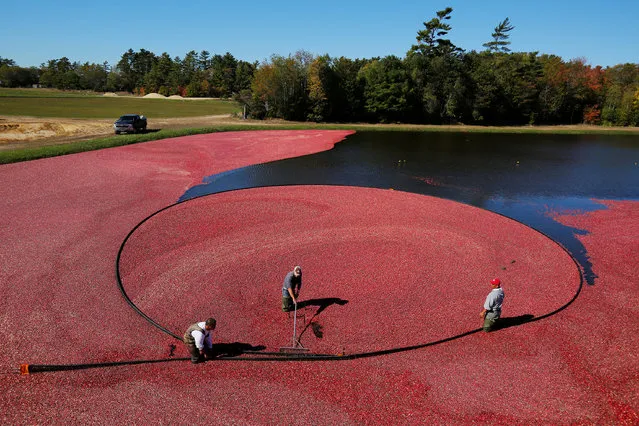
Workers harvest cranberries from one of third-generation farmer Larry Harju's bogs in Carver, Massachusetts, U.S. October 14, 2016. (Photo by Brian Snyder/Reuters)

Workers harvest cranberries from one of third-generation farmer Larry Harju's bogs in Carver, Massachusetts, U.S. October 14, 2016. The cranberries from Harju’s farm are a part of the 8 million barrels of cranberries Ocean Spray anticipates is grower-owners will produce this year. (Photo by Brian Snyder/Reuters)
Details
15 Oct 2016 10:45:00
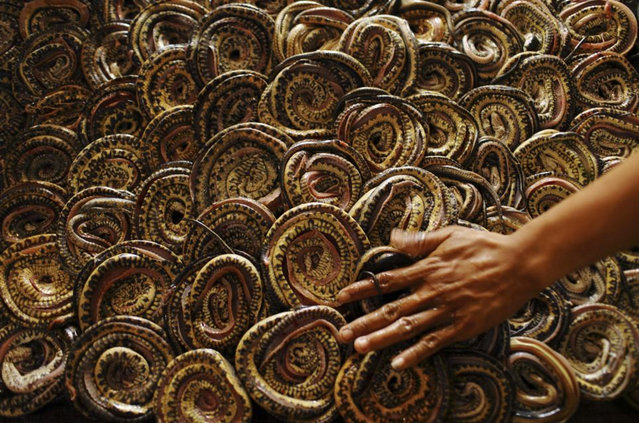
How Snakeskin Handbags Are Made

Images from a snake slaughterhouse at Kapetakan village in Indonesia’s West Java province. Wakira, who is known as “Boss Cobra”, owns the slaughterhouse that produces snake meat and skin. Snake meat is believed by some to be a remedy for skin diseases and asthma, as well as an aid to increase virility. The snake skins, measuring in the hundreds of metres, are sold to bag factories in the West and Central Java provinces on a monthly basis. The price of a bag made from snake skin costs between 150,000 rupiah ($ 15.60) and 300,000 rupiah ($31.20), depending on its size. That snakeskin handbag you’ll buy is costing a hell of a lot more.
Details
20 Feb 2013 12:00:00