Loading...
Done
The Lun-class Ekranoplane was used by the Soviet Navy starting in 1987, and wasn't retired until the late 1990s, after the Soviet Union's fall. (Igor113)

“The Lun-class ekranoplan (NATO reporting name Duck) was a ground effect vehicle (GEV) designed by Rostislav Evgenievich Alexeev and used by the Soviet and Russian navies from 1987 until sometime in the late 1990s. It “flew” using the lift generated by the ground effect of its large wings when close to the surface of the water – about four metres or less. Although they might look similar and/or have related technical characteristics, ekranoplans like the Lun are not aircraft, seaplanes, hovercraft, or hydrofoils – ground effect is a separate technology altogether. The International Maritime Organization classifies these vehicles as maritime ships. The name Lun comes from the Russian for harrier”. – Wikipedia (Photo by Igor113)
Details
08 Aug 2014 10:51:00
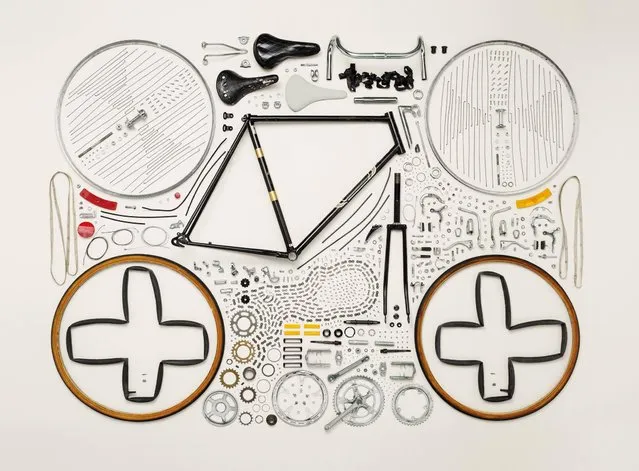
Deconstructed Objects By Todd McLellan

It is simply staggering how complicated some items really are. We never think about it, but some items that we use every day consist of hundreds of parts meticulously put together and working perfectly. Todd McLellan is a photographer who based his newest book “Things Come Apart” on the complexity of various old and new tech. By carefully taking apart various items and arranging all of the parts in perfect order, Todd has allowed us not only to look inside various appliances, but also to appreciate the astounding complexity of these items. Just like the human mind, we are so used to seeing and talking with people that we forget just how complicated their minds really are. It would be great if we could “take apart” the human mind in order to gain some insight into the person’s thoughts and desires. However, very few people are capable of doing it, while the rest will remain blind to the obvious. (Photo by Todd McLellan)
Details
15 Nov 2014 12:30:00
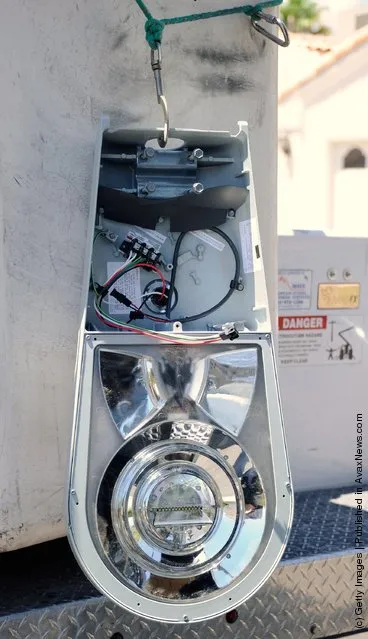
A new LED light fixture is secured to the side of a lift as crews replace existing street lights

A new LED light fixture is secured to the side of a lift as crews replace existing street lights August 1, 2011 in Las Vegas, Nevada. The new energy-efficient fixtures are expected to reduce the city's annual electricity use by eight million kilowatt hours, saving about USD 400,000. The city estimates the LEDs will last about 15 years, nine years longer than the current lights. Funding for the project comes from federal energy conservation bonds and an American Recovery & Reinvestment Act grant. The city plans to replace all of its 50,000 streetlights after more funding is secured. (Photo by Ethan Miller/Getty Images)
Details
02 Aug 2011 14:27:00
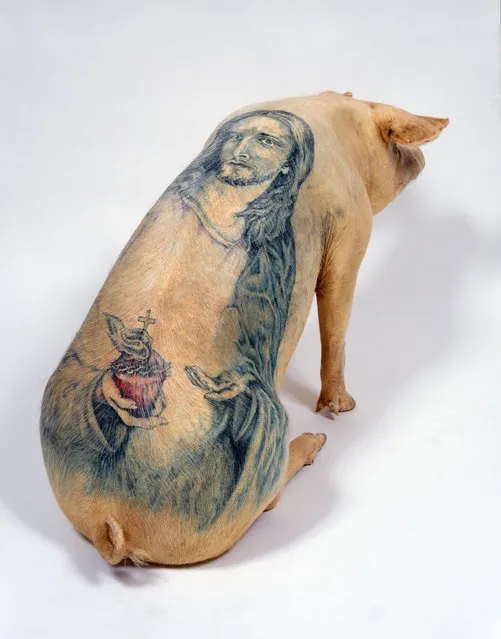
Tattooing Pigs By Wim Delvoye

Wim Delvoye is a notorious tattoo artist, who became famous when he started tattooing live pigs. He first began in 1997 and after animal rights activists found out about what he was doing, he had to move to China to continue his business. There is nothing special about the tattoos that Wim Delvoye creates, they look mediocre at best, and the only reason why he’s famous is his acts of animal cruelty. Nevertheless, Wim states that the pigs feel just fine and are well fed and taken care off. Full anesthesia is used to ensure that the pig doesn’t feel pain during the course of the whole procedure. During this time three tattoo artists work on the tattoo simultaneously to complete it as quickly as possible. Skins of those pigs are then sold for as much as £50k a piece.
Details
02 Apr 2015 09:06:00
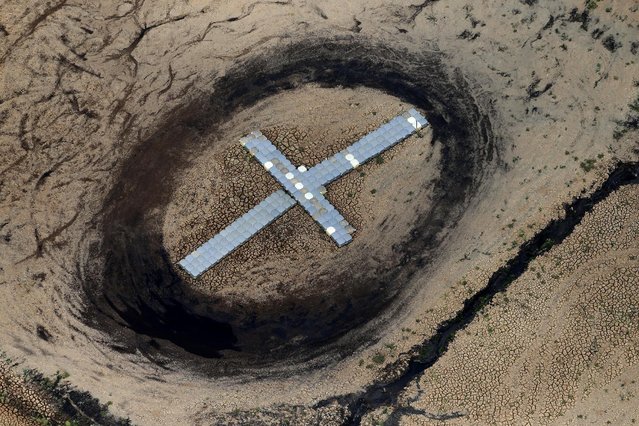
Pontoons, which were previously used as a floating jetty, are seen on the cracked ground of the Atibainha dam, part of the Cantareira reservoir, during a drought in Nazare Paulista, Sao Paulo state February 12, 2015. (Photo by Paulo Whitaker/Reuters)

Pontoons, which were previously used as a floating jetty, are seen on the cracked ground of the Atibainha dam, part of the Cantareira reservoir, during a drought in Nazare Paulista, Sao Paulo state February 12, 2015. Brazil's worst drought in 80 years has left the Cantareira system, that provides greater Sao Paulo with most of its water, with the lowest water level on record. Brazil's economy is already expected to post zero growth this year. Worse yet, since Brazil depends on hydroelectric dams for about three quarters of its electricity, power shortages are also possible due to the drought, federal officials have said. (Photo by Paulo Whitaker/Reuters)
Details
15 Feb 2015 14:19:00
Stop the Violence, Don’t Speed Ad Campaign

The ‘Stop the Violence’ advertising campaign by Brazilian agency Terremoto Propaganda aims to reduce the risk of accidents on the road. The visually grabbing print campaign shows a vehicle painted on the face of one person and the fist of another, drawing the comparison between what is widely known to be intentional violence, such as punching someone in the face, with what many incorrectly consider unintentional, like speeding or unsafe lane changes. Let us know what you think about this campaign in the comments below.
Details
01 Apr 2014 12:29:00
Realistic Hair Art By Roberto Perez Part 2

When Roberto Perez (also known as Rob The Original) gives you a haircut, it’s probably not going to be just a haircut. This San-Antonio-based artist and hair stylist creates amazing works of art using nothing but his clients’ scalp and hair as his canvas. Perez can create just about anything he or his clients can think of – from a photo-realistic portrait or illustration to full-head paintings or graphic designs.


See Also: Part 1
Details
27 Sep 2014 09:50:00
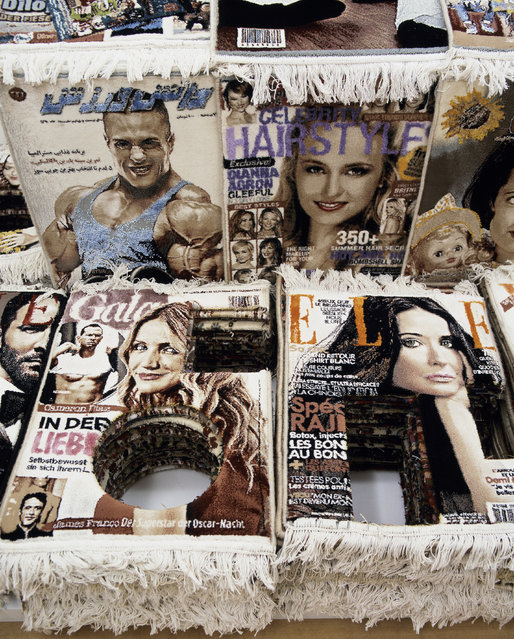
Magazine Store By Farhad Moshiri

Farhad Moshiri, an Iranian artist working a lot with carpet media using it as a mean to joke about consumerism culture, was one of the participants of the group show Love Me Love Me Not of Yarat! pavilion curate by Dina Nasser-Khadivi (read on her curating Lalla Essaydi's Harem here) at Venice 2013 Art Biennial. The installation consists of more than 500 carpets depicting celebrities-covered magazines from all over the world.
Details
02 Oct 2014 12:15:00