Loading...
Done
Macropinna Microstoma

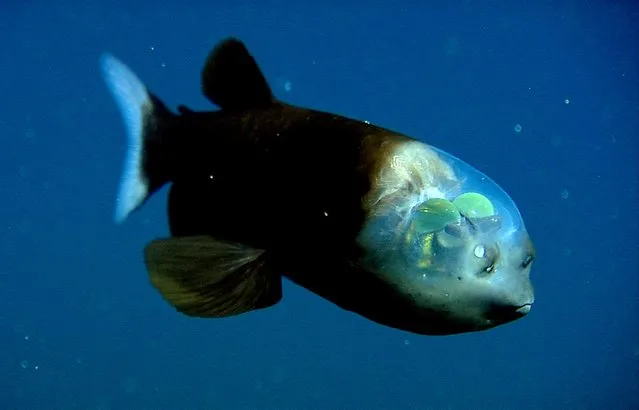
Macropinna microstoma is the only species of fish in the genus Macropinna, belonging to Opisthoproctidae, the barreleye family. It is recognized for a highly unusual transparent, fluid-filled dome on its head, through which the lenses of its eyes can be seen. The eyes have a barrel shape and can be rotated to point either forward or straight up, looking through the fish's transparent dome. M. microstoma has a tiny mouth and most of its body is covered with large scales.
Details
08 Jan 2013 17:42:00
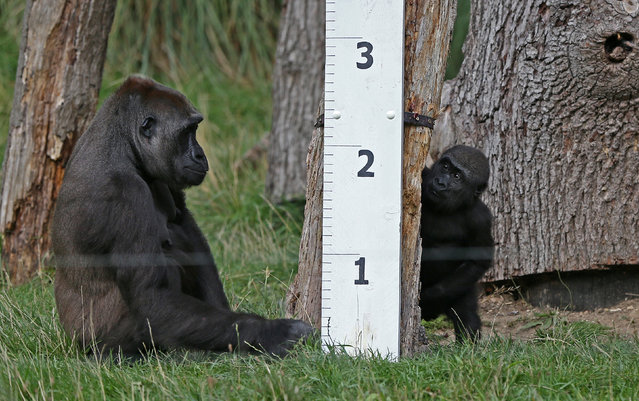
Gorillas sit next to a ruler during a photocall for the annual weigh-in at London Zoo in London, Britain August 24, 2017. (Photo by Neil Hall/Reuters)

Gorillas sit next to a ruler during a photocall for the annual weigh-in at London Zoo in London, Britain August 24, 2017. During the weigh-in, animals across the zoo have their vital statistics recorded including their height and weight and the information is then shared with zoos across the world to help zookeepers compare important information on thousands of endangered species. (Photo by Neil Hall/Reuters)
Details
26 Aug 2017 08:16:00
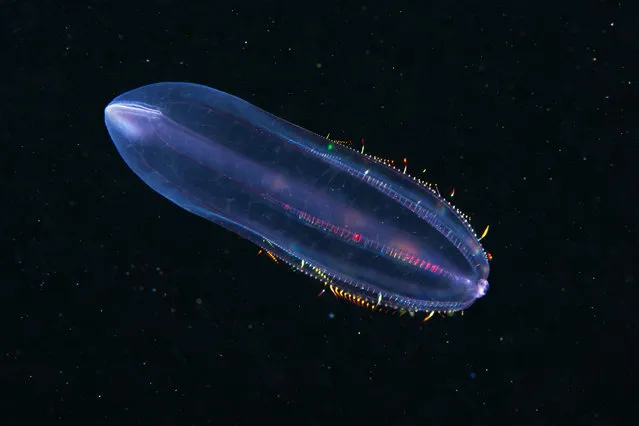
A Comb jelly – Beroe cucumis. (Photo by Alexander Semenovs/Caters News)

Underwater photographer Alexander Semenovs has snapped some of the most stunning, fragile life forms anywhere on planet Earth. Shot in deep, dark conditions, the images continue to provide an insight into what lies beneath, with glowing creatures appearing a lot like aliens in the pitch-black water. Semenovs has shot the likes of bioluminescent jellyfish, aggressive-looking worms and many species that leave a lot to the imagination. The 30-year-old from Moscow does the majority of his work in the White Sea, near the Arctic Circle. Here: A Comb jelly – Beroe cucumis. (Photo by Alexander Semenovs/Caters News)
Details
23 Nov 2015 08:06:00
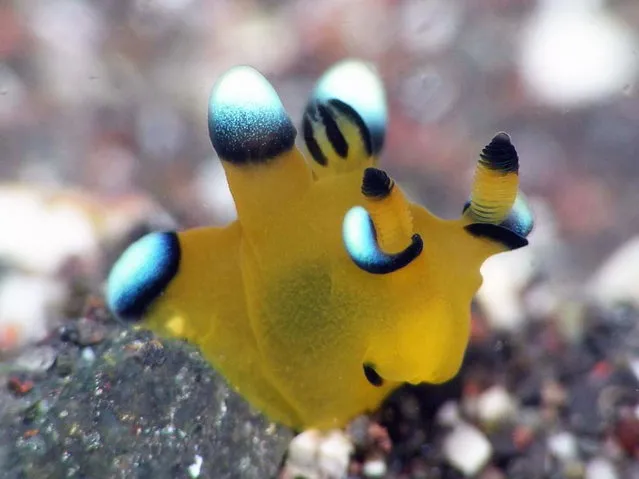
Thecacera Pacifica AKA Pikachu

If you ever wanted to meet a live Pikachu, you might have a hard time finding one. However, there is a creature on this Earth that kind of looks like one. That creature’s name is Thecacera pacifica and it is a species of a sea slug. These little critters can be found in the Indian Ocean from African coast to Indonesia and Vanuatu. Their vibrant orange and blue colors look gorgeous, making it look like some sort of anemone. Also, as you might have guessed from the striking colors of the sea slug, just like most of anemones, this creature is very toxic. Thus, keeping it as a pet isn’t an option.

Details
19 Dec 2014 12:51:00
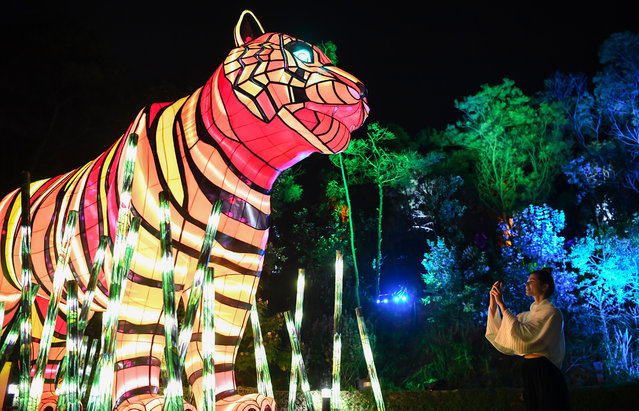
A woman takes a photo on her mobile phone of a tiger during the media preview of Vivid Sydney at Taronga Zoo on May 19, 2019 in Sydney, Australia. (Photo by James D. Morgan/Getty Images)

A woman takes a photo on her mobile phone of a tiger during the media preview of Vivid Sydney at Taronga Zoo on May 19, 2019 in Sydney, Australia. An illuminated trail of almost 300 lit lanterns of endangered species will glow every night at the zoo during Vivid Sydney which runs from May 24 throughout Sydney with hundreds of lit buildings and exhibits which attract hundreds of thousands of visitors each year. (Photo by James D. Morgan/Getty Images)
Details
22 May 2019 00:03:00
Tim Laman - Wildlife Photojournalist

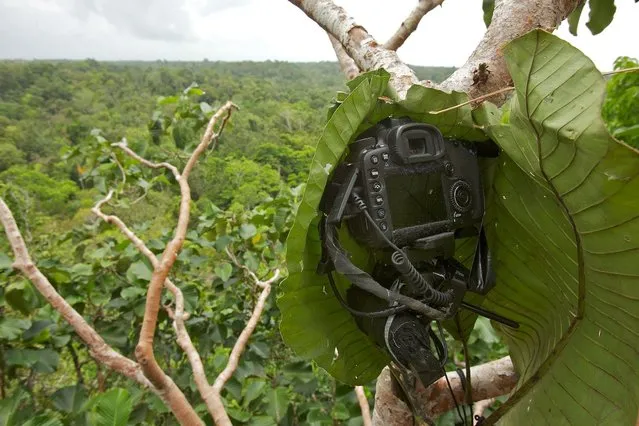
Tim Laman is a field biologist and wildlife photojournalist. His pioneering research in the rain forest canopy in Borneo led to a PhD from Harvard and his first National Geographic article in 1997. Since then, he has pursued his passion for exploring wild places and documenting little-known and endangered wildlife by becoming a regular contributor to National Geographic. He has eighteen articles to his credit to date, all of which have had a conservation message. Some have focused on endangered species such as Orangutans or Hornbills, while others, such as a series of articles on Conservation International’s Biodiversity Hotspots, have highlighted regions under intense pressure.
Details
14 Sep 2013 10:13:00
Nightjars And Pooto Bird

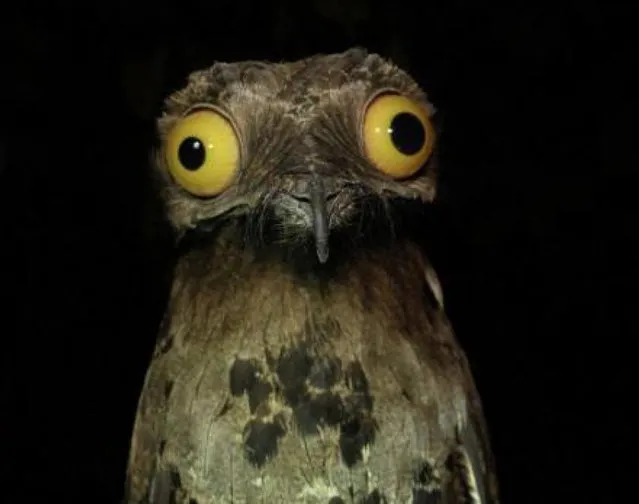
Potoos (family Nyctibiidae) are a group of near passerine birds related to the nightjars and frogmouths. They are sometimes called Poor-me-ones, after their haunting calls. There are seven species in one genus, Nyctibius, in tropical Central and South America.
These are nocturnal insectivores which lack the bristles around the mouth found in the true nightjars. They hunt from a perch like a shrike or flycatcher. During the day they perch upright on tree stumps, camouflaged to look like part of the stump. The single spotted egg is laid directly on the top of a stump.
Details
20 Jan 2014 14:34:00
Perfect Predators: White Sharks

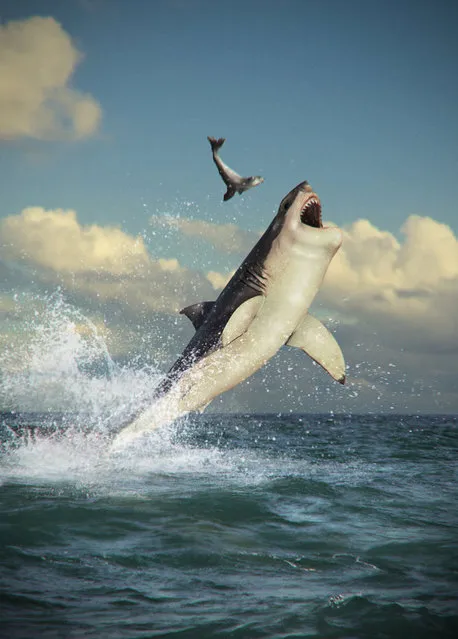
The great white shark, Carcharodon carcharias, also known as the great white, white pointer, white shark, or white death, is a species of large lamniform shark which can be found in the coastal surface waters of all the major oceans. The great white shark is mainly known for its size, with the largest individuals known to have approached or exceeded 6 m (20 ft) in length, and 2,268 kg (5,000 lb) in weight. This shark reaches its maturity around 15 years of age and can have a life span of over 30 years.
Details
01 Apr 2013 10:02:00