Loading...
Done
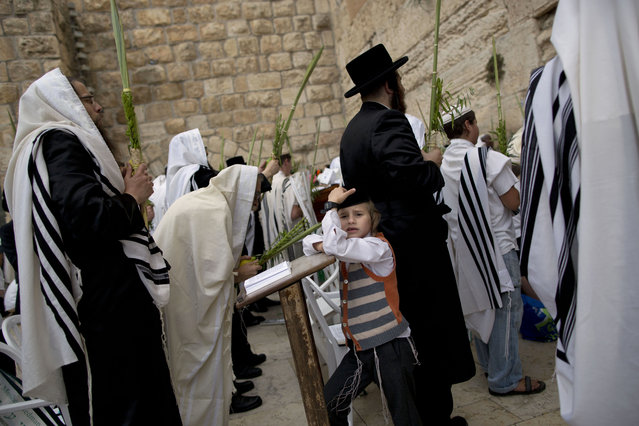
Covered in prayer shawls, Ultra-Orthodox Jewish men participate in a blessing during the holiday of Sukkot, in front of the Western Wall, the holiest site where Jews can pray in Jerusalem's Old City, Wednesday, September 30, 2015. The Cohanim, believed to be descendants of priests who served God in the Jewish Temple before it was destroyed, perform a blessing ceremony of the Jewish people three times a year during the festivals of Passover, Shavuot and Sukkot. (Photo by Oded Balilty/AP Photo)

Covered in prayer shawls, Ultra-Orthodox Jewish men participate in a blessing during the holiday of Sukkot, in front of the Western Wall, the holiest site where Jews can pray in Jerusalem's Old City, Wednesday, September 30, 2015. The Cohanim, believed to be descendants of priests who served God in the Jewish Temple before it was destroyed, perform a blessing ceremony of the Jewish people three times a year during the festivals of Passover, Shavuot and Sukkot. (Photo by Oded Balilty/AP Photo)
Details
03 Oct 2015 08:00:00
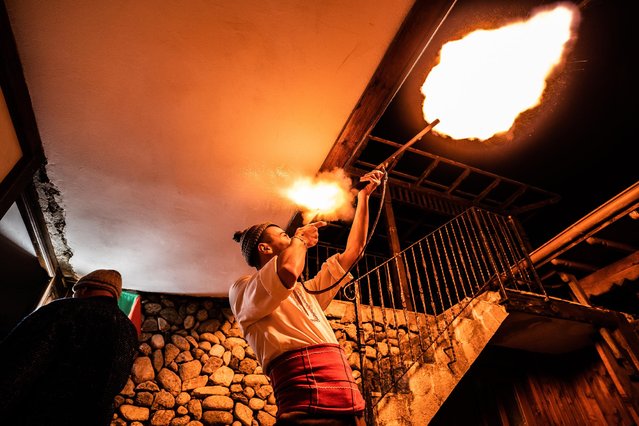
Genko Stoykov fires a rifle as he and other men prepare for the traditional “Horo” dance on Epiphany Day in the icy winter waters of the Tundzha river on January 6, 2022 in Kalofer, Bulgaria. As part of the tradition, a priest throws a cross in the river and it is believed that the one who retrieves it will be healthy throughout the year. Today, cultures throughout Christendom mark the Feast of the Epiphany, when Jesus was revealed to the Magi as God incarnate. (Photo by Hristo Rusev/Getty Images)

Genko Stoykov fires a rifle as he and other men prepare for the traditional “Horo” dance on Epiphany Day in the icy winter waters of the Tundzha river on January 6, 2022 in Kalofer, Bulgaria. As part of the tradition, a priest throws a cross in the river and it is believed that the one who retrieves it will be healthy throughout the year. Today, cultures throughout Christendom mark the Feast of the Epiphany, when Jesus was revealed to the Magi as God incarnate. (Photo by Hristo Rusev/Getty Images)
Details
07 Jan 2022 08:30:00
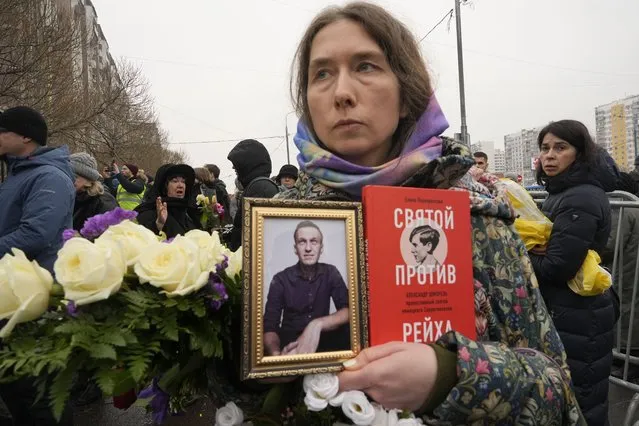
A woman holds a portrait of Alexei Navalny and a book titled “A saint against the Reich” as people gather outside the Church of the Icon of the Mother of God Soothe My Sorrows, in Moscow, Russia, Friday, March 1, 2024. Relatives and supporters of Alexei Navalny are bidding farewell to the opposition leader at a funeral in southeastern Moscow, following a battle with authorities over the release of his body after his still-unexplained death in an Arctic penal colony. (Photo by AP Photo)

A woman holds a portrait of Alexei Navalny and a book titled “A saint against the Reich” as people gather outside the Church of the Icon of the Mother of God Soothe My Sorrows, in Moscow, Russia, Friday, March 1, 2024. Relatives and supporters of Alexei Navalny are bidding farewell to the opposition leader at a funeral in southeastern Moscow, following a battle with authorities over the release of his body after his still-unexplained death in an Arctic penal colony. (Photo by AP Photo)
Details
02 Mar 2024 00:49:00
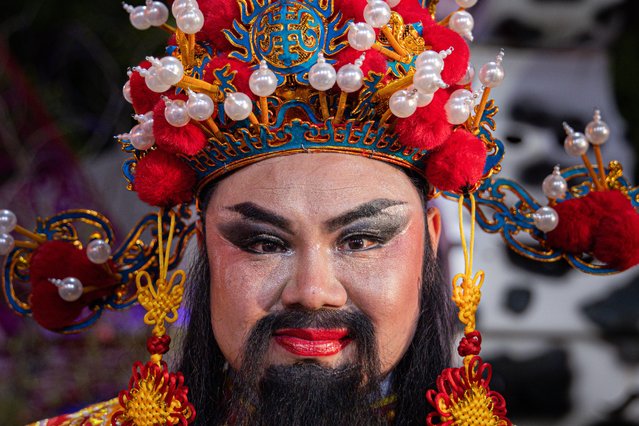
God of Wealth arrives at the Lunar New Year celebration at Thean Hou Temple on February 10, 2024, in Kuala Lumpur, Malaysia. Chinese New Year in Malaysia is marked by family gatherings, festive adornments and traditional rituals embodying a spirit of hope and renewal for the year ahead, and aims to bring joy and prosperity to all while fostering a sense of unity and hope for a successful Year of the Dragon. (Photo by Annice Lyn/Getty Images)

God of Wealth arrives at the Lunar New Year celebration at Thean Hou Temple on February 10, 2024, in Kuala Lumpur, Malaysia. Chinese New Year in Malaysia is marked by family gatherings, festive adornments and traditional rituals embodying a spirit of hope and renewal for the year ahead, and aims to bring joy and prosperity to all while fostering a sense of unity and hope for a successful Year of the Dragon. (Photo by Annice Lyn/Getty Images)
Details
18 May 2024 00:19:00


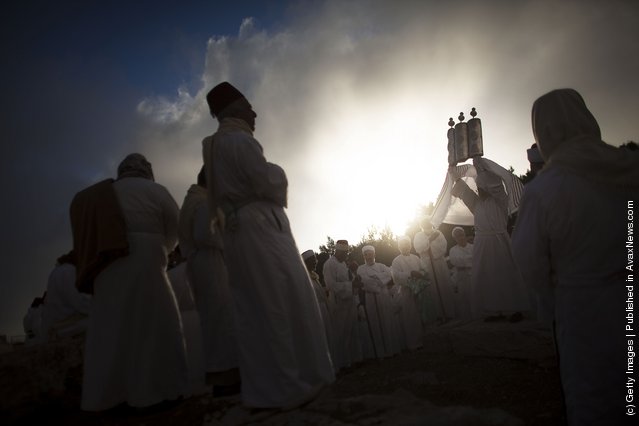
A priest of the ancient Samaritan community, wrapped in a prayer shawl, holds up a Tora scroll as worshippers pray during the holy day of Shavuot on Mount Gerizim on June 12, 2011 in Nablus, West Bank. Shavuot is a Jewish religious holiday and commemorates the anniversary of the day God is said to have given the Torah to the Israelites. (Photo by Uriel Sinai/Getty Images)
Details
13 Jun 2011 07:44:00


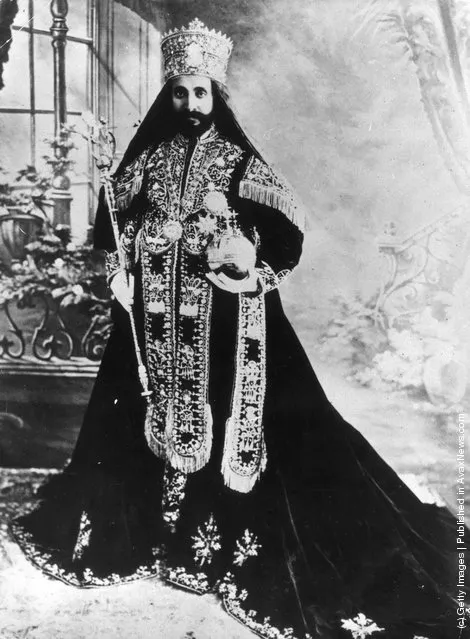
“Haile Selassie I (23 July 1892 – 27 August 1975), born Tafari Makonnen, was Ethiopia's regent from 1916 to 1930 and Emperor of Ethiopia from 1930 to 1974. The heir to a dynasty that traced its origins to the 13th century, and from there by tradition back to King Solomon and Queen Makeda, Empress of Axum, known in the Abrahamic tradition as the Queen of Sheba. Haile Selassie is a defining figure in both Ethiopian and African history.

Haile Selassie is revered as the returned Messiah of the Bible, God incarnate, among the Rastafari movement, the number of followers of which is estimated between 200,000 and 800,000. Begun in Jamaica in the 1930s, the Rastafari movement perceives Haile Selassie as a messianic figure who will lead a future golden age of eternal peace, righteousness, and prosperity. He himself remained an Ethiopian Orthodox Christian throughout his life”. – Wikipedia

Photo: Negusa Negasti, Emperor of Ethiopia Haile Selassie I, known as “Lord of Lords”, “The Conquering Lion of the tribe of Judah”, “Light of the world”, “Elect of God”, in full ceremonial regalia following his coronation. (Photo by Hulton Archive/Getty Images)

Details
21 Jun 2011 11:04:00
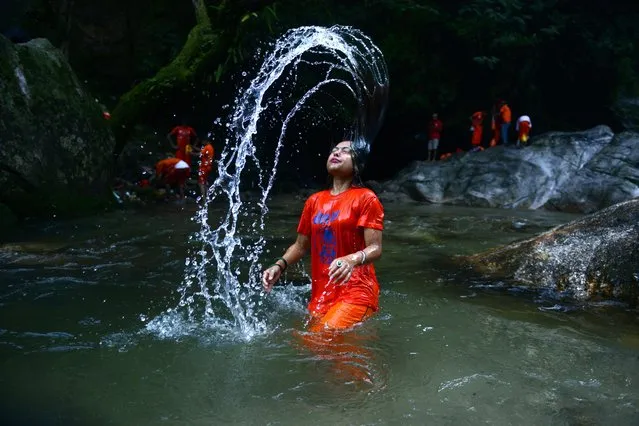
A Nepalese Hindu devotee bathes in the Bagmati River on her way to the Pashupatinath Temple to offer prayers to Lord Shiva, Hindu god of destruction during Shravan festivities in Sundarijal, on the outskirts of Kathmandu on August 3, 2015. According to the Nepali calendar, Shravan is considered the holiest month of the year with each Monday of the month known as Shravan Somvar when worshippers offer prayers for a happy and prosperous life. (Photo by Prakash Mathema/AFP Photo)

A Nepalese Hindu devotee bathes in the Bagmati River on her way to the Pashupatinath Temple to offer prayers to Lord Shiva, Hindu god of destruction during Shravan festivities in Sundarijal, on the outskirts of Kathmandu on August 3, 2015. According to the Nepali calendar, Shravan is considered the holiest month of the year with each Monday of the month known as Shravan Somvar when worshippers offer prayers for a happy and prosperous life. (Photo by Prakash Mathema/AFP Photo)
Details
04 Aug 2015 12:46:00
A devotee takes a holy bath in River Saali in Sankhu during the Swasthani Brata Katha festival in Kathmandu, Nepal, January 24, 2016. (Photo by Navesh Chitrakar/Reuters)

A devotee takes a holy bath in River Saali in Sankhu during the Swasthani Brata Katha festival in Kathmandu, Nepal, January 24, 2016. During the month long festival, devotees recite one chapter of a Hindu tale daily from the 31-chapter sacred Swasthani Brata Katha book that is dedicated to God Madhavnarayan and Goddess Swasthani, alongside various other gods and goddess and the miraculous feats performed by them. The devotees also go on pilgrimages to various temples, perform religious rituals, take a holy bath in the rivers and fast for a month, especially among women who believe fasting helps in their family's well-being or in getting them a good husband. (Photo by Navesh Chitrakar/Reuters)
Details
25 Jan 2016 12:05:00