Loading...
Done


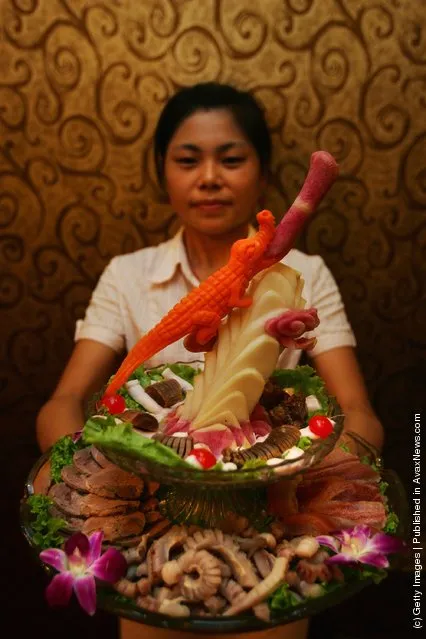
A waitress displays a plate of animal penises and testis at the Guolizhuang pen*s Restaurant on September 7, 2007 in Beijing, China. The restaurant offers more than 30 types of animal-pen*s dishes which can cost from 500 yuan (76.99 USD) up to 90,000 yuan (13,857.67 USD). It is believed that eating an animal's pen*s can strengthen a man's sexual ability. (Photo by Feng Li/Getty Images)
Details
06 May 2011 12:20:00


A Peugeot 408 car is displayed during the 2011 (15th) Shenzhen-Hong Kong-Macao International Auto Show at Shenzhen Convention and Exhibition Center on June 2, 2011 in Shenzhen, Guangdong Province of China. The 6-day Auto Show will be held from June 2 to 7 with total exhibition area of 110,000 square meters. (Photo by ChinaFotoPress/Getty Images)
Details
04 Jun 2011 06:10:00
The Temple of Heaven (The Qi Nian Temple) is illuminated as Beijing celebrates the New Year's Eve at the Temple of Heaven Park

The Temple of Heaven (The Qi Nian Temple) is illuminated as Beijing celebrates the New Year's Eve at the Temple of Heaven Park on December 31, 2011 in Beijing, China. (Photo by Lintao Zhang/Getty Images)
Details
02 Jan 2012 11:31:00
Buddha

The Leshan Giant Buddha was built during the Tang Dynasty (618–907AD). It is carved out of a cliff face that lies at the confluence of the Minjiang, Dadu and Qingyi rivers in the southern part of Sichuan province in China, near the city of Leshan. The stone sculpture faces Mount Emei, with the rivers flowing below his feet. It is the largest carved stone Buddha in the world[1] and it is by far the tallest pre-modern statue in the world.
Details
14 Jul 2012 04:50:00
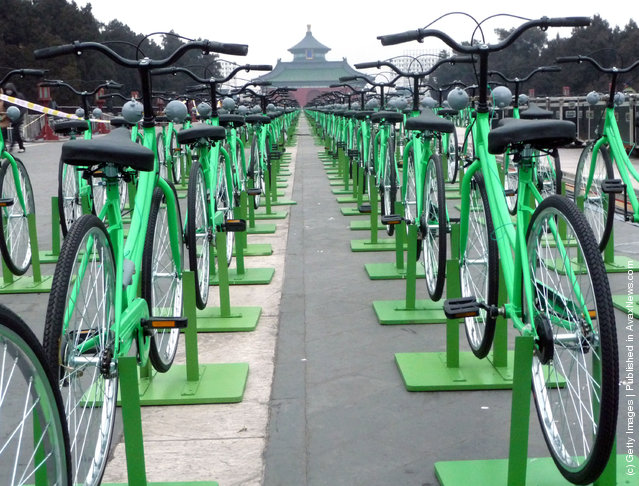
Hundreds of green bicycles are prepared as 960 of them await riders for the new year gala at the Temple of Heaven Park

Hundreds of green bicycles are prepared as 960 of them await riders for the new year gala at the Temple of Heaven Park on December 29, 2011 in Beijing, China. Annual New Year countdown ceremony will be held at the park on December 31. (Photo by ChinaFotoPress/ChinaFotoPress via Getty Images)
Details
31 Dec 2011 10:20:00
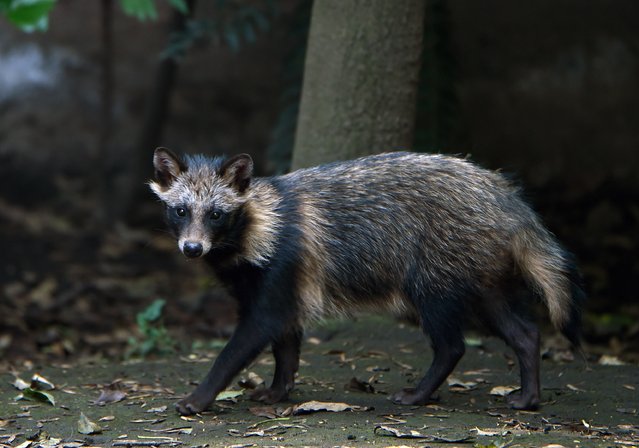
View of a raccoon dog or Tanuki (Nyctereutes procyonoides) at the Chapultpec Zoo in Mexico City on August 06, 2015. (Photo by Alfredo Estrella/AFP Photo)

View of a raccoon dog or Tanuki (Nyctereutes procyonoides) at the Chapultpec Zoo in Mexico City on August 06, 2015. This species is native from Japan and China. (Photo by Alfredo Estrella/AFP Photo)
Details
05 Mar 2016 11:37:00
A young woman wearing no trousers hits the ski slopes at a ski resort in Xuzhou, in east China's Jiangsu province on January 13, 2015 in a promotional effort to equal “No Pants Subway Ride”, which was marked on January 11 this year. (Photo by AFP Photo)

A young woman wearing no trousers hits the ski slopes at a ski resort in Xuzhou, in east China's Jiangsu province on January 13, 2015 in a promotional effort to equal “No Pants Subway Ride”, which was marked on January 11 this year. The promotional “No Pants Subway Ride” stunt on January 11 was held as commuters in some 60 cities around the world braved public transportation in their undies, which has gone global since its first staging by US group Improv Everywhere in New York in 2002. (Photo by AFP Photo)
Details
17 Jan 2015 12:46:00
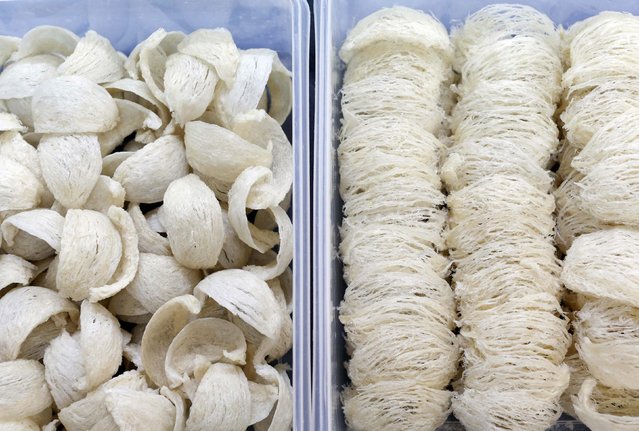
Two styles of cleaned bird's nest, Yan Zhan (L) and Su Zhan (R) await repacking at a processing plant in Kuala Lumpur, February 17, 2015. Prized in China for is alleged health benefits for hundreds of years, nests made from swiftlets' saliva are being mixed into coffee and cereal as the Southeast Asian producers of the delicacy seek to broaden its appeal, and their profit margins. (Photo by Olivia Harris/Reuters)

Two styles of cleaned bird's nest, Yan Zhan (L) and Su Zhan (R) await repacking at a processing plant in Kuala Lumpur, February 17, 2015. Prized in China for is alleged health benefits for hundreds of years, nests made from swiftlets' saliva are being mixed into coffee and cereal as the Southeast Asian producers of the delicacy seek to broaden its appeal, and their profit margins. The nests are among the world's most expensive foods, selling for up to $2,500 a kg and the swiftlets that weave them are indigenous to Indonesia, Malaysia, Thailand and Vietnam. (Photo by Olivia Harris/Reuters)
Details
24 Feb 2015 13:57:00