Loading...
Done
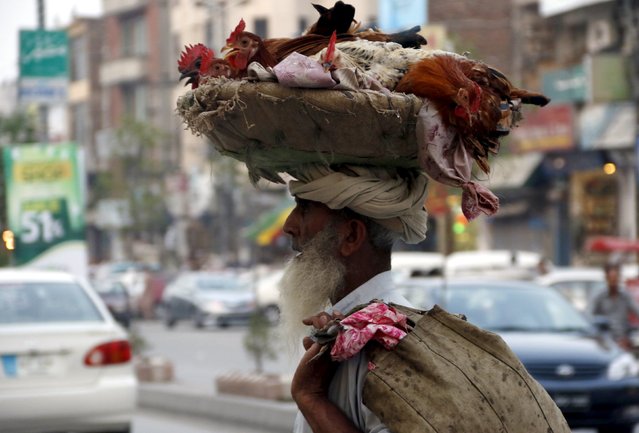
A chicken seller carries his chickens on his head in the market in Peshawar, Pakistan, August 20, 2015. (Photo by Khuram Parvez/Reuters)

A chicken seller carries his chickens on his head in the market in Peshawar, Pakistan, August 20, 2015. (Photo by Khuram Parvez/Reuters)
Details
22 Aug 2015 13:02:00
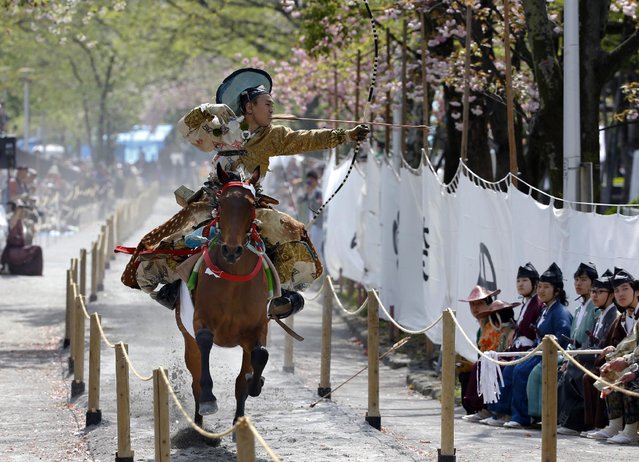
An archer in a samurai warrior costume aims at a target in the Asakusa Yabusame horseback archery event at Sumida Park in Tokyo, Saturday, April 18, 2015. (Photo by Shizuo Kambayashi/AP Photo)

An archer in a samurai warrior costume aims at a target in the Asakusa Yabusame horseback archery event at Sumida Park in Tokyo, Saturday, April 18, 2015. (Photo by Shizuo Kambayashi/AP Photo)
Details
25 Apr 2015 10:17:00
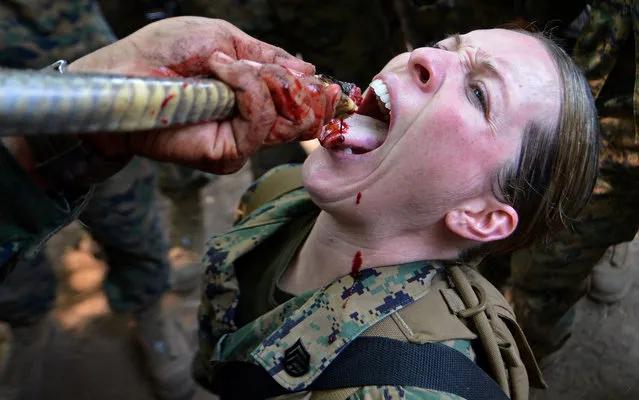
In a military base in the Thai province of Chon Buri February 20 U.S. Marines Navy with Thailand began their studies in jungle survival. The event is held in joint military exercises “Cobra Gold 2013”. During a jungle survival program February 20, 2013 taught by Royal Thai Special Forces in Sannapit, Thailand, U.S. Marines learned to catch cobras and drink their fresh blood, not to mention eat forest insects and pull the heads off of chicken. The training was part of Operation Cobra Gold 13, the 32nd edition of international military exercises hosted by the Thai. According to a U.S. Marines press release, Cobra Gold is the largest exercise of its kind in Asia and incorporates troops from five other nations in addition to the U.S. and Thailand. The Daily Mail reports that the Marines were invited to experience the local custom of drinking cobra blood after being taught to catch and kill cobras in the wild. As CNN notes, Cobra blood is believed to be a panacea and aphrodiasic in parts of Southeast Asia. In Jakarta, vendors can earn over $100 a night selling shots of cobra blood mixed with liquor. (Photo by Pornchai Kittiwongsakul/AFP Photo)

During a jungle survival program February 20, 2013 taught by Royal Thai Special Forces in Sannapit, Thailand, U.S. Marines learned to catch cobras and drink their fresh blood, not to mention eat forest insects and pull the heads off of chicken. The training was part of Operation Cobra Gold 13, the 32nd edition of international military exercises hosted by the Thai. According to a U.S. Marines press release, Cobra Gold is the largest exercise of its kind in Asia and incorporates troops from five other nations in addition to the U.S. and Thailand. The Daily Mail reports that the Marines were invited to experience the local custom of drinking cobra blood after being taught to catch and kill cobras in the wild. As CNN notes, Cobra blood is believed to be a panacea and aphrodiasic in parts of Southeast Asia. In Jakarta, vendors can earn over $100 a night selling shots of cobra blood mixed with liquor. (Photo by Pornchai Kittiwongsakul/AFP Photo)
Details
23 Feb 2013 11:52:00
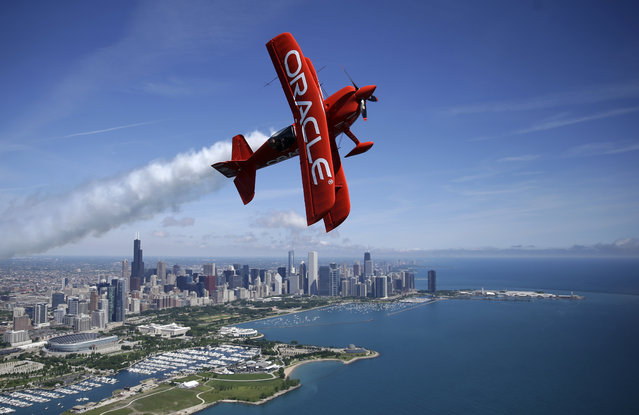
Aerobatic pilot Sean D. Tucker flies in the two-seat Oracle Extra airplane over downtown Chicago skyline, Wednesday, June 8, 2016. Tucker will perform before the start of of the America's Cup World Series racing on Saturday and Sunday. (Photo by Kiichiro Sato/AP Photo)

Aerobatic pilot Sean D. Tucker flies in the two-seat Oracle Extra airplane over downtown Chicago skyline, Wednesday, June 8, 2016. Tucker will perform before the start of of the America's Cup World Series racing on Saturday and Sunday. (Photo by Kiichiro Sato/AP Photo)
Details
09 Jun 2016 09:28:00
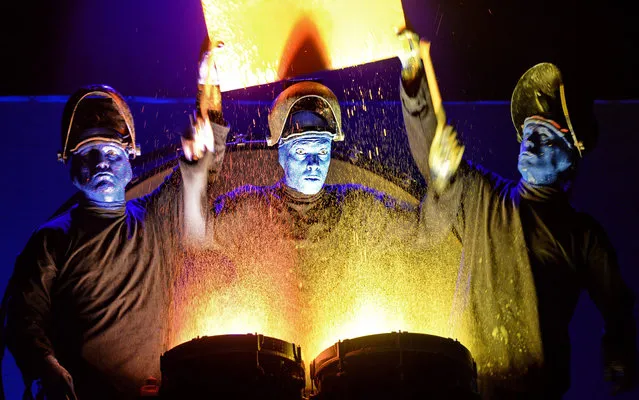
The Blue Man Group performs on stage during a media preview ahead of their show in Singapore on March 31, 2016. Blue Man Group was started by three friends in New York in 1991 as a way to celebrate the human spirit through music, science, art and theater. (Photo by Roslan Rahman/AFP Photo)

The Blue Man Group performs on stage during a media preview ahead of their show in Singapore on March 31, 2016. Blue Man Group was started by three friends in New York in 1991 as a way to celebrate the human spirit through music, science, art and theater. (Photo by Roslan Rahman/AFP Photo)
Details
01 Apr 2016 12:50:00
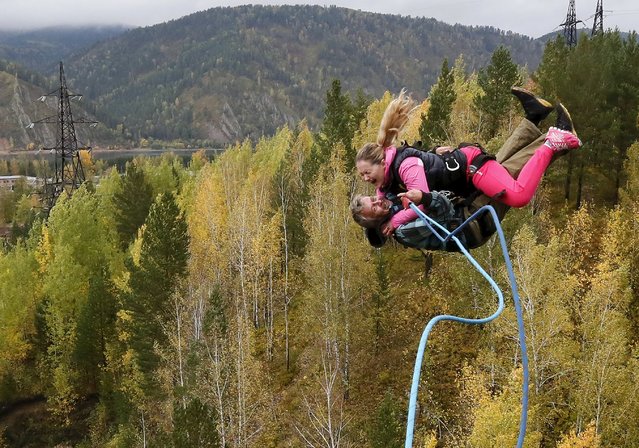
Members of the “Exit Point” amateur rope-jumping group jump from a 44-metre high (144-ft) waterpipe bridge in the Siberian Taiga area outside Krasnoyarsk, September 13, 2015. Rope-jumping, an extreme sport, involves jumping from a high point using an advanced leverage system combining mountaineering and rope safety equipment. (Photo by Ilya Naymushin/Reuters)

Members of the “Exit Point” amateur rope-jumping group jump from a 44-metre high (144-ft) waterpipe bridge in the Siberian Taiga area outside Krasnoyarsk, September 13, 2015. Rope-jumping, an extreme sport, involves jumping from a high point using an advanced leverage system combining mountaineering and rope safety equipment. (Photo by Ilya Naymushin/Reuters)
Details
14 Sep 2015 14:16:00
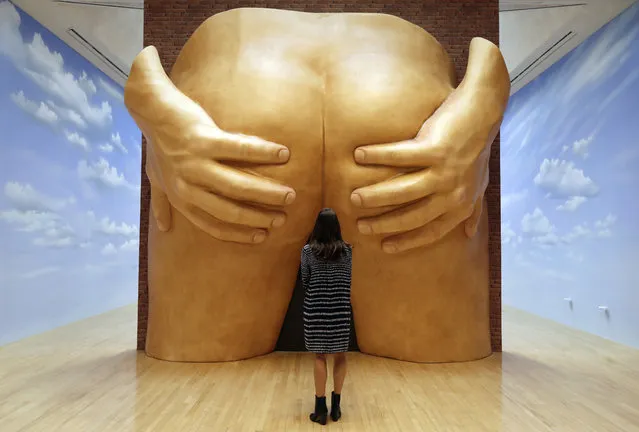
A woman looks towards part of an artwork called “Lichen! Libido! (London!) Chastity!” by Anthea Hamilton, one of the four artists shortlisted for the Turner Prize 2016, as it is displayed at the Tate Britain gallery in London, Monday, September 26, 2016. The Turner Prize aims to promote public debate around new developments in contemporary British art. (Photo by Kirsty Wigglesworth/AP Photo)

A woman looks towards part of an artwork called “Lichen! Libido! (London!) Chastity!” by Anthea Hamilton, one of the four artists shortlisted for the Turner Prize 2016, as it is displayed at the Tate Britain gallery in London, Monday, September 26, 2016. The Turner Prize aims to promote public debate around new developments in contemporary British art. (Photo by Kirsty Wigglesworth/AP Photo)
Details
27 Sep 2016 09:51:00
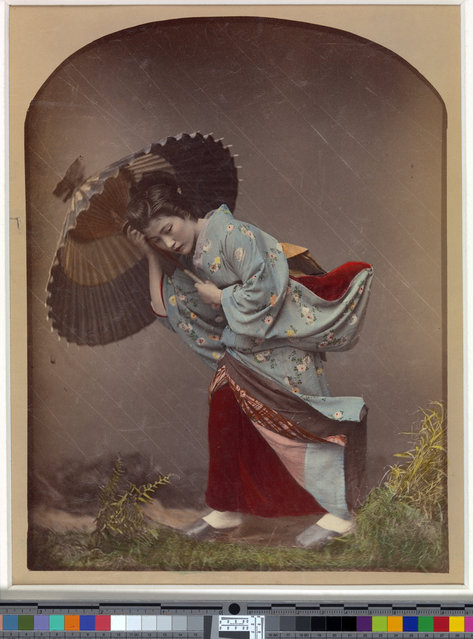
“Woman with Umbrella in Rain” by Raimund von Stillfried. Artist: Kusakabe Kimbei (Japanese, 1841–1934), 1870s. (Photo courtesy of The Metropolitan Museum of Art)

“Woman with Umbrella in Rain” by Raimund von Stillfried. Artist: Kusakabe Kimbei (Japanese, 1841–1934), 1870s. Commercial photography studios in Meiji-era Japan were renowned for the subtlety and refinement of their coloring techniques. This hand-tinted image of a young woman caught in a heavy rainstorm achieved its naturalistic effect by knitting together multiple strands of artifice: the greenery in the foreground was a studio prop; the flaps of the kimono were suspended by thin wires to create the impression of a strong wind; and long, diagonal marks were made on the negative to suggest streaks of rain. (Photo courtesy of The Metropolitan Museum of Art)
Details
12 May 2013 10:13:00