Loading...
Done
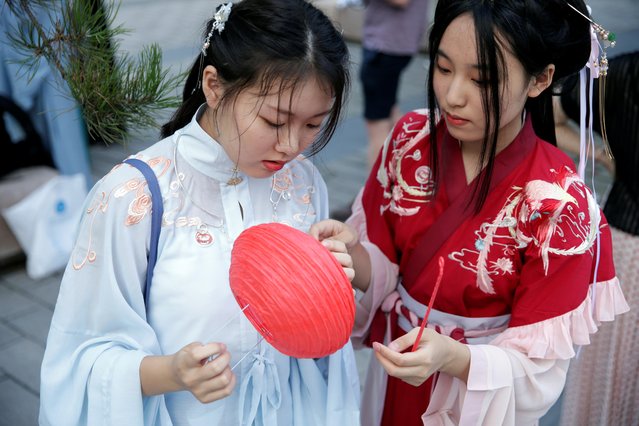
Girls dressed in “Hanfu”, or Han clothing, prepare for an event to mark the traditional Qixi festival, the Chinese equivalent of Valentine's Day, at a park in Beijing, China, August 7, 2019. Chinese for “Han clothing”, “Hanfu” is based on the idea of donning costumes worn in bygone eras by China's dominant Han ethnicity. Some of the most popular styles are from the Ming, Song and Tang dynasties. Hanfu enthusiasts doubled to two million in 2018 from a year earlier, according to a survey by Hanfu Zixun, a popular community account on the Wechat social media platform. (Photo by Jason Lee/Reuters)

Girls dressed in “Hanfu”, or Han clothing, prepare for an event to mark the traditional Qixi festival, the Chinese equivalent of Valentine's Day, at a park in Beijing, China, August 7, 2019. Chinese for “Han clothing”, “Hanfu” is based on the idea of donning costumes worn in bygone eras by China's dominant Han ethnicity. Some of the most popular styles are from the Ming, Song and Tang dynasties. Hanfu enthusiasts doubled to two million in 2018 from a year earlier, according to a survey by Hanfu Zixun, a popular community account on the Wechat social media platform. (Photo by Jason Lee/Reuters)
Details
23 Sep 2019 00:05:00
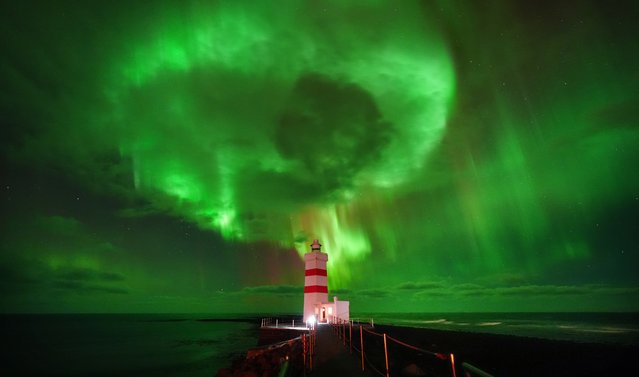
The aurora borealis, also known as the northern lights, visible above Old Gardur Lighthouse on the northern point of the Reykjanes peninsula in Iceland on Sunday, November 24, 2024. The lighthouse dates to 1897, and was one of the first built in Iceland. (Photo by Owen Humphreys/PA Images via Getty Images)

The aurora borealis, also known as the northern lights, visible above Old Gardur Lighthouse on the northern point of the Reykjanes peninsula in Iceland on Sunday, November 24, 2024. The lighthouse dates to 1897, and was one of the first built in Iceland. (Photo by Owen Humphreys/PA Images via Getty Images)
Details
07 Apr 2025 02:54:00
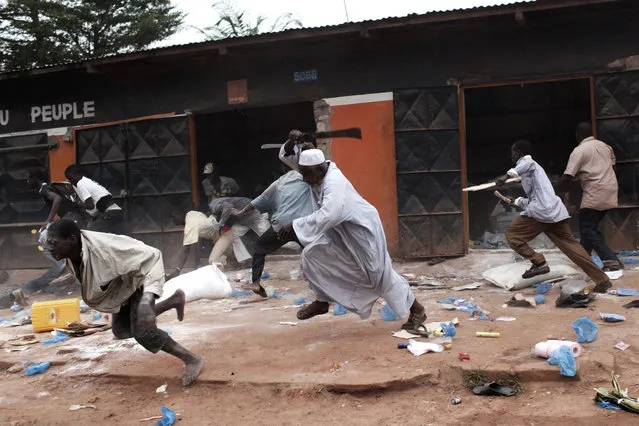
Christians looting a Muslim shop in the “Combattants” district of Bangui. (Photo by Pierre Terdjman/Paris Match)

The 26th annual Visa Pour l’Image, the “Cannes Film Festival” of photojournalism kicks off, filling the French city of Perpignan with more than 3,000 of the world’s best photojournalists and photo editors, along with agencies from around the world. This year’s Visa Pour l’Image showcases 26 exhibitions around the city. Photo: Christians looting a Muslim shop in the “Combattants” district of Bangui. (Photo by Pierre Terdjman/Paris Match)
Details
02 Sep 2014 12:47:00
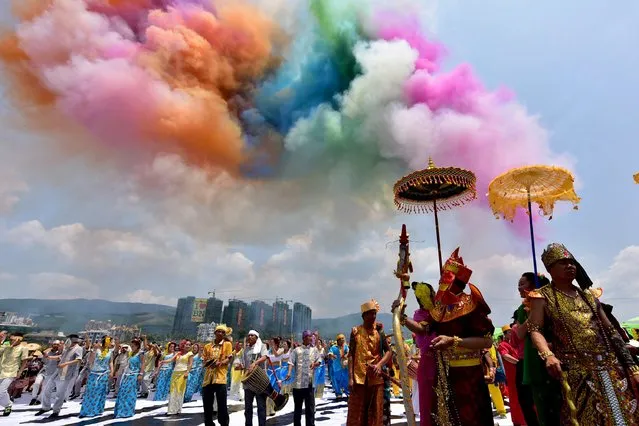
People wearing costumes attend the annual water-splashing festival to mark the New Year of the Dai minority in Jinghong, Yunnan province, April 13, 2015. (Photo by Reuters/China Daily)

People wearing costumes attend the annual water-splashing festival to mark the New Year of the Dai minority in Jinghong, Yunnan province, April 13, 2015. (Photo by Reuters/China Daily)
Details
18 Apr 2015 10:01:00


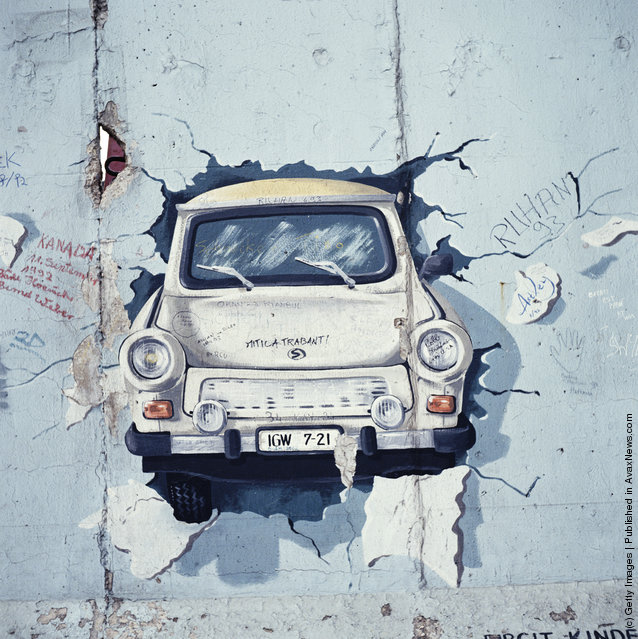
A painting of a Trabant car bursting through a wall in post unification Berlin, August 1993. (Photo by Steve Eason/Hulton Archive/Getty Images)
Details
27 Mar 2011 11:02:00
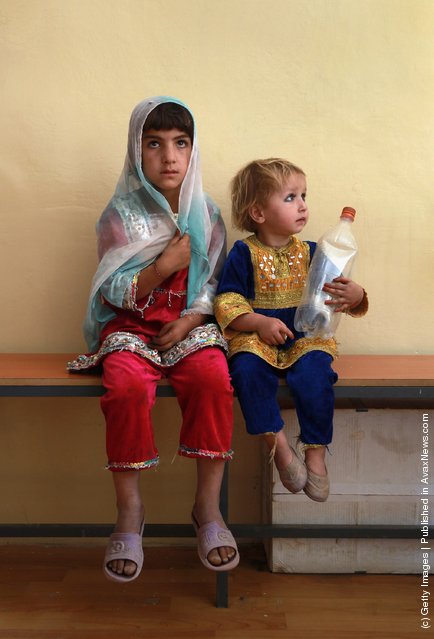
Afghan children wait as their mothers receive treatment at a USAID-funded health center

Afghan children wait as their mothers receive treatment at a USAID-funded health center on September 7, 2011 in Farza, Afghanistan. Almost 10 years after the 9/11 attacks and the U.S. invasion of Afghanistan, the U.S. government funds some of 500 Afghan health facilities nationwide, most run by non-governmental organizations contracted by the Afghan Ministry of Public Health. (Photo by John Moore/Getty Images)
Details
09 Sep 2011 09:54:00
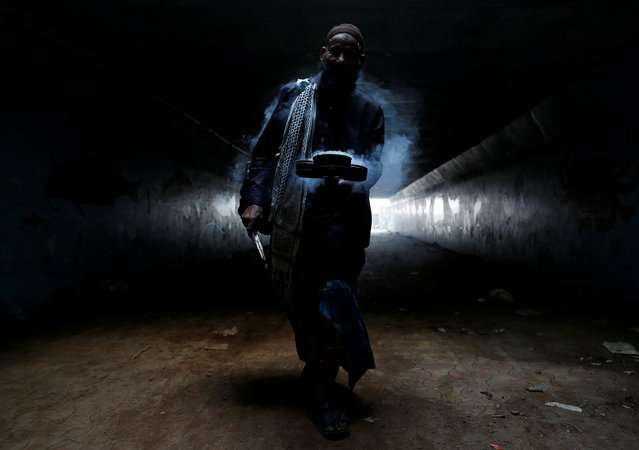
A Muslim man carries holy incensed smoke through a pedestrian subway in Mumbai, India, May 13, 2016. (Photo by Danish Siddiqui/Reuters)

A Muslim man carries holy incensed smoke through a pedestrian subway in Mumbai, India, May 13, 2016. (Photo by Danish Siddiqui/Reuters)
Details
15 May 2016 12:22:00
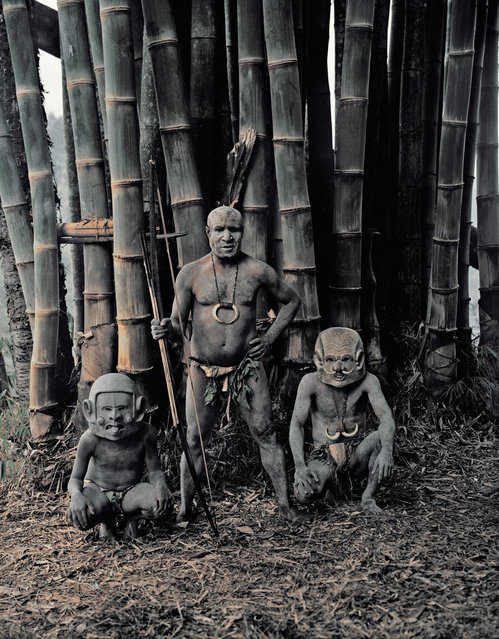
“Asaro from the Eastern Highlands”. The mudmen could not cover their faces with mud because the people of Papua New Guinea thought that the mud from the Asaro river was poisonous. So instead of covering their faces with this alleged poison, they made masks from pebbles that they heated and water from the waterfall, with unusual designs such as long or very short ears either going down to the chin or sticking up at the top, long joined eyebrows attached to the top of the ears, horns and sideways mouths. (Jimmy Nelson)

“Asaro from the Eastern Highlands”. The mudmen could not cover their faces with mud because the people of Papua New Guinea thought that the mud from the Asaro river was poisonous. So instead of covering their faces with this alleged poison, they made masks from pebbles that they heated and water from the waterfall, with unusual designs such as long or very short ears either going down to the chin or sticking up at the top, long joined eyebrows attached to the top of the ears, horns and sideways mouths. (Photo and caption by Jimmy Nelson)
Details
20 Oct 2013 08:54:00