Loading...
Done
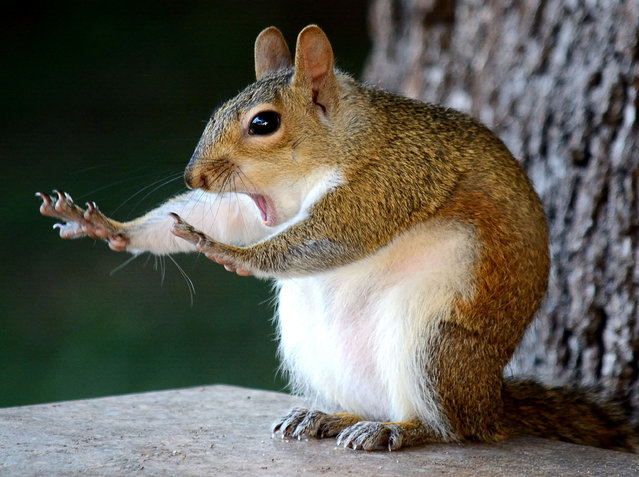
An alarmed squirrel. (Photo by Mary McGowan/Barcroft Images/Comedy Wildlife Photography Awards)

An alarmed squirrel. (Photo by Mary McGowan/Barcroft Images/Comedy Wildlife Photography Awards)
Details
17 Sep 2018 00:03:00
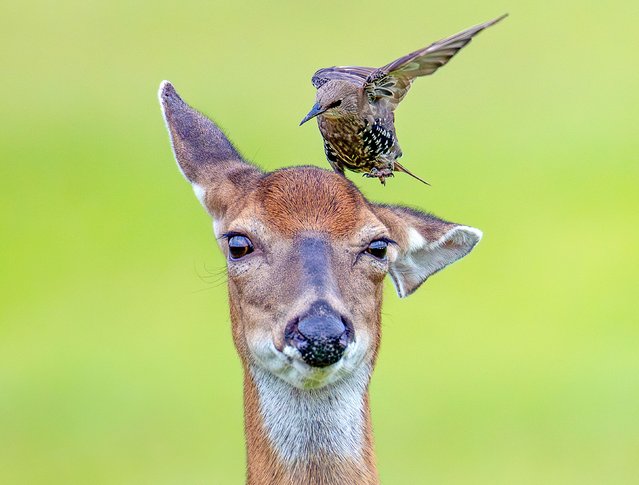
A juvenile European starling hops from deer to deer eating insects. The white-tailed deer did not seem at all bothered by the bird - who can be seen cleaning it of ticks and bugs. The starling was one of a flock near the herd of deer in Sandy Hook, New Jersey, USA in the last decade of November 2025. (Photo by Erik Kessler/Solent News & Photo Agency)

A juvenile European starling hops from deer to deer eating insects. The white-tailed deer did not seem at all bothered by the bird - who can be seen cleaning it of ticks and bugs. The starling was one of a flock near the herd of deer in Sandy Hook, New Jersey, USA in the last decade of November 2025. (Photo by Erik Kessler/Solent News & Photo Agency)
Details
14 Dec 2025 07:17:00
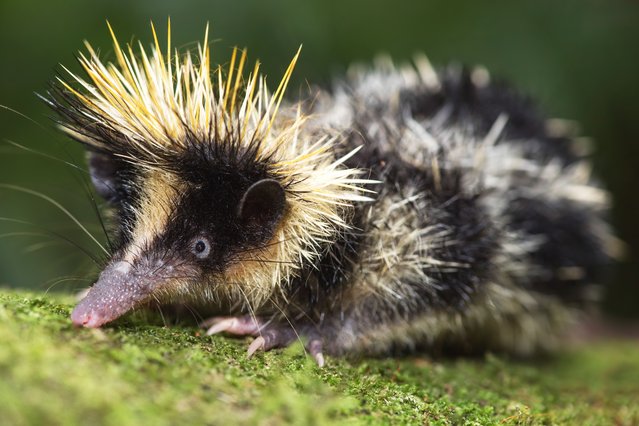
This spiky tenrec was spotted in Madagascar’s Mantadia National Park in the last decade of September 2025. Mostly nocturnal and rarely seen, it puffs out its spines when threatened. Spiky tenrecs are excellent swimmers — unlike most spiny mammals, some species of tenrec can forage in streams and rivers, using their spines for protection while hunting aquatic insects and small prey. (Photo by Dale Morris/Solent News & Photo Agency)

This spiky tenrec was spotted in Madagascar’s Mantadia National Park in the last decade of September 2025. Mostly nocturnal and rarely seen, it puffs out its spines when threatened. Spiky tenrecs are excellent swimmers — unlike most spiny mammals, some species of tenrec can forage in streams and rivers, using their spines for protection while hunting aquatic insects and small prey. (Photo by Dale Morris/Solent News & Photo Agency)
Details
05 Oct 2025 04:02:00
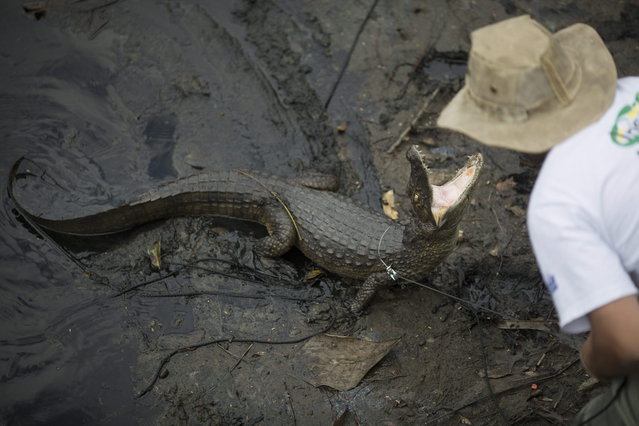
In this October 14, 2013 photo, ecology professor Ricardo Freitas catches a broad-snouted caiman to examine, then release back into the water channel in the affluent Recreio dos Bandeirantes suburb of Rio de Janeiro, Brazil. (Photo by Felipe Dana/AP Photo)

In this October 14, 2013 photo, ecology professor Ricardo Freitas catches a broad-snouted caiman to examine, then release back into the water channel in the affluent Recreio dos Bandeirantes suburb of Rio de Janeiro, Brazil. Caimans are like tanks, a very old species with a remarkable capacity for renovation that allows them to survive under extreme conditions where others couldn't, said Freitas, who runs the Instituto Jacare, or the Caiman Institute, which aims to protect the reptiles. (Photo by Felipe Dana/AP Photo)
Details
18 Oct 2013 09:05:00
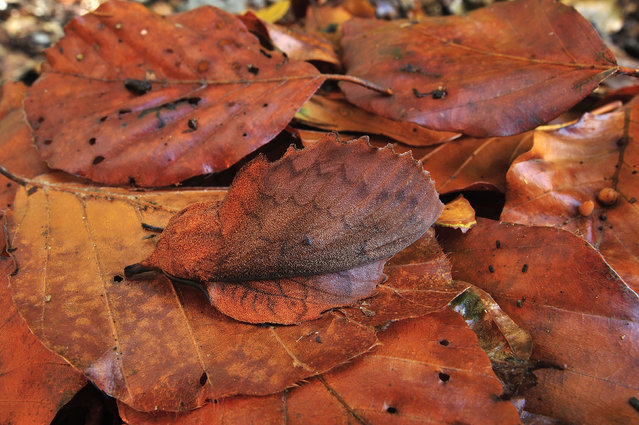
The camouflage mappet moth looks like a fall lead in Switzerland. (Photo by Thomas Marent/Caters News/Ardea)

Whether they are the hunter or the hunted, these camouflage animals show natures incredible ability to blend in with its surroundings. Pictured perfectly concealed against their natural environment, the stunning pictures show the amazing lengths some animals will go to to stay out of sight. Here: The camouflage mappet moth looks like a fall lead in Switzerland. (Photo by Thomas Marent/Caters News/Ardea)
Details
09 Oct 2014 12:58:00
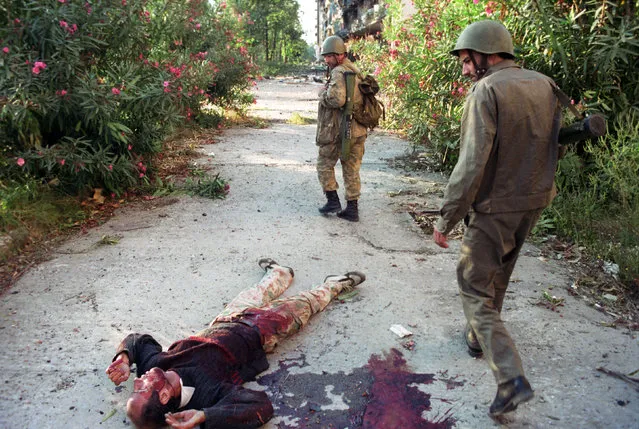
Abkhazia. Sukhumi, 1993. A house-to-house combat. (Photo by Andrei Solovyov/ITAR-TASS)

The War in Abkhazia from 1992 to 1993 was fought between Georgian government forces for the most part, and Abkhaz separatist forces, Russian armed forces and North Caucasian militants. Ethnic Georgians who lived in Abkhazia fought largely on the side of Georgian government forces. Ethnic Armenians and Russians within Abkhazia's population largely supported the Abkhazians, and many fought on their side. The separatists received support from thousands of North Caucasus and Cossack militants and from the Russian Federation forces stationed in and near Abkhazia. Here: Abkhazia. Sukhumi, 1993. A house-to-house combat. (Photo by Andrei Solovyov/ITAR-TASS)
Details
29 Sep 2017 07:31:00
An attendee takes a selfie at KCON USA, billed as the world's largest Korean culture convention and music festival, in Los Angeles, California on August 11, 2018. K-pop acts sing or rap in Korean, often with snippets of English. On the Web, where K-pop fandom thrives, many music videos include subtitles. (Photo by Mike Blake/Reuters)

An attendee takes a selfie at KCON USA, billed as the world's largest Korean culture convention and music festival, in Los Angeles, California on August 11, 2018. K-pop acts sing or rap in Korean, often with snippets of English. On the Web, where K-pop fandom thrives, many music videos include subtitles. (Photo by Mike Blake/Reuters)
Details
20 Aug 2018 00:01:00
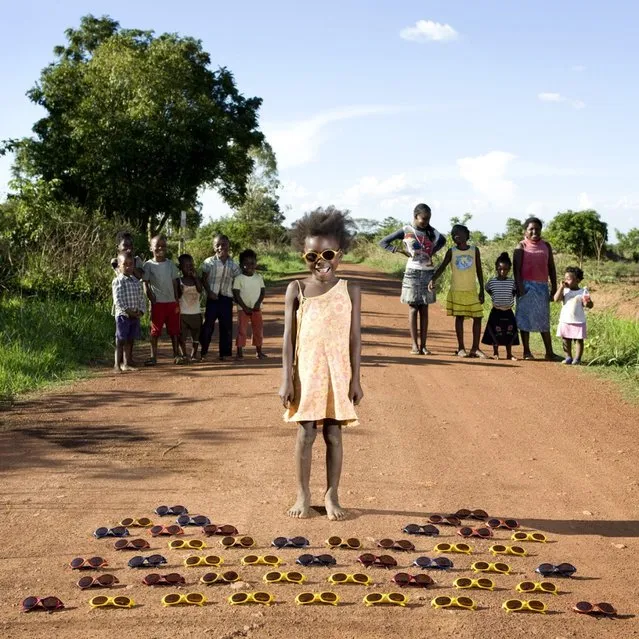
Maudy – Kalulushi, Zambia. Maudy was born in a hut in a small village close to Kalulushi, in Zambia. She grew up playing in the street with the other children in the village, who all attend the same school, where students ages 3 to 10 years old are in the same class. The village has no shops, restaurants or hotels, and just a few children are lucky enough to have toys. Maudy and her friends found a box full of sunglasses on the street, which quickly became their favorite toys. “Toy Stories” project. (Gabriele Galimberti)

Maudy – Kalulushi, Zambia. Maudy was born in a hut in a small village close to Kalulushi, in Zambia. She grew up playing in the street with the other children in the village, who all attend the same school, where students ages 3 to 10 years old are in the same class. The village has no shops, restaurants or hotels, and just a few children are lucky enough to have toys. Maudy and her friends found a box full of sunglasses on the street, which quickly became their favorite toys. “Toy Stories” project. (Photo and caption by Gabriele Galimberti)
Details
05 Dec 2013 07:54:00