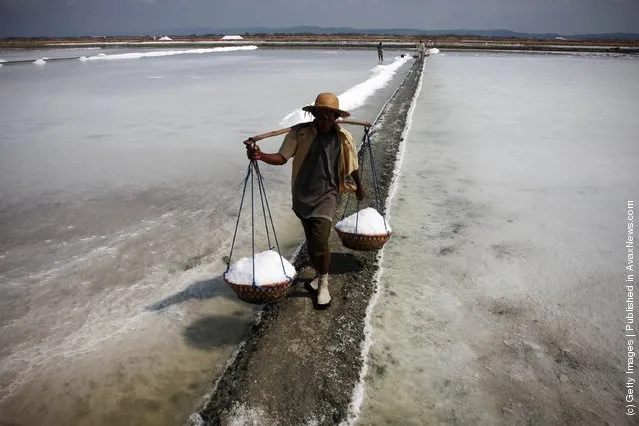
A farmers carries baskets of salt during a harvest in the the salt production process August 13, 2009 in Sumenep on Madura island, Indonesia. (Photo by Ulet Ifansasti/Getty Images)
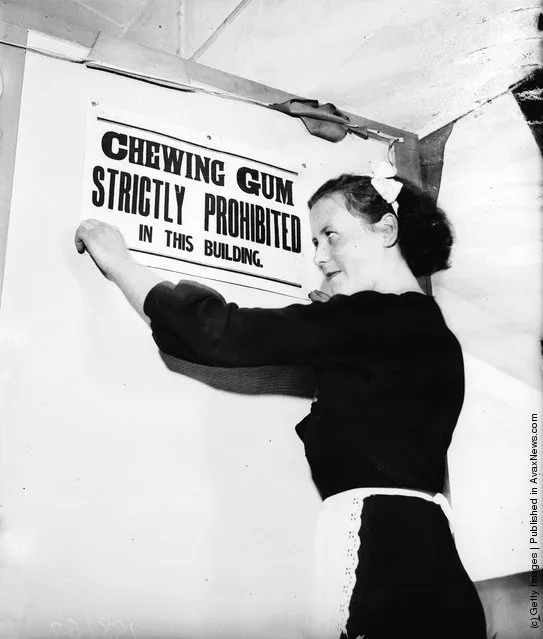
A Penarth dance hall has banned chewing gum on the premises because dancers have complained that their feet keep sticking to the floor. (Photo by Richards/Fox Photos/Getty Images). 16th July 1936
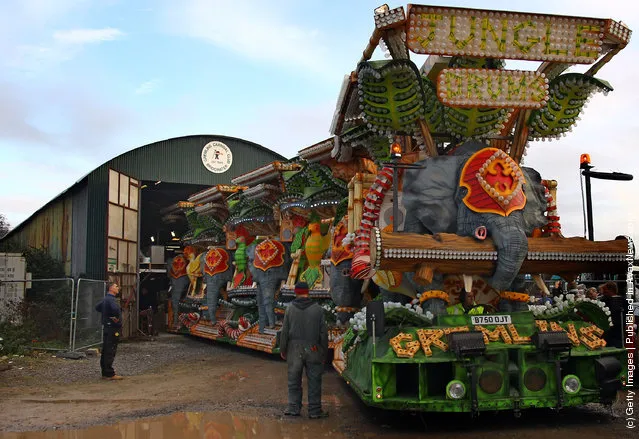
Members of the Gremlins Carnival Club, open the doors to their workshop to unveil for the first time their cart, Jungle Drums, which is their entry to this year's Bridgwater Carnival, on November 4, 2011 in Bridgwater, England. (Photo by Matt Cardy/Getty Images)
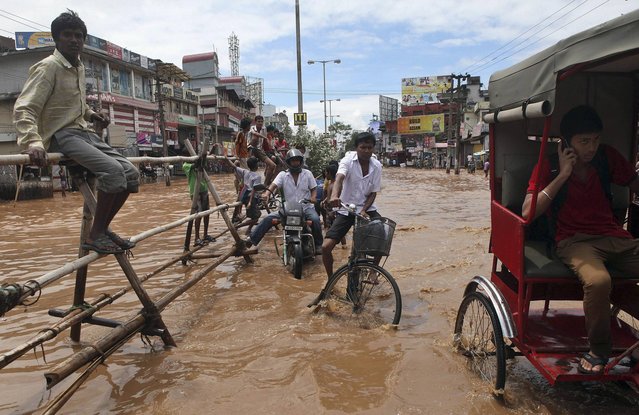
People move through a waterlogged street in Gauhati, India, Tuesday, July 16, 2013. Heavy showers flooded some areas in the city on Tuesday. (Photo by Anupam Nath/AP Photo)
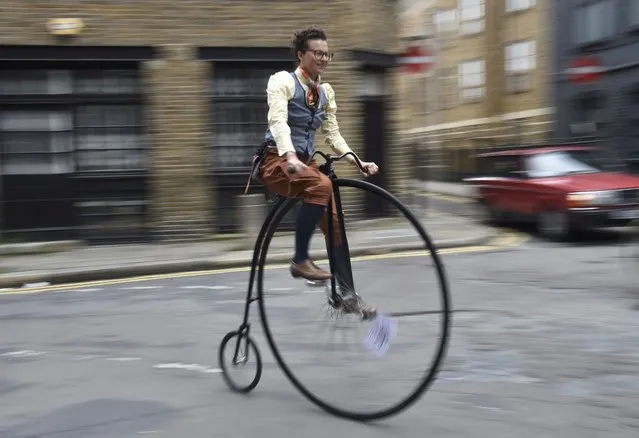
A participant sets off on a penny-farthing bicycle at the start of the The Tweed Run in central London, Britain, May 14, 2016. The Tweed Run, a very British public bicycle ride through London's streets, with a prerequisite that participants are dressed in their best tweed cycling attire. (Photo by Hannah McKay/Reuters)
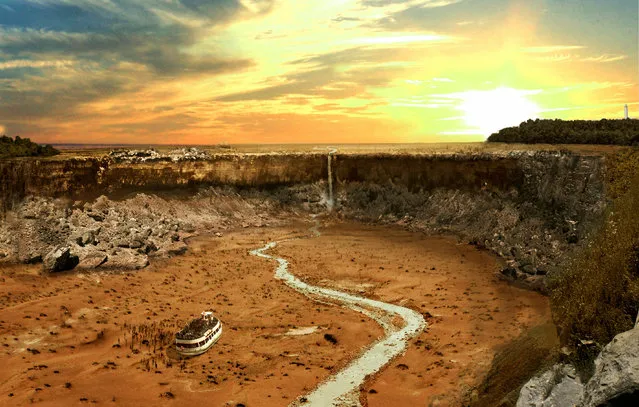
A graphic designer has produced a haunting look at what the world’s most famous landmarks would look like if they were hit by a severe drought. Joel Krebs has intricately dried up hot spots such as the Tower Bridge in London, the Capitol in Washington, D.C., Niagara Falls and Machu Picchu. Here: Niagara Falls, Canada, after severe drought. (Photo by Joel Krebs/Caters News)
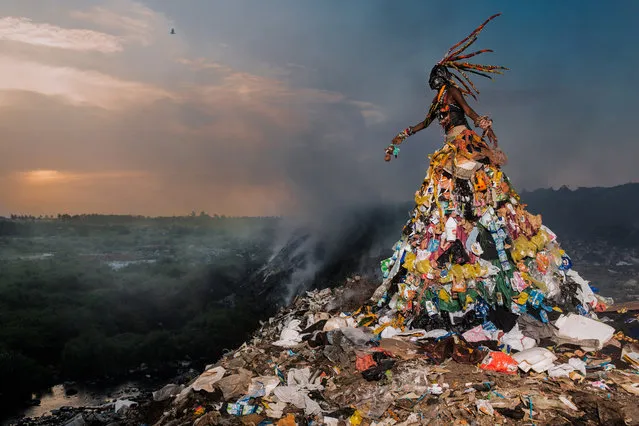
Fabrice Monteiro travelled to the most polluted places in Africa and created terrifying characters who roamed their midst dressed in eerie debris. They are spirits, he says, on a mission to make humans change their ways. Informed by Africa’s environmental problems, Fabrice Monteiro’s photographs aim to highlight urgent ecological issues all over the world. His series “The Prophecy” is on show at Photo Basel 2017 until 18 June. (Photo by Fabrice Monteiro/Photo Basel 2017/Mariane Ibrahim Gallery/The Guardian)