Loading...
Done
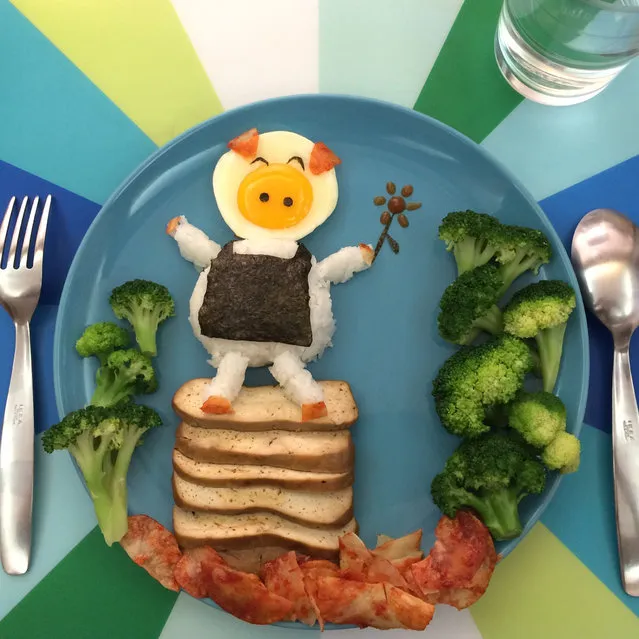
Annes egg art a smiling pig standing on a tower of toast with a sushi roll apron. (Photo by Anne Widya/Caters News)

A creative mother has come up with a novel way of making sure her children eat their breakfasts – by using eggs to make works of art. Sculpted into a variety of extraordinary designs, culinary genius, Anne Widya, uses sunny side up eggs to make sure her children's plates are always cleared. Here: Annes egg art a smiling pig standing on a tower of toast with a sushi roll apron. (Photo by Anne Widya/Caters News)
Details
23 Nov 2014 12:39:00
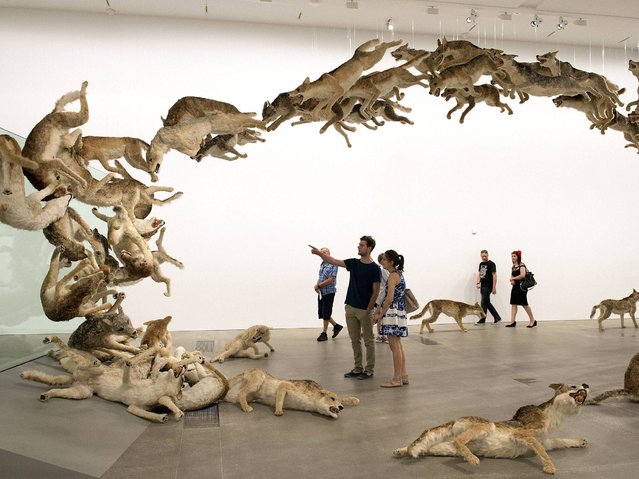
“Falling Back To Earth” promises to be both spectacular and meditative, and presents a beautiful, thought-provoking vision of our relationship with the earth and with each other. (Photo by Dave Hunt/EPA)

“Falling Back To Earth” promises to be both spectacular and meditative, and presents a beautiful, thought-provoking vision of our relationship with the earth and with each other. (Photo by Dave Hunt/EPA)
Details
14 Feb 2014 09:31:00
Kissing girls

Fuse TV VJ's Marianela and Juliya attend the store opening of “Nigo's A Bathing Ape” with Pharrell Williams January 11, 2005 in New York City. (Photo by Paul Hawthorne/Getty Images)
Details
29 Aug 2011 14:20:00
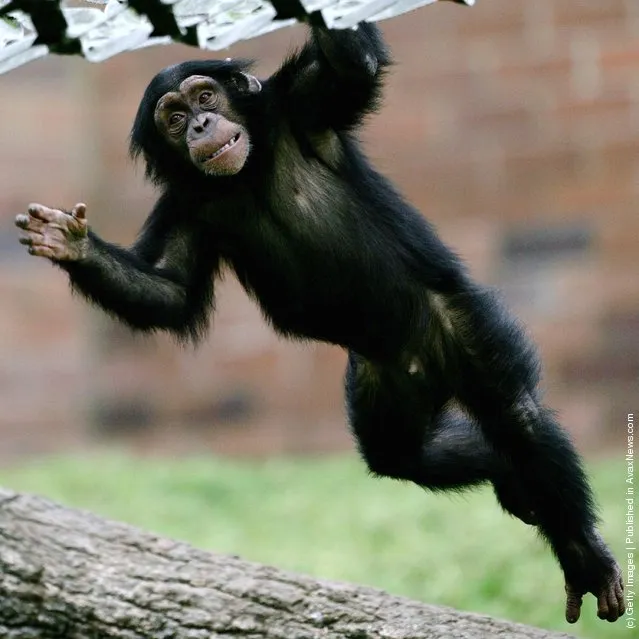
A baby Chimpanzee plays in its enclosure at Taronga Zoo

A baby Chimpanzee plays in its enclosure at Taronga Zoo July 14, 2006 in Sydney, Australia. (Photo by Ian Waldie/Getty Images)
Details
08 Oct 2011 13:22:00
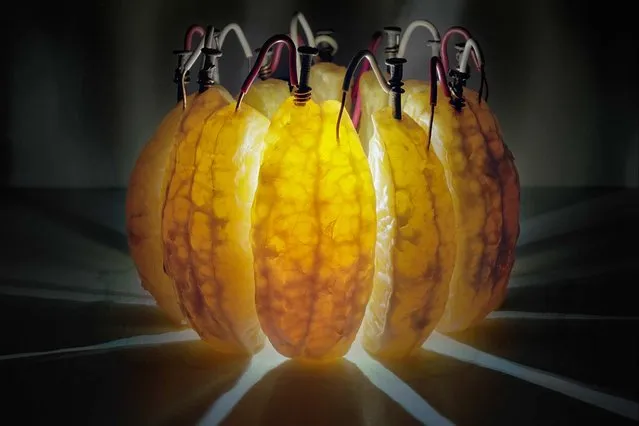
Wedges of an orange generate enough current and electrical juice – 3.5 volts – to power an LED. The fruit’s citric acid helps electrons flow from galvanized nails to copper wire in this 14-hour exposure. This image was published in September’s Visions of Earth, a trio of photos that appear in each issue of National Geographic. (Photo by Caleb Charland/National Geographic)

Wedges of an orange generate enough current and electrical juice – 3.5 volts – to power an LED. The fruit’s citric acid helps electrons flow from galvanized nails to copper wire in this 14-hour exposure. This image was published in September’s Visions of Earth, a trio of photos that appear in each issue of National Geographic. (Photo by Caleb Charland/National Geographic)
Details
06 Jan 2014 12:09:00


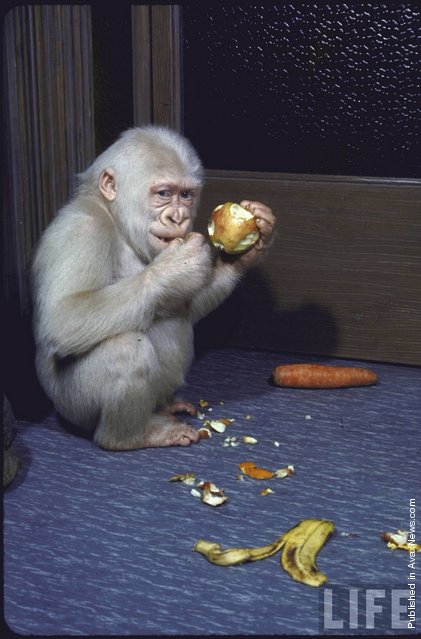
“Snowflake (c. 1964 – November 24, 2003) was an albino gorilla. He was the only known albino gorilla so far, and the most popular resident of the Barcelona Zoo in Catalonia, Spain. Originally named Nfumu Ngui in Fang language ("white gorilla") by his captor, he was then nicknamed Floquet de Neu (Catalan for little snowflake) by his keeper Jordi Sabater Pi. On his arrival to Barcelona where he was given an official reception by the then Mayor of Barcelona, Josep Maria de Porcioles, in November 1966, he was called Blancanieves (“Snow White”) in the newspaper Tele/Exprés. But he became famous with the name given to him by Sabater when National Geographic Magazine featured him on the main page in March 1967, with the English name Snowflake. This name spread among the press (Stern, Life, Paris-Match) and was later translated to Spanish as Copito de Nieve. Sabater himself called the gorilla Floquet or Copi, and in the later years Nfumu. The asteroid 95962 Copito, discovered by Catalan astronomer J. Manteca, is named in his honour”.

Details
07 Mar 2011 15:50:00
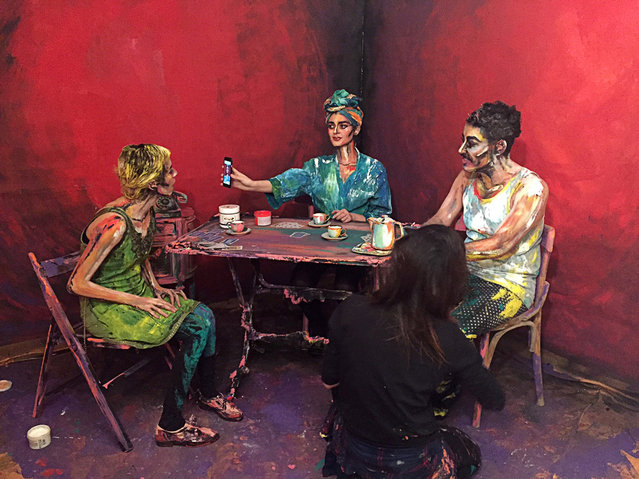
Cairo-based artist Chanel Arif's paints for her art project called After Dinner that uses humans and their surroundings as her canvas, in her gallery in the capital of Cairo, Egypt March 2, 2017. (Photo by Sherif Fahmy/Reuters)

Cairo-based artist Chanel Arif's paints for her art project called After Dinner that uses humans and their surroundings as her canvas, in her gallery in the capital of Cairo, Egypt March 2, 2017. (Photo by Sherif Fahmy/Reuters)
Details
07 Mar 2017 11:01:00
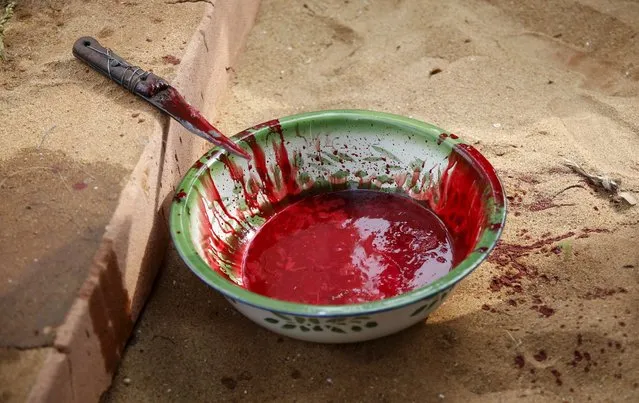
A knife is seen beside a bowl containing blood after a ram was killed as a sacrifice in front of a shrine at the annual voodoo festival in Ouidah, Benin, January 10, 2016. (Photo by Akintunde Akinleye/Reuters)

A knife is seen beside a bowl containing blood after a ram was killed as a sacrifice in front of a shrine at the annual voodoo festival in Ouidah, Benin, January 10, 2016. In Ouidah, a small town and former slave port in the West African country of Benin, the annual voodoo festival gathers visitors from far and wide. It's a week that brings together priests and dignitaries, rich and poor, locals and visitors from as far afield as the Caribbean and France. The festival commemorates the estimated 60 million people who lost their homelands and their freedom during the African slave trade. (Photo by Akintunde Akinleye/Reuters)
Details
23 Jan 2016 12:55:00