Loading...
Done
Of all the species affected by river regulation in Australia, the ibis is one of the few that has changed its behaviour and moved to coastal cities. (Photo by Rick Stevens/The Guardian)

Tip turkey, dumpster chook, rubbish raptor – the Australian white ibis goes by many unflattering names. But it is a true urban success story, scavenging to survive in cities across Australia as wetlands have been lost. Wildlife photographer Rick Stevens captured them in Sydney. Here: Of all the species affected by river regulation in Australia, the ibis is one of the few that has changed its behaviour and moved to coastal cities. (Photo by Rick Stevens/The Guardian)
Details
11 Apr 2018 00:03:00
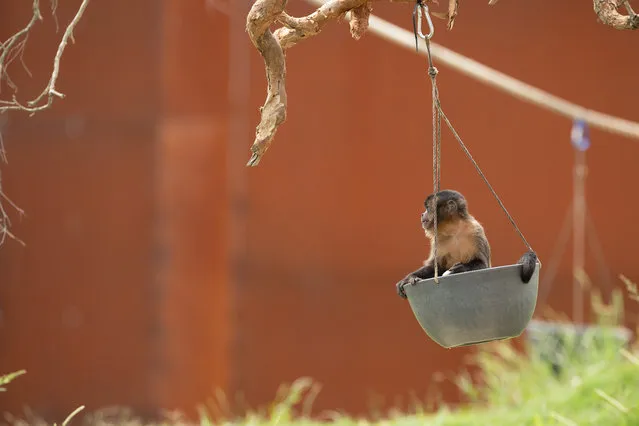
A Tufted Capuchin sits in a hanging food tray on a tree in it's enclosure at Sydney Zoo on February 24, 2020 in Sydney, Australia. Sydney Zoo, located at Bungarribee Park in Western Sydney, is the first new zoo to be built in Sydney in more than 100 years. The Zoo opened to the public on 7 December 2019. (Photo by Mark Kolbe/Getty Images)

A Tufted Capuchin sits in a hanging food tray on a tree in it's enclosure at Sydney Zoo on February 24, 2020 in Sydney, Australia. Sydney Zoo, located at Bungarribee Park in Western Sydney, is the first new zoo to be built in Sydney in more than 100 years. The Zoo opened to the public on 7 December 2019. (Photo by Mark Kolbe/Getty Images)
Details
01 Mar 2020 00:03:00
Photographer holding digital camera during photoshoot of fashion model. (Photo by grinvalds/Getty Images)

Photographer holding digital camera during photoshoot of fashion model. (Photo by grinvalds/Getty Images)
Details
20 Oct 2023 00:29:00
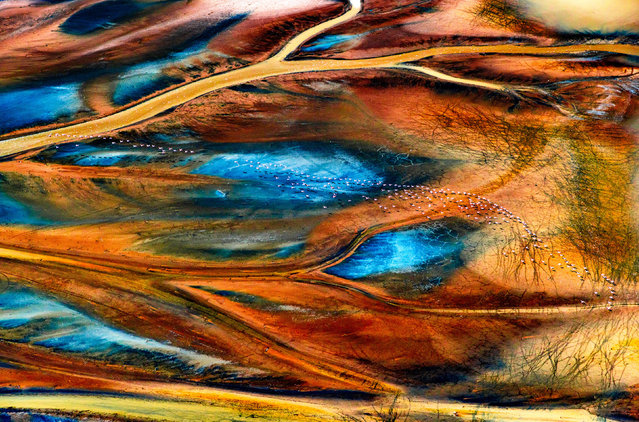
Hundreds of flamingos take flight in the Rift Valley in East Africa early September 2024. The birds gather in the region’s saline lakes to eat the blue-green algae that grows in abundance. The red-orange pigment in the algae is what gives them their distinctive pink plumage. They also use the site to breed. (Photo by Alexandre and Chloe Bes/Naturagency/Solent News)

Hundreds of flamingos take flight in the Rift Valley in East Africa early September 2024. The birds gather in the region’s saline lakes to eat the blue-green algae that grows in abundance. The red-orange pigment in the algae is what gives them their distinctive pink plumage. They also use the site to breed. (Photo by Alexandre and Chloe Bes/Naturagency/Solent News)
Details
23 Sep 2024 02:54:00
In this photo taken with a long exposure, a person walks a dog past Christmas lights in a park, Sunday, December 15, 2024, in Lenexa, Kan. (Photo by USA Today)

In this photo taken with a long exposure, a person walks a dog past Christmas lights in a park, Sunday, December 15, 2024, in Lenexa, Kan. (Photo by USA Today)
Details
08 Jan 2025 04:10:00
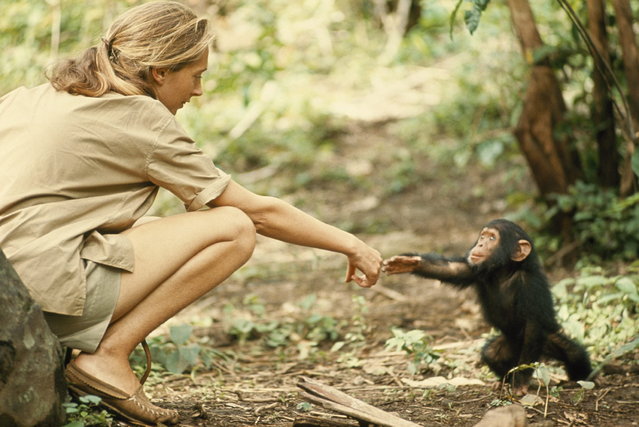
Tanzania, 1964. A touching moment between primatologist and National Geographic grantee Jane Goodall and young chimpanzee Flint at Tanzania's Gombe Stream Reserve. (Photo by Hugo van Lawick

Tanzania, 1964. A touching moment between primatologist and National Geographic grantee Jane Goodall and young chimpanzee Flint at Tanzania's Gombe Stream Reserve. (Photo by Hugo van Lawick via National Geographic)
Details
16 Jan 2013 09:59:00
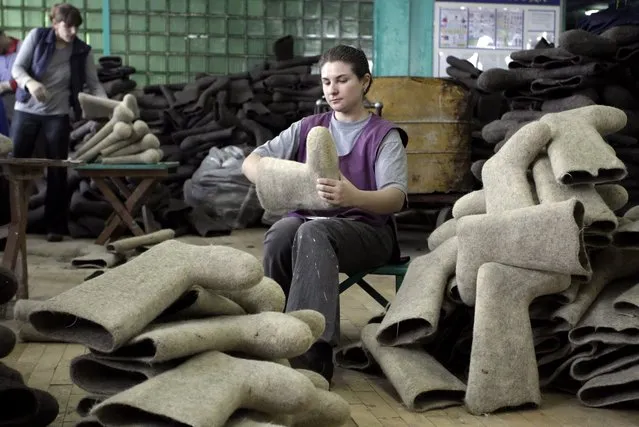
Belarusian workers works at a felt boot factory in Smilovichi, some 35km from Minsk, Belarus, 16 January 2012. (Photo by Tatyana Zenkovich/EPA)

The Smilovichi Felting Factory in Belarus was founded in 1928, when Smilovichi was a small Jewish settlement of craftsmen. Five of those craftsmen organized a small artel (a cooperative association of craftsmen who all live and work together), which produced warm boots called “valenki” for cold weather. Photo: Belarusian workers works at a felt boot factory in Smilovichi, some 35km from Minsk, Belarus, 16 January 2012. (Photo by Tatyana Zenkovich/EPA)
Details
18 Oct 2013 10:02:00
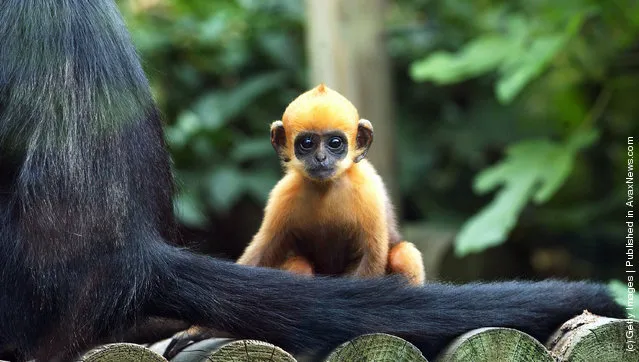
Baby Francois' Langur

“Francois' langur is one of several species of leaf monkeys. Over 50% of its diet is made up of young leaves. It will also consume fruits (17.2%), seeds, flowers, stems, roots, bark and occasionally minerals and insects off of rock surfaces and cliffs. This langur consumes its favorite food, young leaves, at the highest rate during the dry season, April through September, also known as the young leaf-lean period”. – Wikipedia

Photo: An endangered baby Francois' Langur monkey called Laa Laa settles in following her July 6 birth at London Zoo, Regent's Park on August 5, 2004 in London. The bright ginger youngster was born to glossy black parents Max and Shaneka and has the typical orange baby coat which is in stark contrast against the black of her parent's and older brother Grub's fur. (Photo by Steve Finn/Getty Images)
Details
22 Sep 2011 11:28:00