Loading...
Done
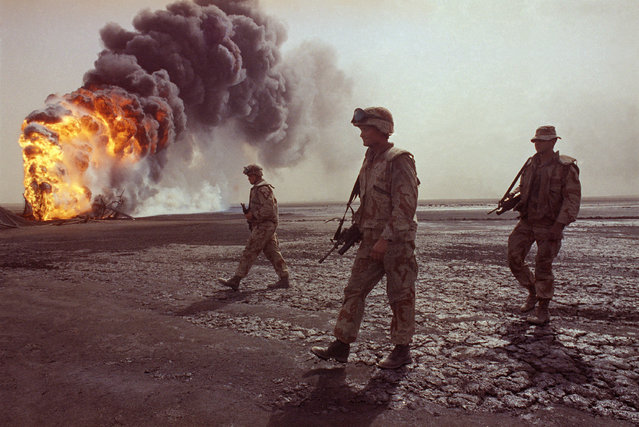
In this March 7, 1991 file photo, a U.S. Marine patrol walks across the charred oil landscape near a burning well during perimeter security patrol near Kuwait City. Twenty five years after the first U.S. Marines swept across the border into Kuwait in the 1991 Gulf War, American forces find themselves battling the extremist Islamic State group, born out of al-Qaida, in the splintered territories of Iraq and Syria. The Arab allies that joined the 1991 coalition are fighting their own conflicts both at home and abroad, as Iran vies for greater regional power following a nuclear deal with world powers. (Photo by John Gaps III/AP Photo)

In this March 7, 1991 file photo, a U.S. Marine patrol walks across the charred oil landscape near a burning well during perimeter security patrol near Kuwait City. Twenty five years after the first U.S. Marines swept across the border into Kuwait in the 1991 Gulf War, American forces find themselves battling the extremist Islamic State group, born out of al-Qaida, in the splintered territories of Iraq and Syria. The Arab allies that joined the 1991 coalition are fighting their own conflicts both at home and abroad, as Iran vies for greater regional power following a nuclear deal with world powers. (Photo by John Gaps III/AP Photo)
Details
23 Feb 2016 11:43:00
Eight year-old Maya Mohammad Ali Merhi walks using prosthetic legs made by her father from tin cans in a camp for displaced people, in the northern Syrian province of Idlib on June 20, 2018. Maya and her father were both born without lower limbs. Unable to afford real prosthetic limbs, her father made her a pair out of tin cans filled with cotton and scrap pieces of cloth. Maya's family had to leave their home in the Aleppo province to flee battles. (Photo by Aaref Watad/AFP Photo)

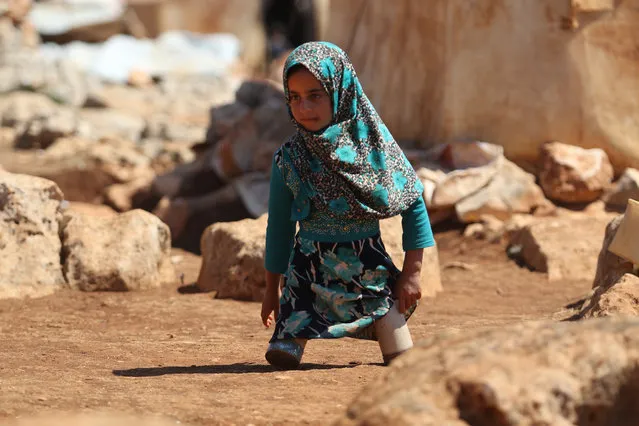
Eight year-old Maya Mohammad Ali Merhi walks using prosthetic legs made by her father from tin cans in a camp for displaced people, in the northern Syrian province of Idlib on June 20, 2018. Maya and her father were both born without lower limbs. Unable to afford real prosthetic limbs, her father made her a pair out of tin cans filled with cotton and scrap pieces of cloth. Maya's family had to leave their home in the Aleppo province to flee battles. (Photo by Aaref Watad/AFP Photo)
Details
09 Aug 2018 00:01:00
A government employee reacts as she is sprayed with disinfectant before entering a government office building to curb the spread of COVID-19 on March 19, 2020 in Pasig city, Metro Manila, Philippines. The Philippine government has sealed off Luzon, the country's largest and most populous island, to prevent the spread of COVID-19. Land, sea, and air travel has been suspended, while government work, schools, businesses, and public transportation have been ordered shut in a bid to keep some 55 million people at home. The Philippines' Department of Health has so far confirmed 217 cases of the new coronavirus in the country, with at least 17 recorded fatalities. (Photo by Ezra Acayan/Getty Images)

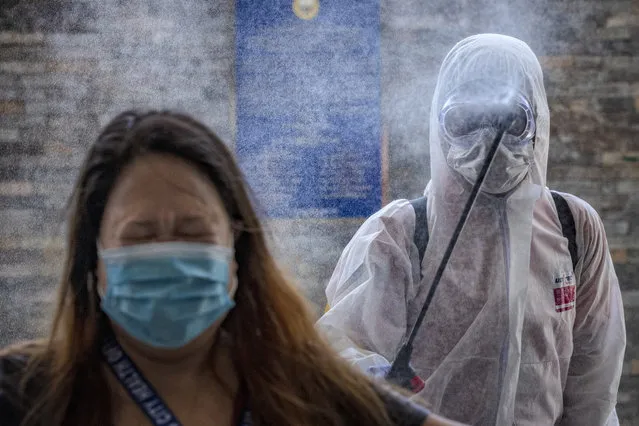
A government employee reacts as she is sprayed with disinfectant before entering a government office building to curb the spread of COVID-19 on March 19, 2020 in Pasig city, Metro Manila, Philippines. The Philippine government has sealed off Luzon, the country's largest and most populous island, to prevent the spread of COVID-19. Land, sea, and air travel has been suspended, while government work, schools, businesses, and public transportation have been ordered shut in a bid to keep some 55 million people at home. The Philippines' Department of Health has so far confirmed 217 cases of the new coronavirus in the country, with at least 17 recorded fatalities. (Photo by Ezra Acayan/Getty Images)
Details
07 Jan 2021 00:05:00
Spectacular images offering insight into the lives of the Huaorani people in the Ecuadorian Amazon have been revealed showing how they use traditional methods to hunt monkeys for food. The stunning pictures were taken by conservation photographer Pete Oxford from Torquay, Devon in the Ecuadorian Amazon. “The Huaorani Indians are a forest people highly in tune with their environment. Many are now totally acculturated since the 1950s by missionaries”, said Pete. “Today they face radical change to their culture to the proximity of oil exploration within their territory and the Yasuni National Park and Biosphere Reserve, they are vastly changed. Some still live very traditionally and for this shoot, through my Huaorani friend, a direct relative of those photographed he wanted to depict them as close to their original culture as possible. They still largely hunt with blow pipes and spears eating a lot of monkeys and peccaries”. The Huaorani are also known as the Waorani, Waodani or the Waos and are native Amerindians. Their lands are located between the Curaray and Napo rivers and speak the Huaorani language. Pete says that during his visit he was welcomed into the group and hopes that ancient cultures can be saved. Here: The tribe were seen celebrating after a hunter returned to camp with a wild pig. (Photo by Pete Oxford/Mediadrumworld.com)

Spectacular images offering insight into the lives of the Huaorani people in the Ecuadorian Amazon have been revealed showing how they use traditional methods to hunt monkeys for food. The stunning pictures were taken by conservation photographer Pete Oxford from Torquay, Devon in the Ecuadorian Amazon. Here: The tribe were seen celebrating after a hunter returned to camp with a wild pig. (Photo by Pete Oxford/Mediadrumworld.com)
Details
20 Jan 2017 07:58:00
In this September 1, 2014 photo released by the U.S. Geological Survey, fluid lava streams from the June 27 lava flow from the Kilauea volcano in Pahoa, Hawaii. The June 27 lava flow is named for the date it began erupting from a new vent. The Hawaiian Volcano Observatory issued a warning Thursday, September 4, 2014 to a rural community in the path of a lava flow on Hawaii's Big Island, as the molten rock moved to within a mile of homes. (Photo by AP Photo/U.S. Geological Survey)

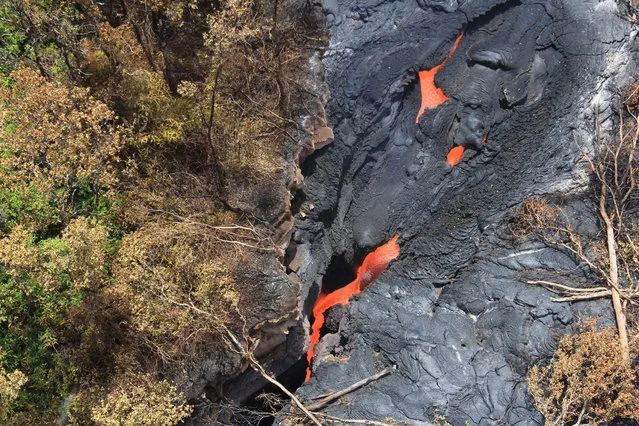
In this September 1, 2014 photo released by the U.S. Geological Survey, fluid lava streams from the June 27 lava flow from the Kilauea volcano in Pahoa, Hawaii. The June 27 lava flow is named for the date it began erupting from a new vent. The Hawaiian Volcano Observatory issued a warning Thursday, September 4, 2014 to a rural community in the path of a lava flow on Hawaii's Big Island, as the molten rock moved to within a mile of homes. Observatory scientists said lava from the Kilauea volcano could reach the Kaohe Homesteads in five to seven days if it continues advancing through cracks in the earth. (Photo by AP Photo/U.S. Geological Survey)
Details
07 Sep 2014 12:47:00
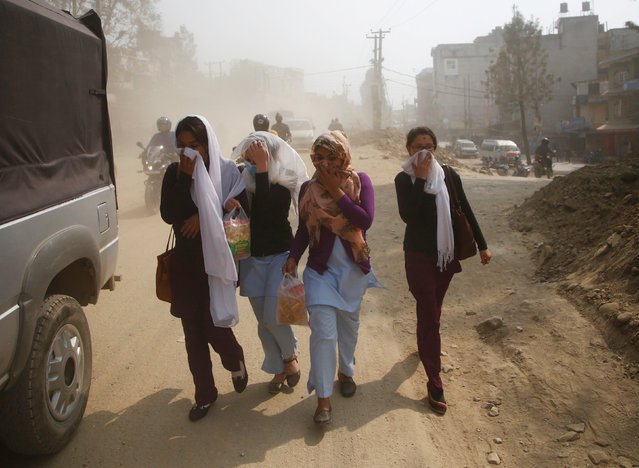
Pedestrians cover their face as they walk along the dusty road in Kathmandu, Nepal February 27, 2017. Nepal has forced 2,500 old vehicles off roads in its capital city of Kathmandu, part of a fight against alarming air pollution levels that have hit nine times World Health Organisation (WHO) limits. Air pollution has been a chronic problem in rapidly growing Kathmandu, which sits in a Himalayan valley and is home to more than 3mn people. Rising public anger with the smog is turning into a headache for a beleaguered government headed by former Maoist rebels. Dust from road works, exhaust from old, poorly maintained vehicles and smoke from coal-burning brick kilns blend in a murky haze that hangs over the ancient city, raising the risk of cancer, stroke, asthma and high blood pressure, experts say. Officials hope the ban on vehicles more than 20 years old will be a step towards a cleaner future. (Photo by Navesh Chitrakar/Reuters)

Pedestrians cover their face as they walk along the dusty road in Kathmandu, Nepal February 27, 2017. Nepal has forced 2,500 old vehicles off roads in its capital city of Kathmandu, part of a fight against alarming air pollution levels that have hit nine times World Health Organisation (WHO) limits. Air pollution has been a chronic problem in rapidly growing Kathmandu, which sits in a Himalayan valley and is home to more than 3mn people. (Photo by Navesh Chitrakar/Reuters)
Details
04 Mar 2017 00:04:00
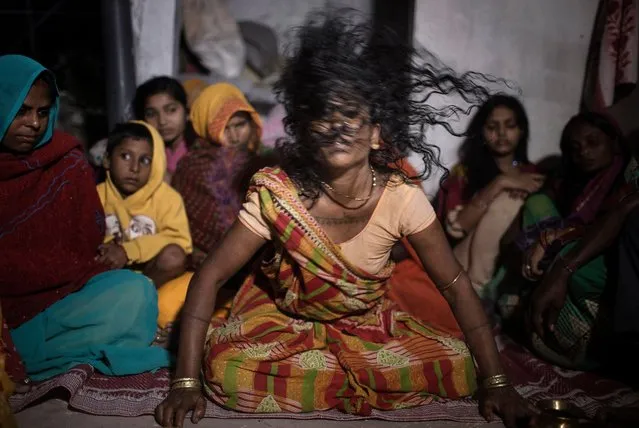
Marani Devi Chaudhary (C), aged 40, performs a ritual in front of shaman Paltan Yadav (unseen) at her home in Rajaur village in Dhanusha district, Nepal, 02 November 2017. The shaman identified Marani Devi to be possessed by their lineage god who was dissatisfied by their worship is thought by the family to have caused them misfortune and is even feared lead to their death. Therefore Marani Devi spent 1,500 USD to perform a healing ritual at the Ghost Festival held at the banks of Kamala River in Dhanusha district two days later. Every family or community has their own sacred god, called 'Kuldevta' in Nepali which means family deity or lineage god. Only family members or people within communities of the same caste can worship to the deity. They have their own rules and regulations of worship which varies from one family and community to another. Being unable to follow the rules and regulations or carry out worship is believed to cause misfortune. (Photo by Narendra Shrestha/EPA/EFE)

Marani Devi Chaudhary (C), aged 40, performs a ritual in front of shaman Paltan Yadav (unseen) at her home in Rajaur village in Dhanusha district, Nepal, 02 November 2017. The shaman identified Marani Devi to be possessed by their lineage god who was dissatisfied by their worship is thought by the family to have caused them misfortune and is even feared lead to their death. (Photo by Narendra Shrestha/EPA/EFE)
Details
17 Nov 2017 06:53:00
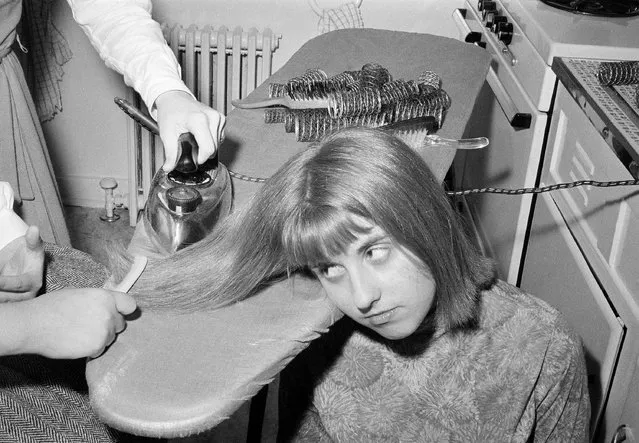
Teenage girls are all steamed up these days about straight hair. The steam iron is replacing the huge rollers on which countless teens slept every night to achieve the height and curls fashionable until. The same girls endure having their hair stretched to absolute straightness on the ironing board, and then ironed to keep it that way. Unlike the roller setting, this takes teamwork. Gay Stilley, 14, goes through an ironing session with a couple of her friends at the Stilley Home in Glen Oaks, Queens, New York City on December 23, 1964. With a wary eye, Gay tries to watch the straightening process as one friend stretches her hair with a comb and another does the ironing, in the Stilley kitchen. (Photo by Marty Zimmerman/AP Photo)

Teenage girls are all steamed up these days about straight hair. The steam iron is replacing the huge rollers on which countless teens slept every night to achieve the height and curls fashionable until. The same girls endure having their hair stretched to absolute straightness on the ironing board, and then ironed to keep it that way. Unlike the roller setting, this takes teamwork. Gay Stilley, 14, goes through an ironing session with a couple of her friends at the Stilley Home in Glen Oaks, Queens, New York City on December 23, 1964. With a wary eye, Gay tries to watch the straightening process as one friend stretches her hair with a comb and another does the ironing, in the Stilley kitchen. (Photo by Marty Zimmerman/AP Photo)
Details
05 Jan 2018 07:00:00