David LaChapelle, Land Scape Anaheim, 2013, chromogenic print, 70 3/4 x 95 inches, 179.7 x 241.3 cm, edition of 3. Image courtesy of the artist and Paul Kasmin Gallery. (Photo by David LaChapelle Studio)
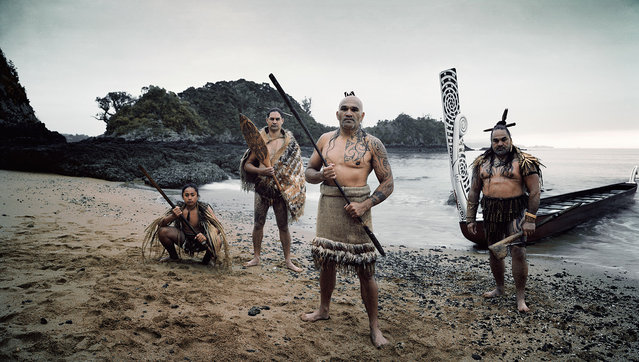
The long and intriguing story of the origine of the indigenous Maori people can be traced back to the 13th century, the mythical homeland Hawaiki, Eastern Polynesia. Due to centuries of isolation, the Maori established a distinct society with characteristic art, a separate language and unique mythology. Defining aspects of Maori traditional culture include art, dance, legends, tattoos and community. While the arrival of European colonists in the 18th centure had a profound impact on the Maori way of life, many aspects of traditional society have survived into the 21th century.
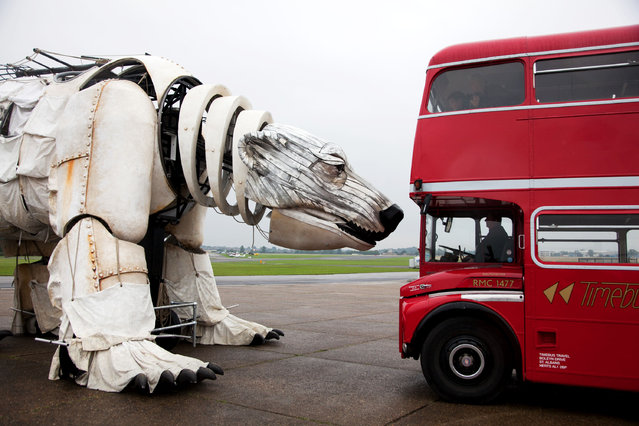
Her name is Aurora, and she is the star of “Aurora's Parade”, the London chapter of ceride – Greenpeace’s global day of action to protest against Arctic destruction. According to DesignBoom, this giant people-powered super-puppet weighs about 3 tons and needs 15 puppeteers and 30 volunteers to operate. Aurora, described as “part protest, part performance”, has fur that includes the names of each supporter in the movement. Greenpeace hopes she will bring the voice and spirit of the Arctic to the public.
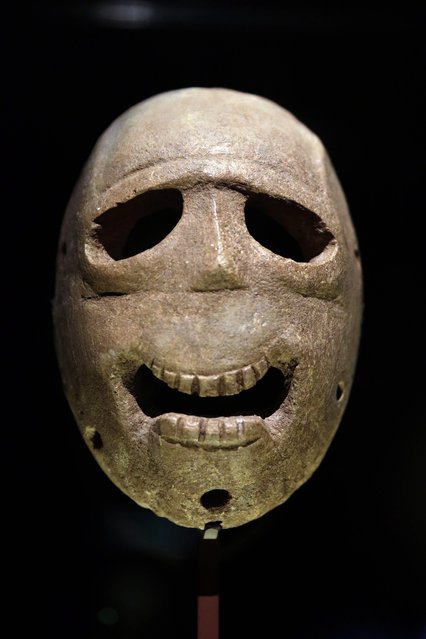
In this Monday, March 10, 2014 photo, a 9,000 year-old mask is on display at the Israel Museum in Jerusalem. The exhibition called “Face To Face” shows eleven stone masks, said to have been discovered in the Judean desert and hills near Jerusalem, which date back 9,000 years and offer a rare glimpse at some of civilization's first communal rituals. (Photo by Tsafrir Abayov/AP Photo)
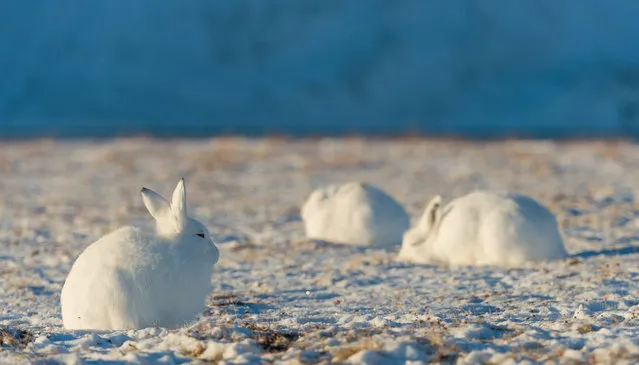
The arctic hare, or polar rabbit, is a species of hare which is adapted largely to polar and mountainous habitats. The arctic hare survives with a thick coat of fur and usually digs holes in the ground or under snow to keep warm and sleep. Arctic hares look like rabbits but have shorter ears, are taller when standing, and, unlike rabbits, can thrive in cold climates. They can travel together with many other hares, sometimes huddling with dozens or more, but are usually found alone, taking, in some cases, more than one partner. The arctic hare can run up to 60 kilometres per hour (40 mph). Its predators include the arctic wolf, arctic fox, and ermine.
These images of abandoned hospitals across Italy are not for the faint-hearted. Both of the hospitals featured in the photographs are Italian asylums – known as manicomios – that were used as mental hospitals. Shut down by law in 1978, the derelict buildings are visibly overgrown and make for very eerie portraits. Photographer Thomas Windisch, 32, of Graz, Austria, said the asylums, located in top-secret spots, can get very creepy when there aren't many people there with him. Here: a hallway within an abandoned hospital. (Photo by Thomas Windisch/Caters News)
Female bodybuilders compete in the annual Muscle Beach Championship bodybuilding and bikini competition at Venice Beach, California on September 7, 2015. Muscle beach Venice is one of two historic bodybuilding locations and took over as the most famous spot when the nearby Santa Monica Muscle beach was shutdown due to overcrowding. California Governor and actor Arnold Schwarzenegger used to be a regular amongst the many famous bodybuilders and actors who have trained there and still makes an occasional appearance. (Photo by Mark Ralston/AFP Photo)
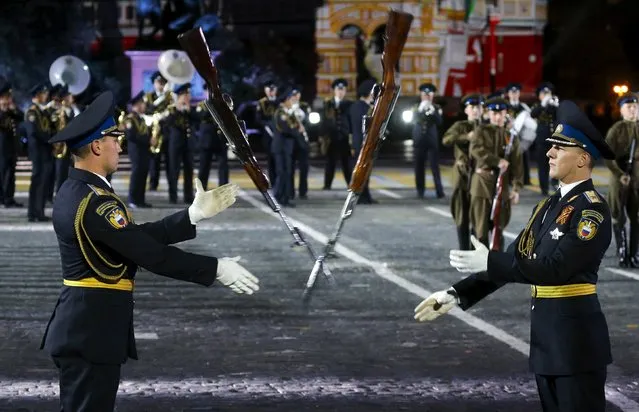
Members of the Guard of Honor of the Presidential Regiment from Russia perform during the “Spasskaya Tower” international military music festival at Moscow's Red Square, Russia, September 10, 2015. The festival runs until 13 Sepember. (Photo by Maxim Shemetov/Reuters)