Loading...
Done
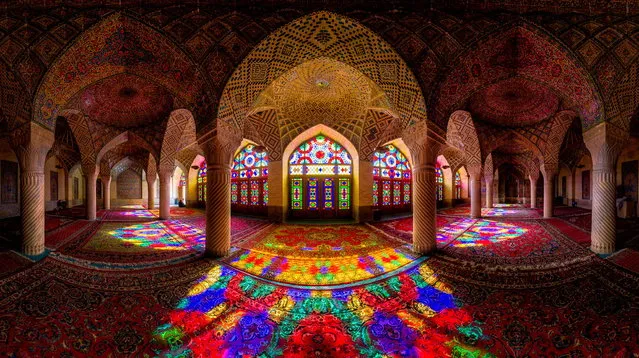
The Nasir Al-Mulk Mosque

The Nasīr al-Mulk Mosque or Pink Mosque is a traditional mosque in Shiraz, Iran, located in Goade-e-Araban place (near the famous Shah Cheragh mosque). The mosque was built during the Qājār era, and is still in use under protection by Nasir al Mulk's Endowment Foundation. It was built by the order of Mirza Hasan Ali Nasir al Molk, one of the lords of the Qajar Dynasty, in 1876 and was finished in 1888. The designers were Muhammad Hasan-e-Memar and Muhammad Reza Kashi Paz-e-Shirazi. The mosque extensively uses colored glass in its facade, and displays other traditional elements such as panj kāseh-i (five concaves) in its design, it is also named in popular culture as Pink Mosque due to the usage of beautiful pink color tiles for its interior design.
Details
26 Mar 2014 14:04:00
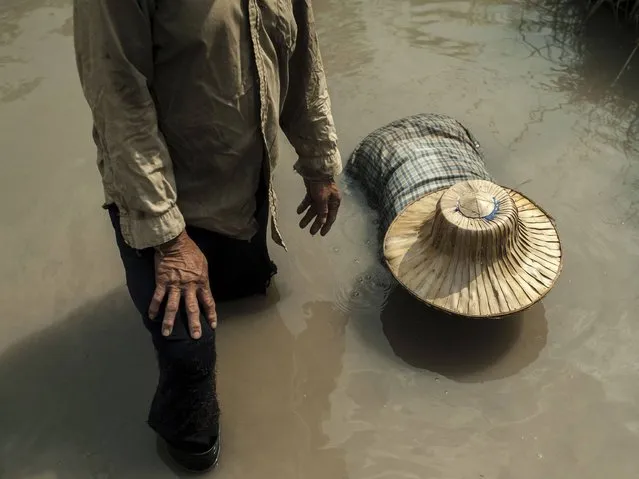
The workers begin to search for gold at 10 am and work until sunset, often working second jobs in the day in order to survive. (Photo by Borja Sanchez-Trillo/Getty Images)

Two workers shovel mud from the river as they look for gold on March 25, 2014 in Lampang, Thailand. Thai villagers from Wang Nuea, North of Thailand, look for gold in the river every year during the drought season. They are able to make an average around USD 15 per day, however two years ago they reached USD 200 in one day due to the river level dropping so much. The workers begin to search for gold at 10 AM and work until sunset, often working second jobs in the day in order to survive. (Photo by Borja Sanchez-Trillo/Getty Images)
Details
27 Mar 2014 06:09:00
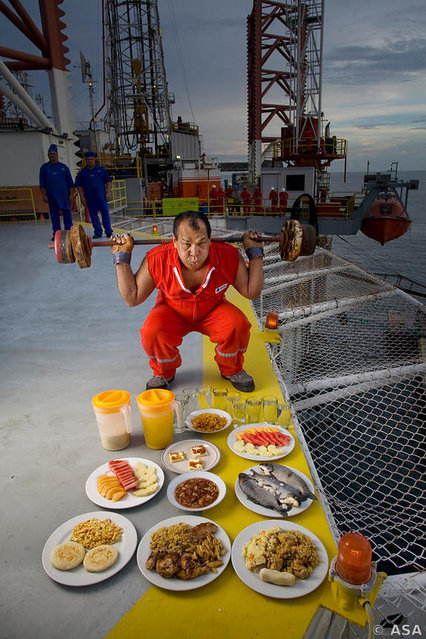
What the World Eats By Peter Menzel And Faith D'Aluisio Part 1

A stunning photographic collection featuring portraits of people from 30 countries and the food they eat in one day. In this fascinating study of people and their diets, 80 profiles are organized by the total number of calories each person puts away in a day. Featuring a Japanese sumo wrestler, a Massai herdswoman, world-renowned Spanish chef Ferran Adria, an American competitive eater, and more, these compulsively readable personal stories also include demographic particulars, including age, activity level, height, and weight. Essays from Harvard primatologist Richard Wrangham, journalist Michael Pollan, and others discuss the implications of our modern diets for our health and for the planet. This compelling blend of photography and investigative reportage expands our understanding of the complex relationships among individuals, culture, and food.
Details
23 Apr 2014 14:34:00
Orange dancing frog discovered by a team headed by University of Delhi professor Sathyabhama Das Biju in the jungle mountains of southern India. (Photo by Satyabhama Das Biju/AP Photo)

This undated photograph shows one of the 14 new species of so-called dancing frogs discovered by a team headed by University of Delhi professor Sathyabhama Das Biju in the jungle mountains of southern India. The study listing the new species brings the number of known Indian dancing frogs to 24 and attempts the first near-complete taxonomic sampling of the single-genus family found exclusively in southern India's lush mountain range called the Western Ghats, which stretches 1,600 kilometers (990 miles) from the west state of Maharashtra down to the country's southern tip. (Photo by Satyabhama Das Biju/AP Photo)
Details
09 May 2014 08:50:00
A beggar who lay at the side of a road pretending he had no legs was moved on by police who made him stand up and walk away. The man lay slumped on his front in Chengdu, in Sichuan Province, China, with his legs tucked under him, and his jeans stretched out to make it appear he had no legs. He is approached by a police officer, who bends down and talks to him for some moments. (Photo by Rex Features)

A beggar who lay at the side of a road pretending he had no legs was moved on by police who made him stand up and walk away. The man lay slumped on his front in Chengdu, in Sichuan Province, China, with his legs tucked under him, and his jeans stretched out to make it appear he had no legs. He is approached by a police officer, who bends down and talks to him for some moments. The officer then reaches out and helps the man to his feet before guiding him across the road. Chengdu is one of a number of cities where officials have tried to clamp down on begging. (Photo by Rex Features)
Details
29 Jul 2014 11:25:00
Heads of love dolls are seen on the shelf on March 9, 2017 in Tokyo, Japan. Japan's oldest and largest “love doll” maker Orient Industry, has been producing silicone love dolls since 1977, and has seen there is a trend for intimate relationships with silicone dolls in Japan. The Orient Industry's factory produces approximately 500 life size hand-made per year, and one doll, costs up to 600,000JPY (approx. 6,000 USD), takes four to five weeks to be finished. Originally, the company was marketing love dolls for disabled people, and the company continues to support the community by providing discounts and consulting their sexual urges. (Photo by Taro Karibe/Getty Images)

Heads of love dolls are seen on the shelf on March 9, 2017 in Tokyo, Japan. Japan's oldest and largest “love doll” maker Orient Industry, has been producing silicone love dolls since 1977, and has seen there is a trend for intimate relationships with silicone dolls in Japan. (Photo by Taro Karibe/Getty Images)
Details
18 Mar 2017 10:32:00
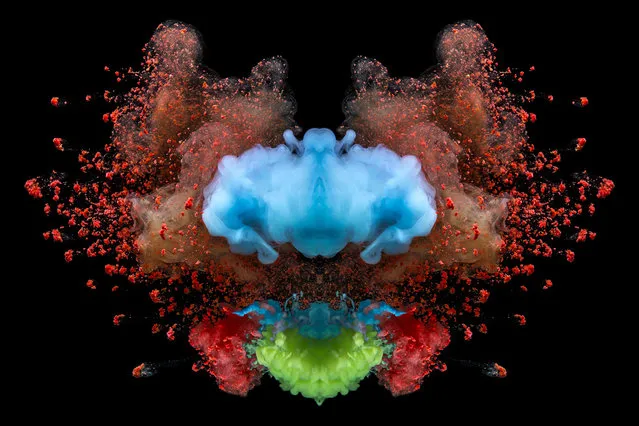
Brian Tomlinsons ink artwork. (Photo by Brian Tomlinsons/Caters News Agency)

These ink-redible, explosive masterpieces are like say-what-you see inkblots tests only in water. The vibrant colors burst from Brian Tomlinsons works, appearing as though they may be coloured ash clouds from an erupting volcano, rather than simply everyday substances. By doing so, Brian challenges viewers to identify what images can be imagined when mixing one fluid with another. In order to shoot the series, entitled Liquid Ink Art, Brain, 40, drops different coloured inks into a fish tank full of water before capturing high-speed shots with a flash. Here: Brian Tomlinsons ink artwork. (Photo by Brian Tomlinsons/Caters News Agency)
Details
15 Jun 2017 08:32:00
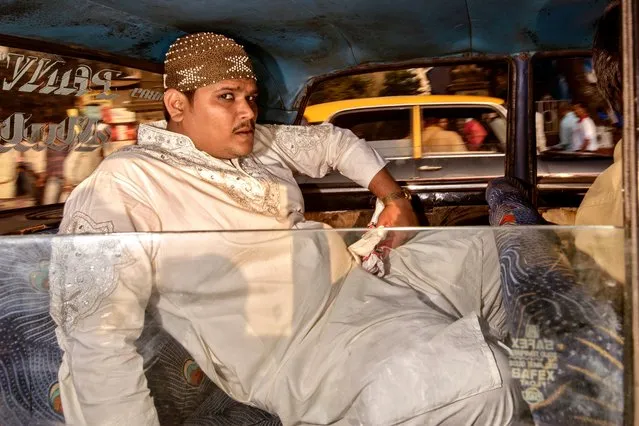
“I’m not scared of breaking the fourth wall”, Wallace has said of the photos where the subject is clearly aware of him taking the shot. “If they are looking at you in a photograph most photographers will think, oh, that’s not a good image. (But) people like to be involved and in the picture. You can see what they are thinking, see them talking”. (Photo by Dougie Wallace/The Guardian)

In Dougie Wallace’s photos of Mumbai taxis, the chatter, yelling, and constant horns of the city are almost audible. A selection of his images is on show at Gayfield Creative Spaces, Edinburgh, as part of the Retina photography festival until 30 July. For four years, the Glasgow-born Wallace focused his photos on one kind of taxi in particular: the Premier Padmini, a 1960s workhorse painted in black and yellow. Locally known as “Kaali-Peeli”, there were once more than 60,000 of them in the Indian city. But thanks to laws restricting pollution, the cars now are fast disappearing from Mumbai’s streets. (Photo by Dougie Wallace/The Guardian)
Details
13 Jul 2016 13:50:00