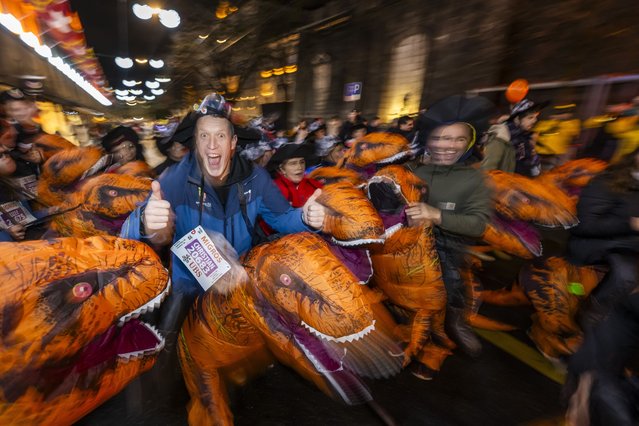
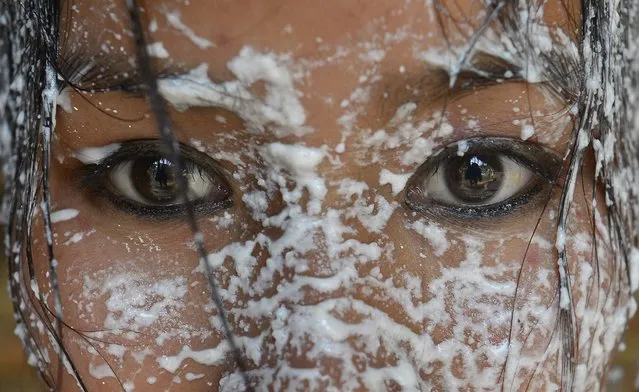
Dressed up participants run at the “Course de la Marmite” during the 46th Escalade Race (Course de l'Escalade) in Geneva, Switzerland, 07 December 2024. (Photo by Martial Trezzini/EPA/EFE)
Queen of drums, Viviane Araujo of Salgueiro performs during 2024 Carnival parades at Sapucai Sambodrome on February 11, 2024 in Rio de Janeiro, Brazil. (Photo by Buda Mendes/Getty Images)
A competitor takes part in the Shrove Tuesday Pancake Race at the City of London's Leadenhall Market on February 13, 2024. (Photo by Isabel Infantes/Reuters)
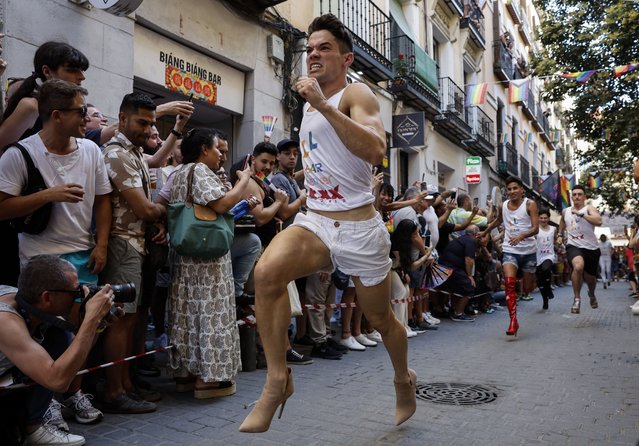
Participants compete in the High-Heels Race as part of the Pride celebrations, in the Chueca neighbourhood in Madrid on July 4 29, 2024. MADO (Madrid Pride) is a series of street celebrations that take place during the city´s LGBTIQ (lesbian, gay, bisеxual, transgender, intersеx and queer) Pride week. (Photo by Óscar del Pozo/AFP Photo)
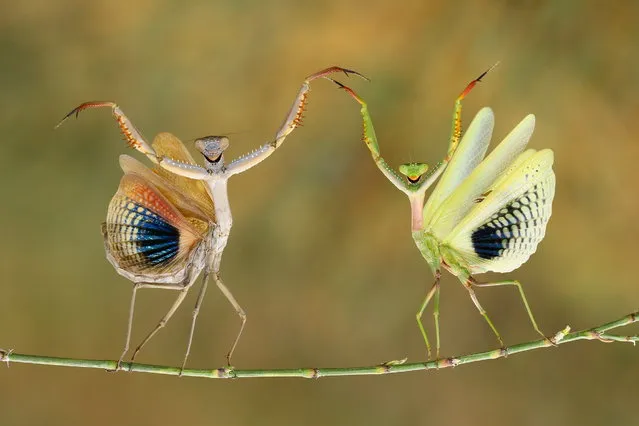
“Show Time”. It's a normal behavior of mantis. They're doing defence. When they're afraid of; raising their arms and spreading their wings. They looks like smiling dancer. Photo location: Nicosia, Cyprus. (Photo and caption by Hasan Baglar/National Geographic Photo Contest)
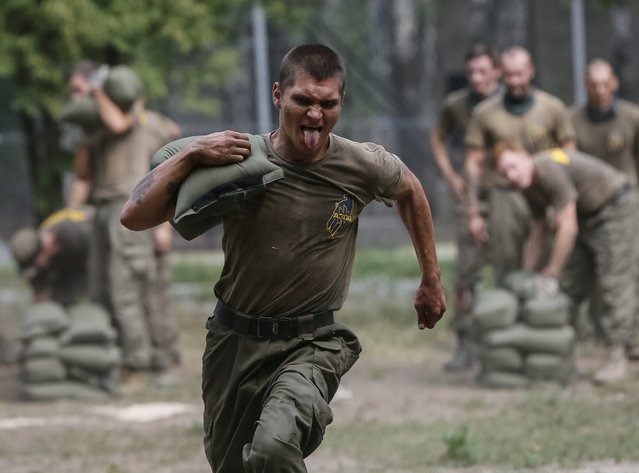
A new volunteer for the Ukrainian interior ministry's “Azov” battalion takes part in tests before heading to frontlines in eastern Ukraine, at the battalion's training centre in Kiev, Ukraine, August 14, 2015. (Photo by Gleb Garanich/Reuters)
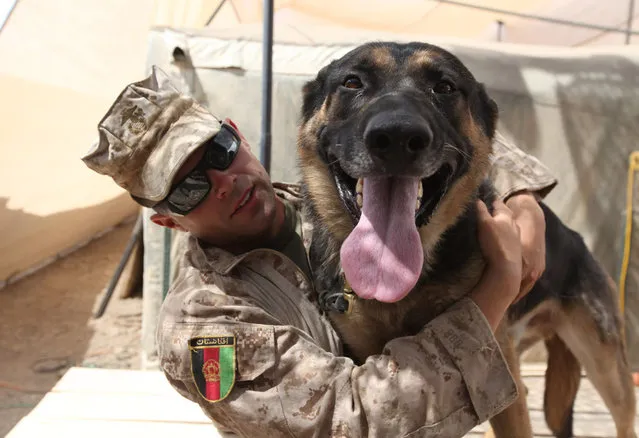
Throughout the course of the long war in Afghanistan, Coalition troops have relied on thousands of military working dogs to help keep them safe, and make their jobs easier. The dogs are trained to detect explosives, to find illegal drugs, to search for missing comrades, or target enemy combatants. Not only are they active on the front lines, but behind the lines they serve as therapy dogs, service dogs, and loyal companions. They also share the same risks as the ground troops, suffering injuries and sometimes death on the battlefields. Gathered here are images of these dogs and their handlers in Afghanistan and back home, from over the past several years, part of the ongoing series here on Afghanistan.
A picture made available on 13 May 2016 shows A Tiwa girl performing her traditional dance as they celebrated the Wanchuwa festival in Karbi Anglong District of Assam state, India, 11 May 2016. Wanchuwa is one of the most important festivals of the Tiwa tribal community living in the hills as it is related with agriculture which is the mainstay of their economy. Tiwas pray for a bountiful harvest during this festival and to protect their crops from pest and other natural calamities. Tiwa is a major tribe of Assam state who practice Jhum or shifting cultivation for their living in the hills. (Photo by EPA/Stringer)