Loading...
Done
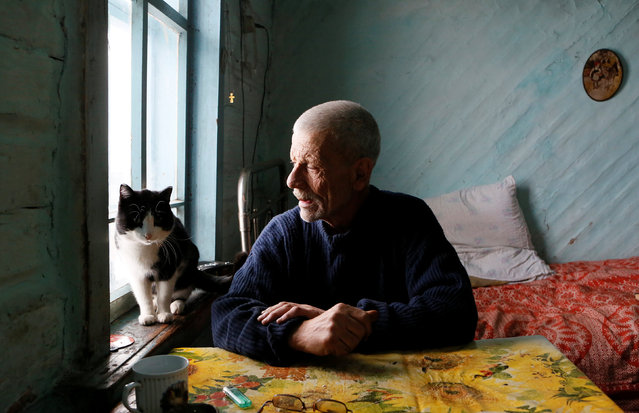
Mikhail Baburin, 66, talks to his cat Marquis at his house in the remote Siberian village of Mikhailovka, Krasnoyarsk region, Russia, December 5, 2016. (Photo by Ilya Naymushin/Reuters)

Mikhail Baburin, 66, talks to his cat Marquis at his house in the remote Siberian village of Mikhailovka, Krasnoyarsk region, Russia, December 5, 2016. Baburin, a former Navy man, barge worker and employee of a military plant in Krasnoyarsk, is the last inhabitant of Mikhailovka, which was founded in the 19th century by migrants from Russia's Mordovia region. He moved in 2000 to Mikhailovka where he was born and has lived there all alone for the last 10 years with only domestic animals. (Photo by Ilya Naymushin/Reuters)
Details
07 Dec 2016 12:22:00
A tattoo artist applying ink on a girl' s arm during the 2017 Moscow Tattoo Festival at Moscow' s Amber Plaza Shopping Center in Moscow, Russia on April 1, 2017. (Photo by Valery Sharifulin/TASS)

A tattoo artist applying ink on a girl' s arm during the 2017 Moscow Tattoo Festival at Moscow' s Amber Plaza Shopping Center in Moscow, Russia on April 1, 2017. Tattoo artists from all over the world take part in the event. The festival' s program includes a tattoo contest, body taping art marathon, masterclasses, round table discussions and conferences. (Photo by Valery Sharifulin/TASS)
Details
02 Apr 2017 10:16:00
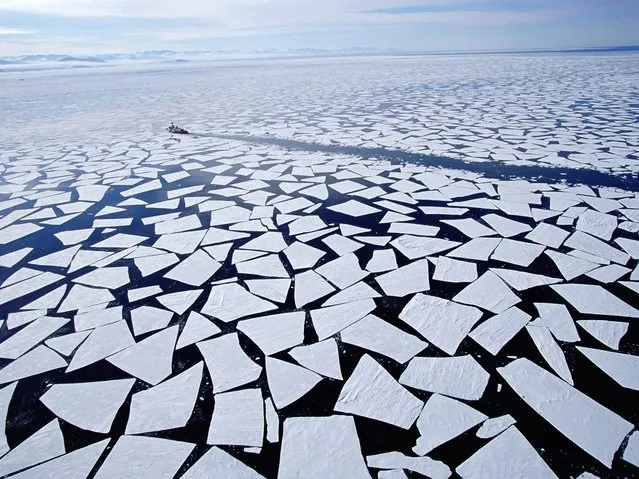
McMurdo Station Antarctic

McMurdo Station is a U.S. Antarctic research centre located on the southern tip of Ross Island, which is in the New Zealand-claimed Ross Dependency on the shore of McMurdo Sound in Antarctica. It is operated by the United States through the United States Antarctic Program, a branch of the National Science Foundation. The station is the largest community in Antarctica, capable of supporting up to 1,258 residents, and serves as the United States Antarctic science facility. All personnel and cargo going to or coming from Amundsen–Scott South Pole Station first pass through McMurdo.
Details
05 Sep 2013 10:18:00
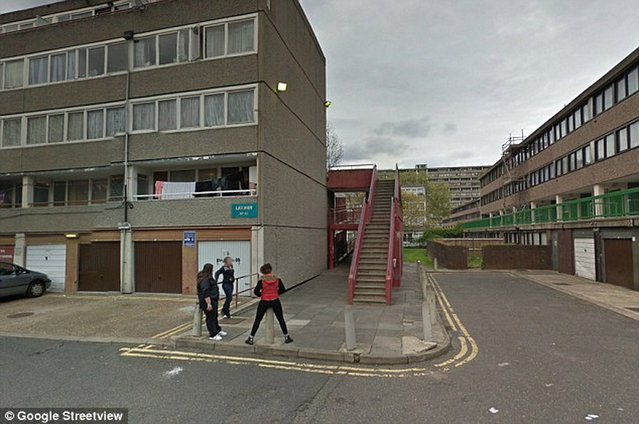
Bad Part of Town By Google Street View

Take a walk on the wild side around some of the most down right dangerous places in the world - and all without leaving your desk, courtesy of Google Street View. Since 2007, Google's amazing technology has given people the chance to visit the Eiffel Tower, peer out over San Francisco's Golden Gate Bridge or walk along a beach in the Bahamas. But as well as mapping the tourist-friendly hotspots, Google also ventured into places you really wouldn't want to find yourself. Here is a collection of some the most notorious areas captured by the infamous roaming camera cars from around the UK and the world.
Details
03 Oct 2013 11:05:00
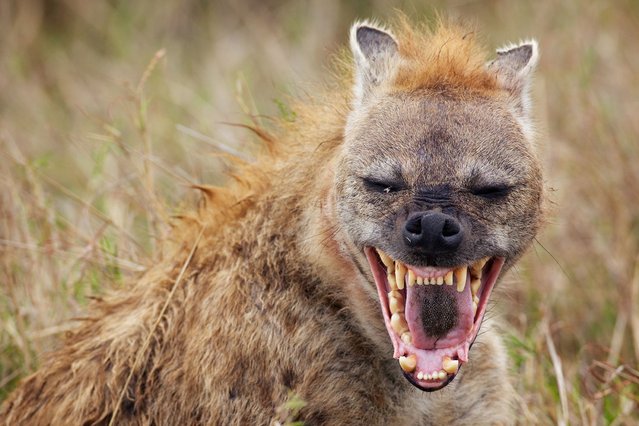
The torrential rain has failed to dampen the spirits of this hyena as he bursts into a hysterical laugh in Kenya, on Oktober 24, 2013. (Photo by Mark Bridger/Solent News & Photo Agency)

The torrential rain has failed to dampen the spirits of this hyena as he bursts into a hysterical laugh in Kenya, on Oktober 24, 2013. (Photo by Mark Bridger/Solent News & Photo Agency)

P.S. All pictures are presented in high resolution. To see Hi-Res images – just TWICE click on any picture. In other words, click small picture – opens the BIG picture. Click BIG picture – opens VERY BIG picture (if available; this principle works anywhere on the site AvaxNews)
Details
26 Oct 2013 11:52:00
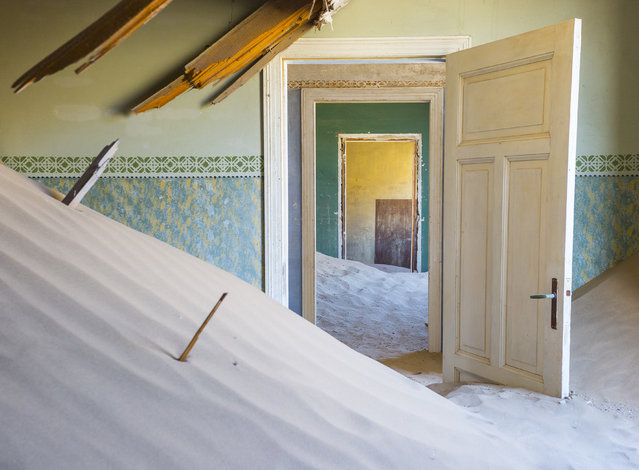
Kolmankop, an abandoned mining town in Namibia. (Photo by David Ogden/Caters News)

These sand-swept images show the ghostly remains of what was once a mineral-rich mining community. In its heyday, the town of Kolmanskop, Namibia, was home to about 700 families. Now all that remains are empty homes filled with sand, while cast-off items such as bathtubs are scattered about the surrounding area. Over time, the sand of the stunning dunes that encircle the town of Kolmanskop has been blown towards the abandoned residences, coating everything from streets to the interiors of houses and workshops. Here: Kolmankop, an abandoned mining town in Namibia. (Photo by David Ogden/Caters News)
Details
13 Mar 2016 09:31:00
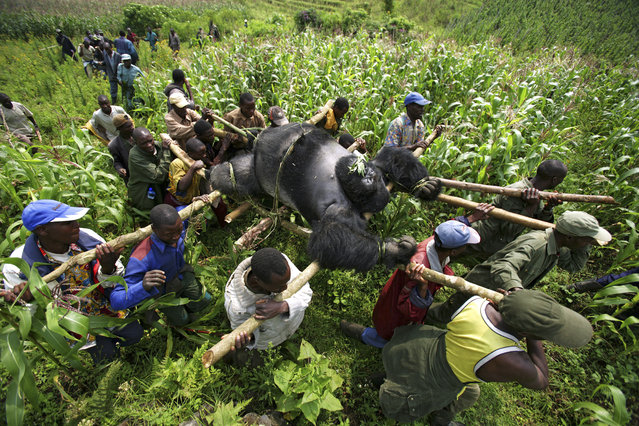
2008 Visa d'or Feature: Brent Stirton. Conservation Rangers from an Anti-Poaching unit work with locals to evacuate the bodies of four Mountain Gorrillas killed in mysterious circumstances in the park,  July 24, 2007, Virunga National Park, Eastern Congo. (Photo by Brent Stirton/Exclusive by Getty Images)

Jean-François Leroy launched Visa Pour l’Image, the international photojournalism festival, in Perpignan in 1989. Before heading up the festival, Leroy was shooting reportage for the agency Sipa Press and also working for Photo-Reporter, Le Photographe, Photo-Revue and Photo Magazine. He is the chairman of the company Images Evidence. Photo: 2008 Visa d'or Feature: Brent Stirton. Conservation Rangers from an Anti-Poaching unit work with locals to evacuate the bodies of four Mountain Gorrillas killed in mysterious circumstances in the park, July 24, 2007, Virunga National Park, Eastern Congo. (Photo by Brent Stirton/Exclusive by Getty Images)
Details
27 Aug 2013 10:42:00
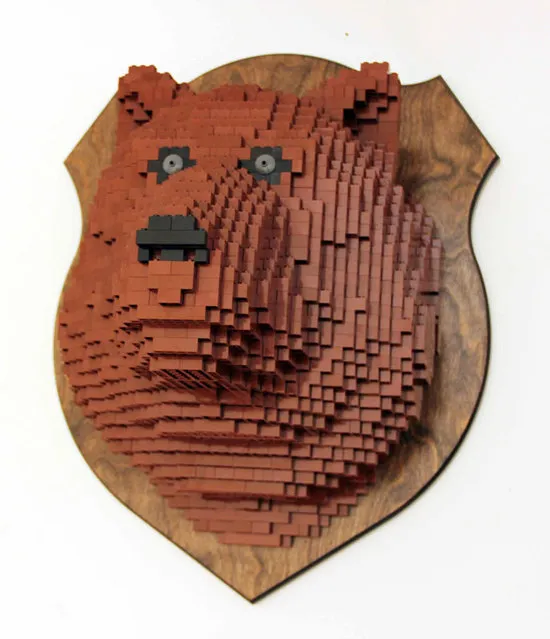
Art lego

New York sculptor Nathan Sawaya has become renowned in the modern art world for his groundbreaking fusion of pop art and surrealism in pieces comprised solely of LEGO® bricks. His most recent work represents a new phase of artistic expression within this medium, as he explores themes of identity. All his new sculpture is in one way or another autobiographical, addressing the issue of self through symbolism to express his surrealistic ideology.
Details
15 Apr 2015 09:00:00